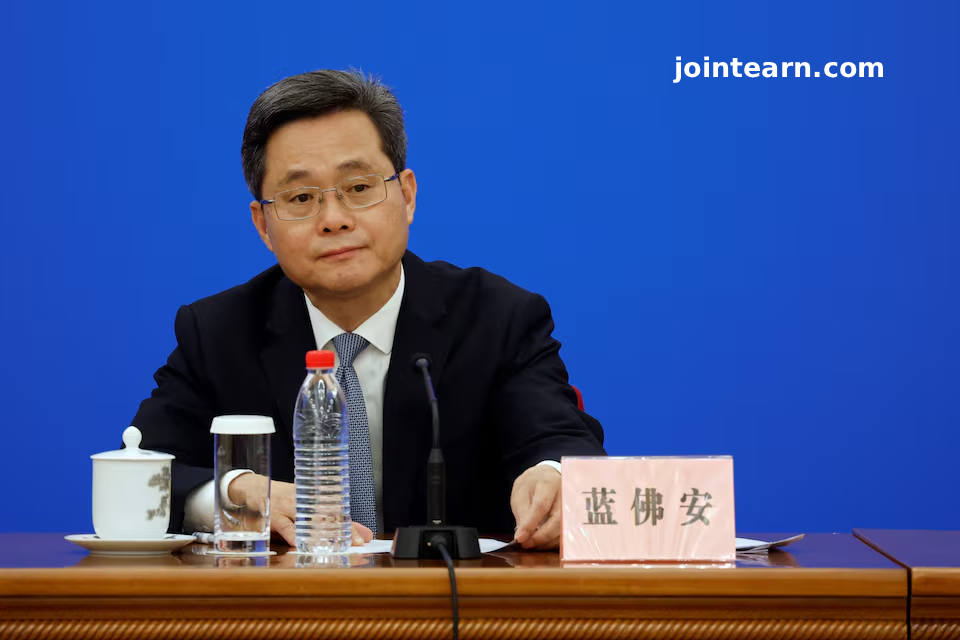
BEIJING/SHANGHAI, November 15, 2025 – China will adopt a more proactive fiscal policy over the next five years to support economic and social development, Finance Minister Lan Foan announced in an interview with Xinhua News Agency on Saturday. The policy measures aim to stabilize growth amid an increasingly volatile global economic environment and complex international dynamics.
Counter-Cyclical and Cross-Cyclical Measures
Finance Minister Lan highlighted that China will implement counter-cyclical and cross-cyclical fiscal regulation, adjusting the deficit-to-GDP ratio and government borrowing levels in line with evolving economic conditions. The approach seeks to provide flexibility in responding to both domestic and global economic fluctuations while maintaining fiscal prudence.
Strategic Use of Fiscal Tools
China plans to leverage a wide range of fiscal instruments to sustain economic development:
- Budget management and taxation policies to optimize resource allocation
- Government bonds and transfer payments to support priority sectors
- Fiscal subsidies aimed at boosting domestic consumption of goods and services
- Special-purpose local government bonds and ultra-long treasury bonds to finance strategic investments
The measures will target key areas of national development, including:
- Modern industrial systems
- Science and technology innovation
- Education and social security programs
Lan emphasized the coordinated use of these tools to optimize the direction of government investment and ensure long-term economic stability.
Navigating a Complex Global Environment
The Finance Minister acknowledged that the international landscape remains volatile and unstable, with major-country rivalries intensifying, though he did not specify particular nations. The fiscal strategy is designed to strengthen China’s economic resilience, maintain steady growth, and support critical domestic priorities in the face of external challenges.
Implications for Investors and the Economy
China’s commitment to a strengthened fiscal stance is expected to:
- Stimulate domestic consumption and investment
- Support innovation-driven sectors and industrial modernization
- Enhance confidence among international and domestic investors
- Stabilize economic growth amid global uncertainty
As the world’s second-largest economy, China’s fiscal policies will continue to play a crucial role in shaping regional and global economic trends, particularly as it balances growth objectives with sustainable government spending.


Leave a Reply