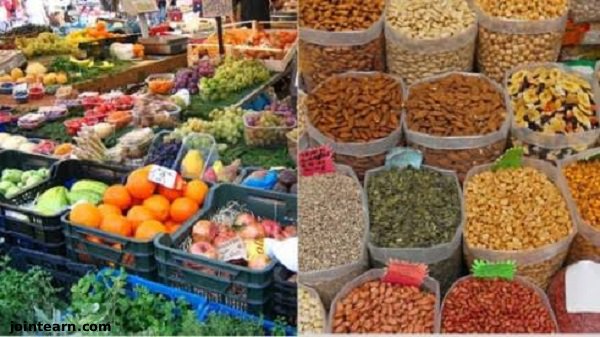
Food and agriculture stakeholders in Ogun, Oyo, and Kwara States have welcomed the recent decline in food prices, praising government policies and interventions that have helped ease the cost of living. However, experts caution that sustained efforts are needed to maintain these reductions.
A survey by the News Agency of Nigeria (NAN) revealed notable price drops in key markets such as Lafenwa, Kuto, and Olomore in Abeokuta. Staples including rice, beans, garri, groundnut oil, and yams have all become more affordable. Perishable items like peppers, onions, and tomatoes have also seen significant reductions.
- Garri: ‘Kongo’ now sells for N500 (down from N1,800), while a bag is N28,000 (previously N40,000).
- Rice (50kg bag): N53,000, down from N68,000.
- Beans (Oloyin): N60,000, down from N70,000.
- Groundnut oil (5L): N13,000, down from N16,000.
- Onions (medium basket): N12,000, down from N20,000.
- Scotch bonnet pepper (big bag): N35,000–N40,000, down from N60,000–N65,000.
- Tomatoes (bag): N50,000, down from N70,000.
- Yams (six big tubers): N12,000, down from N17,000–N20,000.
Some traders attribute the drop to the recent decline in the exchange rate and the reopening of land borders, which have eased importation and boosted availability, especially for rice and oils. Mrs. Sikirat Soyeye, a grain seller at Lafenwa Market, said, “Since food items are now cheaper, people are buying more. The reduction in the dollar rate and border reopening have really helped.”
Perishable goods sellers like Mrs. Tinuke Ayomide and Mr. Haruna Ibrahim noted that seasonal harvests contributed to lower prices, though some items remain relatively expensive. Consumers, including Mrs. Ayomide Adedeji, expressed delight at the trend but urged the government to maintain policies that stabilize both currency and fuel prices.
Economists, including Prof. Alarudeen Aminu of the University of Ibadan, explained that the price reductions align with historical harvest season trends. However, he emphasized that coordinated government interventions are needed to sustain these gains beyond the harvest period, including investments in rural infrastructure, storage facilities, and support for off-season farming.
Officials also highlighted government efforts in Ogun State to boost productivity and reduce post-harvest losses. Commissioner for Agriculture and Food Security, Mr. Bolu Owotomo, noted initiatives in cassava processing and aquaculture, as well as programs linking farmers directly to buyers.
Market leaders in Kwara, such as Iyaloja-General Alhaja Muhibat Olumon, pledged to support government policies and prevent artificial inflation of food prices by middlemen.
Consumers, however, point out that despite lower food prices, purchasing power remains weak, and essentials like meat, eggs, and vegetable oil are still expensive. Some also called for improved storage to preserve surplus harvests for off-season sales and reductions in petrol prices to lower transportation costs.
While the recent decline in food prices is a relief for many households, experts agree that continued government support, investment in local production, and improved rural infrastructure are key to ensuring long-term affordability.


Leave a Reply