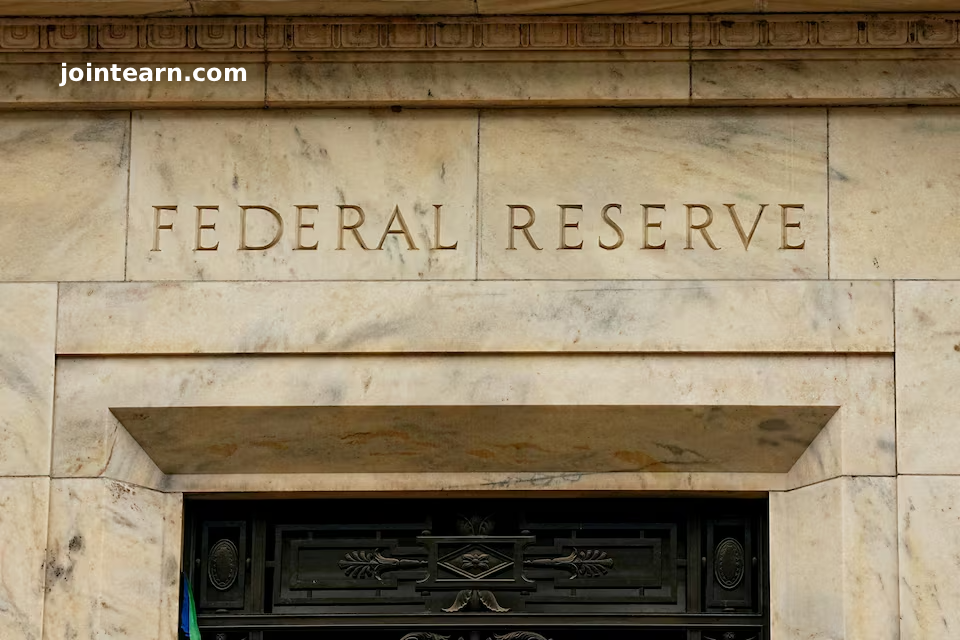
The U.S. Federal Reserve is confronting a profound policy divide as updated economic data begins to flow following the federal government’s reopening. With the Fed’s next meeting just over three weeks away, central bankers are weighing whether to cut interest rates amid persistent uncertainty over employment, inflation, and overall economic growth.
Economic Data Returns After Shutdown
The federal government’s temporary shutdown delayed critical economic reports, leaving policymakers in the dark about the current state of the economy. Key reports, including employment figures, inflation data, retail spending, and GDP growth, have either been postponed or remain incomplete.
The Bureau of Labor Statistics has announced that the delayed employment report for September will be released on Thursday. However, some October data may be skipped entirely, and November reporting could also be impacted by the shutdown that extended to mid-month.
Fed Divisions Over Interest Rate Cuts
Minutes from the Fed’s October meeting, set to be released Wednesday, are expected to shed light on the sharp divisions within the central bank. The core debate is whether higher inflation justifies holding off on rate cuts or whether slowing job growth and the need for looser monetary policy should take precedence.
Fed Governor Christopher Waller emphasized his focus on the labor market, stating that the current data trends support another rate cut when the Fed meets on December 9-10.
Conversely, Fed Vice Chair Philip Jefferson cautioned a slower approach, noting that the benchmark interest rate, currently in the 3.75%-4.00% range, may soon reach a level where it no longer suppresses economic activity or inflation.
Divergent Views Within the Federal Reserve
The divide within the Fed is stark. Several governors, appointed by former President Donald Trump, favor further rate cuts. Meanwhile, multiple regional Fed presidents are more hawkish, emphasizing the need to control inflation.
The October meeting’s quarter-point rate cut was marked by unusual dissent, reflecting differing opinions on whether the central bank should pursue looser or tighter monetary policy. Fed Chair Jerome Powell provided rare explicit guidance on the December meeting, signaling a careful compromise.
Market Implications and Rate Outlook
Powell’s comments and recent data have altered market expectations, reducing the likelihood of a December rate cut. Policymakers’ projections in September anticipated the federal funds rate ending the year in the 3.50%-3.75% range—slightly below the current rate.
Yet, persistent inflation remains a concern for some Fed officials. Cleveland Fed President Beth Hammack highlighted the importance of returning inflation to the 2% target, framing it as essential to maintaining the Fed’s credibility.
Challenges in Reaching Consensus
Powell faces the difficult task of forging consensus amid varying opinions and gaps in official data. Potential compromises include:
- Approving a rate cut in December but signaling a pause thereafter.
- Pausing in December while indicating possible future cuts depending on incoming economic data.
Quarterly projections to be released at the December meeting may help clarify the Fed’s strategy. The pace at which delayed federal data is published could also influence decision-making, though central bankers have multiple alternative tools to monitor economic conditions.
Uncertainty in Labor Market and Inflation Drivers
Fed officials are grappling with emerging forces affecting employment and inflation. Questions remain over whether slow job growth is:
- Part of a normal business cycle,
- A result of stricter immigration policies,
- Linked to weakening demand from tariffs and inflation, or
- Influenced by technological changes, such as artificial intelligence reshaping the workforce.
Currently, inflation persists about one percentage point above the Fed’s 2% target. Market analysts expect that strong evidence of declining inflation will be required before the Fed resumes rate cuts.
Conclusion
As the Federal Reserve navigates this complex economic landscape, the coming weeks will be critical. The release of delayed economic data, combined with ongoing debates among policymakers, will shape the future of U.S. interest rates. Investors, businesses, and consumers alike are closely watching for any signals from Powell and the Fed about the path forward in managing both inflation and employment.


Leave a Reply