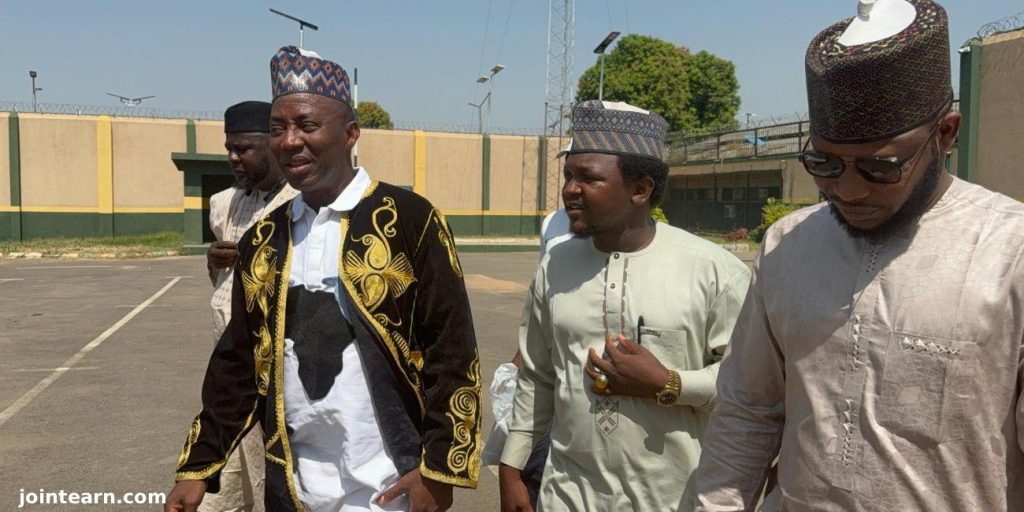
Human rights activist and former presidential candidate Omoyele Sowore on Tuesday visited the embattled Kano cleric, Sheikh Abduljabbar Nasiru Kabara, at the Kuje Correctional Centre in Abuja — marking their first meeting since the scholar’s controversial blasphemy conviction.
Sowore, accompanied by Barrister Hamza Nuhu Dantani, said they travelled to Kuje “to meet a man whose persecution has been weaponised by political and clerical powers.”
Sheikh Abduljabbar was handed a death sentence in 2023 after a trial that drew widespread condemnation from rights organisations.
Describing the case as a politically orchestrated prosecution under the administration of former Kano governor Abdullahi Ganduje, Sowore argued that several stages of the legal process were compromised. He further claimed that some individuals close to the cleric conspired with political and religious actors to secure the conviction — a situation he labelled “pathetic and tragic.”
Despite facing a death sentence and years of isolation, Sowore said they met a man who remained calm, humble, intellectually alert, and spiritually unwavering.
“He told us clearly that he is protected by Allah and will continue to stand by the teachings of Allah until the very end,” Sowore recounted.
The activist stressed that injustice against any individual is unacceptable, regardless of how widely supported it may appear when driven by political or religious manipulation.
Sowore confirmed receiving copies of the cleric’s Court of Appeal documents, noting that his team would study them carefully. However, he emphasised that the issue goes beyond legal filings.
“We have received his appeal documents, and we will review them thoroughly. But beyond the paperwork, what must prevail is justice — justice for Sheikh Abduljabbar and justice against the weaponisation of religion by corrupt politicians who fear knowledge, dialogue, and dissent,” he said.
He added that even in Islam, Allah’s compassion extends to accepting the prayers of oppressed unbelievers — a powerful reminder, he said, of the seriousness of injustice.


Leave a Reply