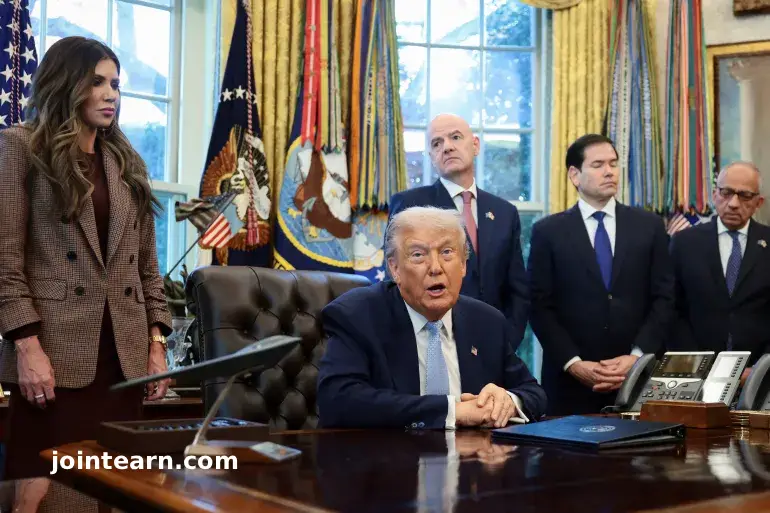
United States President Donald Trump has suggested that the US could expand its controversial military operations against Latin American drug cartels to include Mexico, marking a dramatic escalation in his administration’s ongoing “war on drugs.” Speaking at the Oval Office on Monday, Trump emphasized that he has already been in discussions with Mexican authorities regarding potential interventions, while acknowledging the gravity of the nation’s drug crisis.
“Would I launch strikes in Mexico to stop drugs? It’s OK with me. I’ve been speaking to Mexico. They know how I stand,” Trump told reporters. “We’re losing hundreds of thousands of people to drugs. So now we’ve stopped the waterways, but we know every route.”
Trump’s Second-Term Approach to the Drug Crisis
Since returning to office in January, Trump has pursued an aggressive strategy targeting cartels across Latin America, using executive orders and legal designations to bypass Congressional approval. The administration has labeled six major drug cartels as “foreign terrorist organizations”, allowing military action under national security provisions.
Trump’s team has reportedly conducted at least 20 strikes on boats transporting narcotics in the Caribbean and Pacific since September, resulting in over 80 deaths. These actions have been justified as a “non-international armed conflict” against “narcoterrorists” and “unlawful combatants,” echoing legal frameworks first developed during the Bush administration’s war on terror.
While these strikes have primarily targeted shipments linked to foreign organizations like Venezuela’s Tren de Aragua, Trump’s latest statements suggest Mexico may be the next focus of operations.
Legal and Diplomatic Hurdles
Experts warn that any US strike inside Mexican territory would face significant legal and diplomatic obstacles. Jeff Garmany, associate professor of Latin American studies at the University of Melbourne, noted that both domestic and international laws, as well as UN protocols, typically prevent unilateral military interventions.
“Nothing about Trump’s second presidency suggests he would adhere to these laws and protocols,” Garmany said. “I’d be surprised if Trump waited for Mexican President Claudia Sheinbaum’s sign-off if he decides to move forward.”
President Sheinbaum has previously opposed foreign military strikes on Mexican soil, underscoring the potential for heightened diplomatic tensions between the US and Mexico.
Challenges of Targeting Mexico’s Drug Cartels
While Trump has portrayed the campaign as a national security imperative, experts argue that strikes inside Mexico may have limited impact due to the strength and organization of local cartels.
“Mexico’s cartels are some of the most powerful criminal organizations globally, controlling key trafficking routes between Latin America and the US,” Garmany explained. “Targeted strikes might make headlines, but they are unlikely to disrupt the vast illegal drug supply chains that continue to flood American communities with cocaine, heroin, methamphetamine, and fentanyl.”
Trump described the drug crisis as “like a war,” pointing to hundreds of thousands of American deaths caused by narcotics. He added, “We know every route. We know the addresses of every drug lord. We know their front door. We know everything about every one of them.”
Implications for US-Mexico Relations
The prospect of US strikes in Mexico raises critical questions about sovereignty, international law, and bilateral relations. Analysts caution that any unilateral military action could escalate into diplomatic friction and undermine long-standing cooperative efforts between the two countries to combat drug trafficking.
Despite the controversy, Trump’s administration appears committed to using military and intelligence capabilities to address what it calls a national emergency, signaling a continuation of his aggressive, confrontational approach to narcotics enforcement.


Leave a Reply