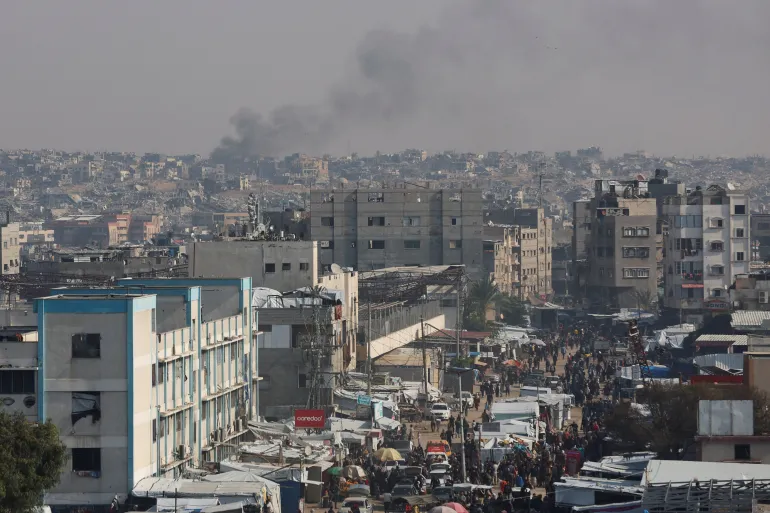
At least one Palestinian has been killed and two others—a woman and her child—injured in Israeli attacks on southern Gaza, according to Wafa news agency and local medical sources. The latest fatalities occurred in the Qizan an-Najjar area, south of Khan Younis, while a drone strike in Bani Suheila injured the mother and child earlier in the day.
These attacks increase the Gaza death toll to 280 since the October 10 ceasefire, which was brokered by the United States, amid nearly 400 violations of the truce, according to the Gaza Government Media Office. The office urged the US, UN Security Council, and other mediators to enforce the ceasefire, protect civilians, and prevent further escalations.
Ceasefire Violations and Political Developments
The October ceasefire, part of former US President Donald Trump’s 20-point Gaza peace plan, proposed the creation of a transitional administration and an international stabilization force in Gaza, aiming for a “credible pathway” to Palestinian statehood. The UN Security Council approved the plan in a 13-0 vote, with Russia and China abstaining.
Trump emphasized the plan’s international scope, describing a “board of peace” composed of global leaders to oversee security, public services, and reconstruction in Gaza until 2027. Saudi Crown Prince Mohammed bin Salman (MBS) was invited to join the board, highlighting international involvement in the process.
Humanitarian Crisis in Gaza
Despite political initiatives, Palestinians on the ground face immediate challenges. Al Jazeera correspondent Hani Mahmoud reported from Gaza City:
“Residents worry about accessing clean drinking water, staying dry during heavy rainfall, and protecting their children in displacement areas. Daily survival is their top concern.”
Areas near the so-called yellow line, the boundary between Israeli-controlled and Hamas-controlled zones, are particularly dangerous. Many homes and communities have been destroyed, and Israeli strikes have targeted Palestinians checking on damaged properties, increasing fear and insecurity.
Under the ceasefire, at least 600 trucks of humanitarian aid were supposed to enter Gaza daily. In reality, deliveries remain insufficient, exacerbating a growing food and resource crisis. Philippe Lazzarini, chief of UNRWA, warned:
“Winter is coming, and residents will face additional hardship from rain, cold, and insufficient food and medical supplies. Crossings must be opened to deliver aid.”
Prisoner and Captive Exchanges
The ceasefire also included agreements for the return of captives and deceased bodies. Initially, Hamas held 20 living captives and 28 bodies, while Israel released nearly 2,000 Palestinian prisoners and returned hundreds of deceased individuals.
Trump claimed progress had been made, though UN officials dispute these assertions, emphasizing that insufficient resources and ongoing violence continue to jeopardize civilians’ safety.
Immediate Needs and Future Outlook
While international diplomacy continues, residents of Gaza are primarily focused on immediate survival. Access to water, food, and shelter remains limited, and political agreements have yet to translate into tangible relief. Mahmoud stated:
“Political diplomacy is not changing daily realities for Palestinians. They need clear action to end violence, open crossings, and ensure access to essential supplies.”
With winter approaching, humanitarian challenges are expected to intensify, highlighting the urgent need for effective implementation of the ceasefire and international aid delivery.


Leave a Reply