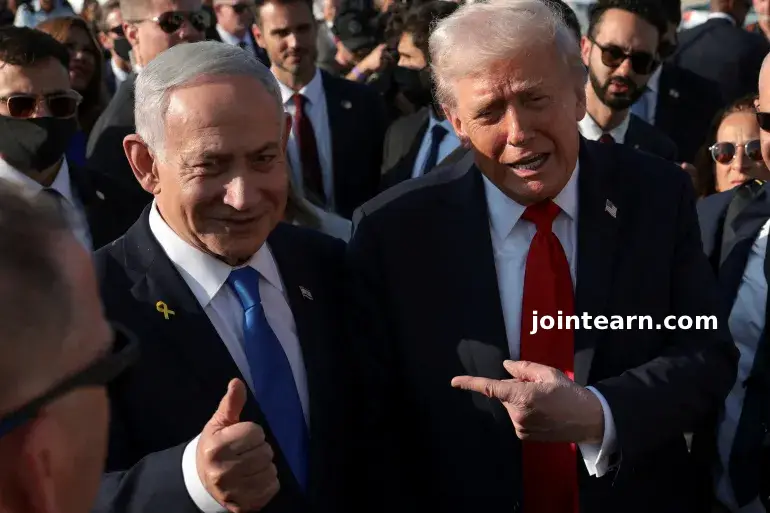
Despite ceasefire agreements in Gaza and Lebanon and declarations by US President Donald Trump that the Middle East is at peace, Israeli Prime Minister Benjamin Netanyahu has insisted that Israel’s war is far from over. Recent Israeli air and drone attacks have continued, killing dozens and leaving civilians unable to return home.
Escalating Violence in Gaza and Lebanon
On Tuesday, Israeli forces targeted the largest Palestinian refugee camp in Lebanon, firing missiles that killed at least 13 people. A separate drone strike in Bint Jbeil on the same day claimed another life. The following day, airstrikes hit southern Lebanese villages.
Meanwhile, in Gaza, Israeli air raids and drone attacks continue unabated. On Wednesday, at least one Palestinian was killed as Israeli strikes hit Rafah and Khan Younis, despite the ceasefire agreements meant to halt hostilities.
“There was never any evidence that the Israelis would respect the ceasefire in Gaza or Lebanon,” said Elia Ayoub, a Lebanese-Palestinian researcher.
Since the October 10, 2025 ceasefire in Gaza, Israel has killed more than 280 Palestinians, while in Lebanon, civilian deaths have exceeded 100 over the past year. Attacks also persist in the occupied West Bank.
Netanyahu’s Position
In a speech to Israel’s Knesset on November 10, Netanyahu emphasized that Israel’s enemies are regrouping and rearming, justifying continued military action:
“Those who seek to do us harm are rearming. They did not give up their aim of destroying us.”
Netanyahu insists the dismantling of Hamas and prevention of Hezbollah’s resurgence remain unfinished objectives. Analysts, however, question whether these goals are achievable, suggesting that Netanyahu may be using the war to maintain political leverage.
Political Motivations Behind the Conflict
Experts argue that Netanyahu’s insistence on continuing the war serves domestic political purposes. His coalition partners, representing far-right factions, reportedly demand ongoing conflict to advance a vision of expanding Israeli settlements and consolidating political power.
Netanyahu is also facing three corruption trials, repeatedly delayed due to the war. According to Rob Geist Pinfold, lecturer in international security at King’s College London:
“Keeping Israel on a constant war footing allows Netanyahu to delay his trials and manage far-right coalition pressures.”
Analysts also note that Netanyahu has used the war to further long-term goals of displacing Palestinians and consolidating control over contested areas.
International Response
Internationally, pressure on Israel has been inconsistent. The International Criminal Court (ICC) has issued arrest warrants for Netanyahu and former Defense Minister Yoav Gallant for war crimes in Gaza.
“I view the so-called ceasefires as gaslighting campaigns designed to indefinitely delay accountability,” Ayoub said.
Despite global attention, analysts warn that the root causes of the conflict—Israeli occupation, apartheid policies, and settlement expansion—remain unresolved. Violence is likely to continue until these underlying issues are addressed.
Humanitarian Impact
Civilians in Gaza and Lebanon continue to suffer. Many cannot rebuild their homes due to ongoing attacks and the destruction of reconstruction equipment. Humanitarian aid, especially in Gaza, has been restricted despite international agreements. Residents face daily threats to life, health, and livelihood.
“As long as Netanyahu expects impunity, there is no reason to believe that anyone in Lebanon or Palestine is safe from Israel,” said Ayoub.
The Ceasefire Reality
While the ceasefires have reduced some hostilities, the situation remains volatile. Observers note a pattern of partial compliance by Israel, leading to ongoing violence whenever retaliation occurs. Analysts argue that sustained international pressure is necessary to ensure enforcement and protect civilians.
“International stakeholders – governments, civil society groups, and media – must continue to apply pressure on the Israeli and US governments,” said Rida Abu Rass, Palestinian political scientist.
“We will inevitably face new escalations unless the root causes—namely, Israeli apartheid and military occupation—are dismantled.”


Leave a Reply