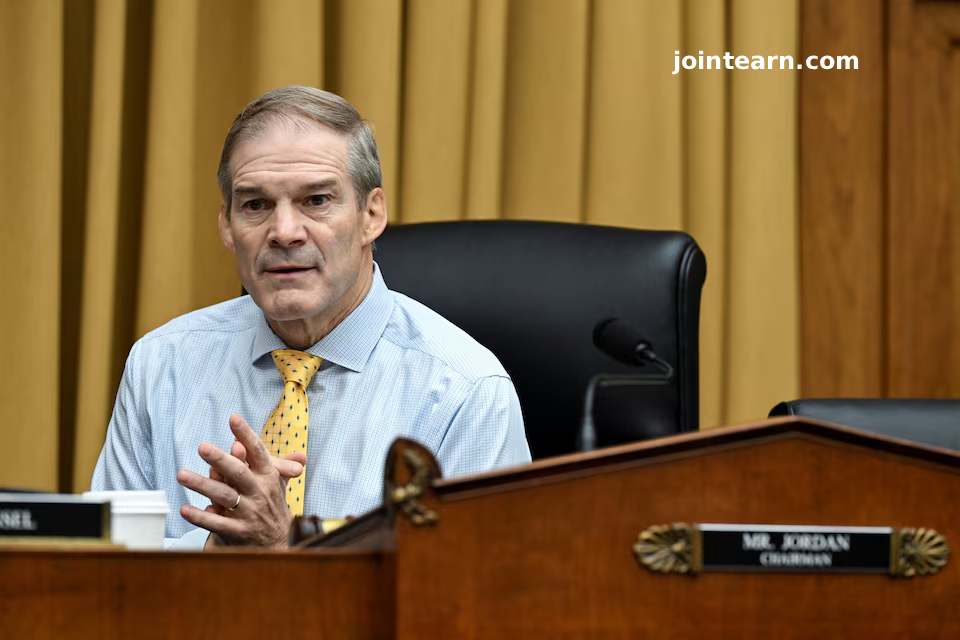
The U.S. House Judiciary Committee has formally requested testimony from Australia’s eSafety Commissioner, Julie Inman Grant, regarding the country’s online safety laws and their potential impact on free speech in the United States. The request, issued in a letter dated November 18, targets Grant’s enforcement of the Online Safety Act (OSA) and her participation in international panels on internet regulation.
House Judiciary Chair Jim Jordan (R-OH) described Grant as a “noted zealot for global takedowns” who, he claims, “threatens the speech of American citizens” by extending the reach of Australian internet regulations beyond the country’s borders.
Congressional Concerns About Australian Internet Oversight
Jordan’s letter cites Grant’s participation in a Stanford University panel of foreign officials who, according to the committee, have “directly targeted American speech” and represent a “serious threat to the First Amendment.” The letter also references her office’s extraterritorial claims to censor content outside of Australia, warning that such actions could impact U.S.-based social media users and platforms.
Several U.S.-based tech companies have recently criticized Australian online rules, including a law banning social media use for children under 16. Elon Musk, owner of X and former adviser to former President Donald Trump, has labeled Grant a “censorship commissar,” specifically citing the upcoming youth social media ban as a form of surveillance enforcement.
Historical Context and Legal Disputes
Jordan’s letter referenced a 2024 case in which the eSafety Commissioner ordered X to remove posts showing footage of a church stabbing in Sydney, which Australian authorities described as terrorism. The case was later dropped, but it highlights the potential intersection of Australian regulations with American online content.
The House Judiciary Committee also expressed concerns over Grant’s ties to Stanford University, which she engaged to evaluate Australia’s social media age restrictions. Jordan warned that these connections are “troubling given the university’s past efforts to facilitate U.S. government censorship of lawful American speech.”
Next Steps
The committee requested that Grant respond by December 2 to schedule a formal interview. While representatives for the eSafety Commissioner have not commented, the Australian Broadcasting Corporation reported that Grant is considering the request and maintains that she has not attempted to restrict what U.S. companies display to American audiences.
This review by Congress reflects broader debates over extraterritorial jurisdiction, global online regulation, and the balance between safety and free expression, highlighting the growing complexity of internet governance in an interconnected world.
Conclusion
The U.S. Congress’s outreach to Australia’s eSafety Commissioner underscores the tension between national internet laws and global free speech principles. As regulators worldwide expand oversight of digital platforms, cross-border disputes over censorship, age restrictions, and content moderation are likely to become increasingly common, prompting lawmakers to scrutinize the international implications of domestic online safety policies.


Leave a Reply