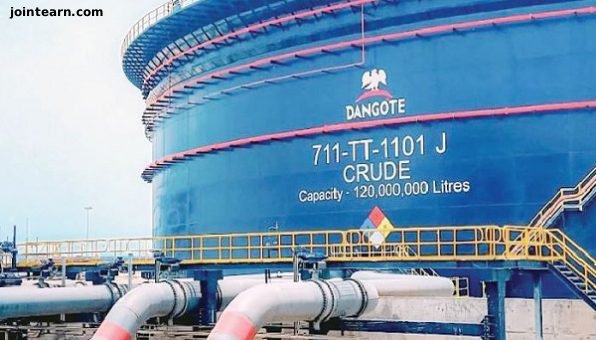
Industry experts have weighed in on the newly launched Dangote Refinery, highlighting its potential benefits as well as early operational challenges.
Dr. Chijioke Ekechukwu, Managing Director of Dignity Finance & Investment Ltd, noted that the refinery’s output could influence economic forecasts for 2024–2025. By relying more on local crude, Nigeria could ease pressure on foreign exchange reserves and boost job creation.
The $19 billion refinery, with a capacity of 650,000 barrels per day, began limited operations this year and is poised to become Africa’s largest if it reaches full capacity. It could also reduce Nigeria’s dependence on imported fuel.
However, domestic crude supply remains a challenge, requiring some imports from the U.S. and Brazil. Analysts point to uncertainties around pricing, regulation, and coordination with the Nigerian National Petroleum Company Limited (NNPCL) as key concerns.
Energy analyst Abdulai Omosunlade emphasized that infrastructure alone cannot solve Nigeria’s energy challenges. “Local refining can conserve foreign exchange and improve supply security, but long-term success depends on transparent pricing, regulatory oversight, and strong institutional controls to prevent market distortions,” he said.
A pricing dispute with petroleum marketers in late 2024 highlighted governance and regulatory issues. Additionally, divestments by international oil companies from onshore and shallow-water assets have increased local participation but created operational challenges related to aging infrastructure, security, environmental compliance, and community relations.
Dr. Ayodele Oni, legal adviser to the Nigerian Electricity Regulatory Commission, cited crude theft and pipeline vandalism as ongoing obstacles affecting production and investment. Omosunlade added that indigenous operators must adopt international standards in governance, safety, and environmental compliance to manage assets effectively.
Key challenges for Nigeria’s energy transition include:
- Clarifying the relationship between Dangote Refinery, NNPCL, and independent marketers.
- Improving security infrastructure.
- Securing sustainable financing for asset maintenance.
- Ensuring policy continuity across administrations.
Regulatory authorities, including NUPRC and NMDPRA, will play a crucial role in overseeing operations, maintaining market competition, and ensuring adherence to standards.
While local refining and indigenous operators present opportunities for energy independence and economic value, experts stress that effective management, strong governance, and sustained regulatory support will determine the sector’s long-term success.


Leave a Reply