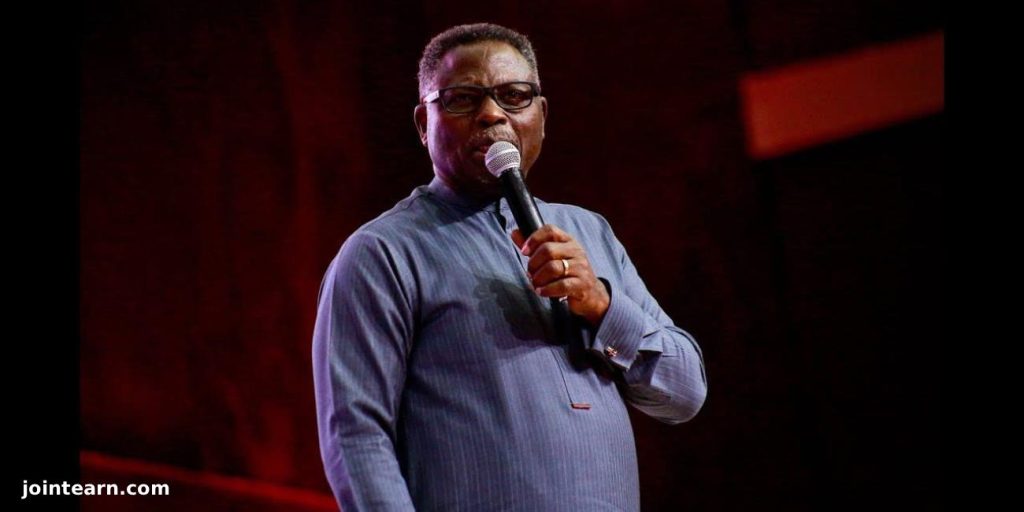
Senior Pastor of Kingsway International Christian Centre (KICC), Matthew Ashimolowo, has reignited national debate over long-standing claims of systemic violence and alleged genocide against Christians and minority ethnic groups in Nigeria.
Speaking with journalists, Ashimolowo argued that Nigeria’s violent history—from the massacres of the 1960s to present-day terror attacks—shows a clear and disturbing pattern of targeted killings, land dispossession, and impunity.
Ashimolowo, who was born in Zaria in 1952 and grew up across Kaduna State, said his views were not influenced by media narratives but by his own lived experiences.
“They didn’t tell me. I saw it,” he said, recalling the anti-Igbo massacres in Zaria during the 1960s, where civilians were dragged from their homes and killed “simply for being Igbo.”
According to him, the violence that followed across subsequent decades—religious riots, ethnic cleansing, and forced displacement—fits the dictionary definition of genocide: a deliberate and systematic killing or persecution of a large number of people from a particular group with the aim of destroying them.
A Multi-Layered National Crisis
Ashimolowo described Nigeria’s security challenges as a “hydra-headed tragedy,” pointing to the convergence of banditry, terrorism, Fulani militia raids, kidnappings, land-grabbing militias, and religious extremism.
He said government inaction allowed these threats to grow uncontrollably:
“Whatever issue was not dealt with became a snake with five heads — or more.”
The pastor listed several violent episodes across decades to support his argument:
- The Maitatsine uprising of the 1980s, which he said openly encouraged the killing of “unbelievers.”
- The Zango Kataf massacres, during which “23,000 people from Southern Kaduna — 99% Christian — were hacked like animals because someone wanted their land.”
- The Kano riots against Reinhard Bonnke, where Christian worshippers were beheaded for attending a crusade.
- Deborah Samuel’s lynching, which he said exposed religious bias in the justice system after “52 lawyers showed up to defend the killers.”
- The murder of evangelist Eunice Olawale in Kubwa, Abuja, while preaching in the early morning.
- Ongoing attacks in Benue, Plateau, Southern Kaduna, and Taraba, where communities are “killed, chased out, and immediately replaced.”
Mailafia’s Allegations Resurface
Ashimolowo also referenced controversial allegations made by late former CBN Deputy Governor Dr. Obadiah Mailafia, who claimed security forces repeatedly failed to intervene while thousands were killed in Southern Kaduna, and that mysterious helicopters supplied the attackers.
“Is that not a plan of genocide?” he asked.
Boko Haram and the Chibok Girls
Turning to Boko Haram’s abduction of 276 Chibok schoolgirls—most of them Christian—Ashimolowo listed six crimes committed against them: rape, trafficking, forced conversion, child marriage, violent assault, and murder.
He criticized the government’s deradicalisation programme for former Boko Haram fighters, questioning how individuals involved in such atrocities could be reintegrated into national security structures.
“How can a man who raped children, killed, trafficked, and forced conversions now qualify to defend the nation?” he asked.
“Who forgave them? Where were they forgiven? Which court? Where is the fruit of repentance?”
“If There Is No Genocide, Explain These Killings”
Ashimolowo insisted that Nigeria must confront the scale and pattern of killings rather than deny them out of political or religious sensitivity.
“We cannot say there is no genocide. But if you insist — answer my questions,” he said.
“We cannot say there is no religious intolerance. If you insist — explain the killings.”


Leave a Reply