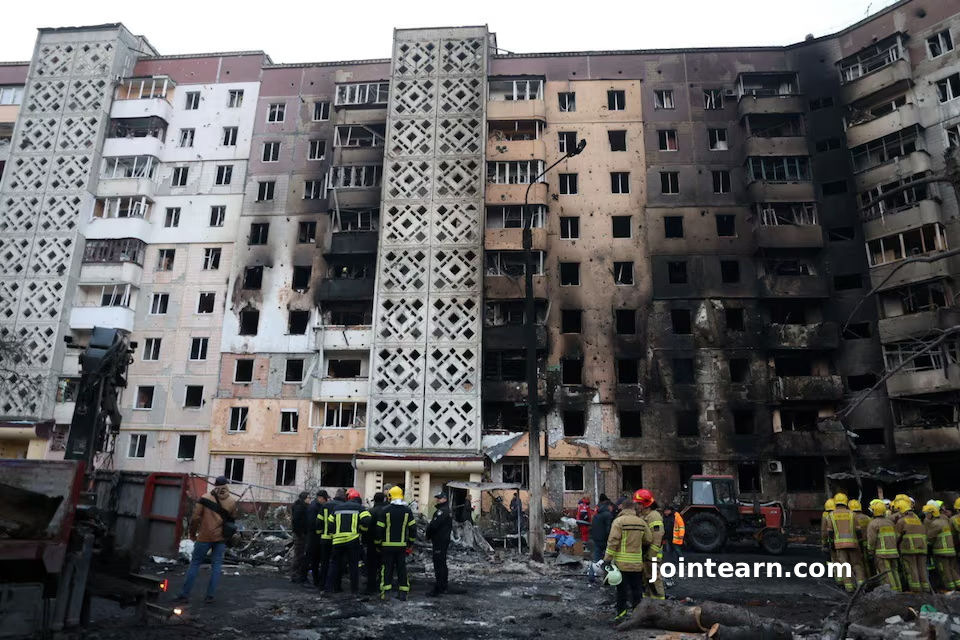
Johannesburg, South Africa/Kyiv, Ukraine – November 22, 2025 – European and Western leaders met urgently on the sidelines of the G20 summit on Saturday to coordinate a response to U.S. President Donald Trump’s peace plan for Ukraine, which sets a Thursday deadline for Kyiv to accept key terms, including territorial concessions and military restrictions. The proposed plan, aimed at ending Russia’s ongoing invasion, has prompted a delicate balancing act for Western capitals, which seek to support peace efforts without undermining Ukraine’s sovereignty.
Tensions Between Kyiv and Western Allies
President Volodymyr Zelenskiy warned that Ukraine faces a choice between losing its dignity and independence or risking U.S. support by rejecting the peace plan. In a national address on Friday, Zelenskiy called for unity among Ukrainians and vowed never to betray the nation, emphasizing that Ukrainian freedom and sovereignty remain non-negotiable.
European leaders—including representatives from the UK, France, Germany, Japan, Canada, Italy, Spain, Norway, the Netherlands, Finland, Ireland, as well as the EU Commission and EU Council—held discussions to determine a coordinated approach. Sources say leaders debated how to support peace negotiations while ensuring Kyiv is not pressured into accepting terms that compromise its core interests.
Key Elements of the U.S. Peace Plan
Trump’s 28-point plan endorses several Russian demands, including territorial concessions by Ukraine, limits on its military capabilities, and the renunciation of NATO membership ambitions. The plan has drawn cautious responses from European capitals, which acknowledge Trump’s intent to end the war but question the acceptability of some provisions for Ukraine.
U.S. Vice President JD Vance commented that any solution must preserve Ukrainian sovereignty and be mutually acceptable to both Ukraine and Russia. He added that it is unrealistic to expect that additional U.S. funding, weapons, or sanctions alone could secure an outright Ukrainian victory.
Ukraine Prepares for High-Stakes Negotiations
Kyiv announced it will hold talks with senior U.S. officials in Switzerland to discuss pathways to ending Russia’s full-scale invasion, now in its fourth year. In a statement, the Ukrainian presidency stressed:
“Ukraine will never be an obstacle to peace, and representatives of the Ukrainian state will defend the legitimate interests of the Ukrainian people and the foundations of European security.”
Meanwhile, Russian President Vladimir Putin described the U.S. plan as a framework for resolving the conflict but may challenge specific proposals, particularly those requiring Russian troop withdrawals from occupied areas.
The coming days will test Zelenskiy’s leadership as he navigates the pressures of international diplomacy while maintaining national unity. He told the nation:
“Now, Ukraine can face a very difficult choice — either losing dignity or risk losing a major partner. I will fight 24/7 to ensure that at least two points in the plan are not overlooked – the dignity and freedom of Ukrainians.”
Implications for the Conflict
The U.S. peace plan has placed European and Western leaders in a race to coordinate their responses, balancing support for Kyiv with the goal of reducing hostilities in Ukraine. How Ukraine navigates this diplomatic challenge could shape the trajectory of the conflict and affect international security, NATO relations, and European stability.


Leave a Reply