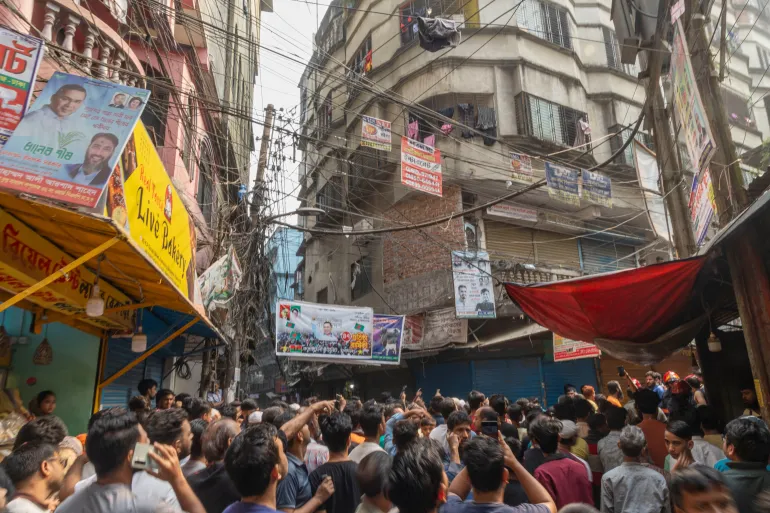
A series of earthquakes has left Bangladesh reeling as the death toll from Friday’s quake rises to 10, with hundreds more injured. The tremors, felt across Dhaka and neighboring districts, have caused widespread panic and structural damage, highlighting the country’s vulnerability to seismic activity.
Friday’s Earthquake and Immediate Impact
On November 21, 2025, a magnitude 5.5 earthquake struck near Bangladesh’s capital, Dhaka, sending residents scrambling for safety. According to disaster management official Ishtiaqe Ahmed, the death toll has now reached 10, with several hundred people reporting injuries.
The earthquake’s effects were particularly severe in densely populated areas. In the old city of Dhaka, rooftops and walls collapsed, forcing residents into the streets. Abdul Goni of AFP captured images of terrified families navigating narrow lanes as debris littered the area.
Omar Faruq from the Bangladesh Meteorological Department confirmed that a minor aftershock of magnitude 3.3 occurred on Saturday morning at 10:36 a.m. local time, with its epicenter in Ashulia, just north of Dhaka. Aftershocks are expected after powerful tremors, but they continue to alarm residents, many of whom are already traumatized by the initial quake.
Residents Share Their Experiences
Shahnaj Parvin, a resident near the epicenter, described the aftermath: “I don’t feel safe yet, as there was another jolt this morning in Ashulia. Cracks have developed in dozens of houses around me.” She recalled how she was hanging her children’s clothes when the tremor struck.
Similarly, Dhaka resident Shadman Sakif Islam described the quake as terrifying: “Small ripples appeared in my coffee before a massive shake hit without warning. My chair and table shook violently for 10-15 seconds—I couldn’t process what was happening.”
These firsthand accounts underscore the widespread fear and disruption caused by the earthquake, even in areas not directly at the epicenter.
Government and Meteorological Response
In response, the Bangladesh government has activated its Emergency Operations Center to coordinate relief efforts, assess structural damage, and ensure timely medical support for affected communities.
Experts note that Bangladesh’s geographical location makes it particularly susceptible to earthquakes. Rubayet Kabir of the Meteorological Department’s Earthquake Observation and Research Centre explained, “While there has not been a massive earthquake in over 100 years, the country remains vulnerable. Small tremors after a major quake are expected, but residents must remain alert.”
The Need for Earthquake Preparedness
Bangladesh’s recent earthquakes highlight the urgent need for disaster preparedness. With a population exceeding 170 million, the risk of casualties in densely populated urban areas is high. Building codes, public awareness campaigns, and emergency response planning are critical to mitigating future risks.
Al Jazeera reporter Tanvir Chowdhury noted from Dhaka, “It was one of the largest earthquakes in recent history, occurring dangerously close to the capital. The city erupted in panic as buildings swayed, and people rushed outdoors.”
As aftershocks continue to be reported, residents across Bangladesh are bracing for further tremors while authorities emphasize safety precautions and ongoing monitoring of seismic activity.


Leave a Reply