In a powerful address to the world’s most powerful economies, Nigerian President Bola Ahmed Tinubu declared that Africa will no longer accept its traditional role as a mere supplier of raw materials and called for a new global framework based on equity and value addition.
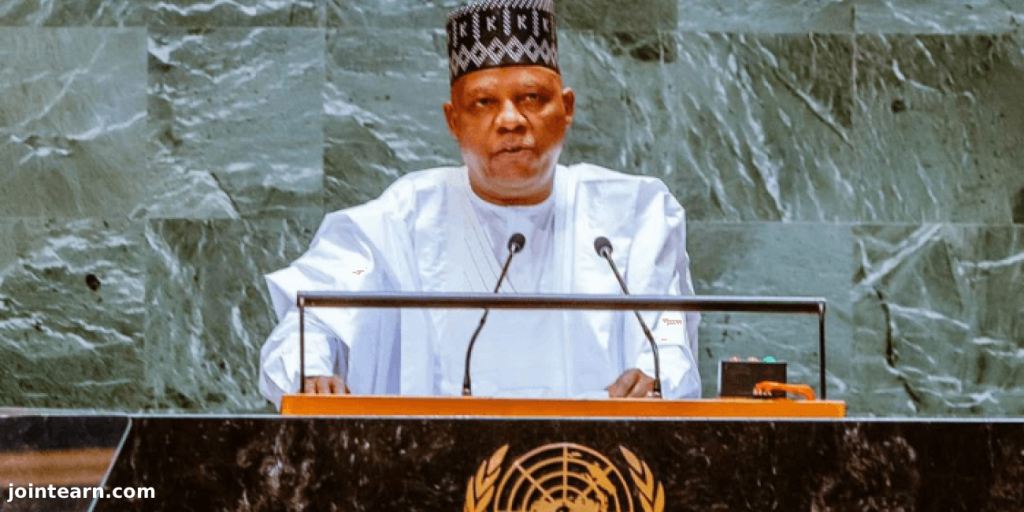
The message was delivered on Saturday by Vice President Kashim Shettima on Tinubu’s behalf during the Third Session of the G20 Leaders’ Summit in Johannesburg. The session, titled “A Fair and Just Future for All: Critical Minerals, Decent Work, Artificial Intelligence,” provided a platform for Tinubu’s direct challenge to the existing global economic order.
“Africa must not merely remain a supplier of raw materials,” Tinubu stated. “We must build a future defined by value creation, innovation, and dignity in work.”
The President’s speech centered on three critical pillars for a fairer partnership with the developed world:
1. Justice for Critical Minerals
Tinubu urged G20 leaders to support a binding global framework that ensures African nations and communities hosting critical minerals benefit directly from their wealth. He argued that the global transition to green energy, which relies heavily on African minerals, must not perpetuate old inequalities.
“Nigeria calls for a global framework that promotes value addition at the source, supports local beneficiation, and ensures that communities hosting these resources are not left behind,” he said. “The issue before us reaches far beyond the narrow arithmetic of economics and speaks to the moral character of the world we aspire to build.”
2. Ethical Guardrails for Artificial Intelligence
Warning of the risks of unchecked technological development, Tinubu voiced Nigeria’s support for a unified global framework governing AI. He emphasized that such standards must uphold safety, transparency, and equity to prevent AI from becoming a force that widens the global inequality gap.
“We must ensure that AI becomes a tool of empowerment, not exclusion; of job creation, not displacement,” he asserted, calling for strategic partnerships to ensure developing nations have equitable access to AI-driven opportunities.
3. Reform of the Global Financial Architecture
In a separate intervention, President Tinubu appealed for urgent reform of the international financial system, which he described as outdated and ill-equipped to address modern challenges. He highlighted how rising debt burdens are crippling African economies and turning local problems into global threats.
“The continent cannot rise on the wings of aspiration alone without confronting the urgent need for sustainable financing,” Tinubu argued, urging the G20 to place debt sustainability at the heart of its development agenda.
The 2025 G20 Summit continues with further deliberations, with Tinubu’s address positioning Africa’s demand for a just economic partnership as a central issue for the gathering.


Leave a Reply