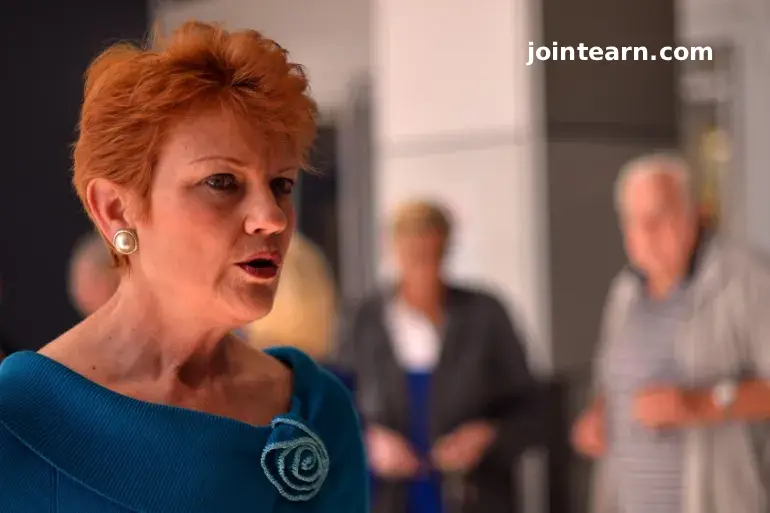
A major political controversy has erupted in Australia after far-right politician Pauline Hanson entered the Senate chamber wearing a burqa, reigniting debate over religious freedom, racism, and national identity. Her actions, widely denounced across the political spectrum, were part of her ongoing campaign to ban the wearing of full-face coverings in public.
Burqa Stunt Sparks Outrage in Parliament
Hanson, the leader of the One Nation Party, drew immediate condemnation when she appeared in the chamber dressed in a full black burqa. Her intention was to protest the Senate’s refusal to allow her to introduce a bill aimed at banning the garment and similar face coverings throughout Australia.
The dramatic entrance halted parliamentary proceedings when Hanson refused to remove the garment, prompting lawmakers to accuse her of a political stunt designed to provoke fear and division.
Senator Mehreen Faruqi, the first Muslim woman elected to Australia’s upper house and a member of the Greens, strongly condemned the act. She called it “a racist senator displaying blatant racism and Islamophobia,” arguing that such theatrics have no place in Australia’s democratic institutions.
Independent Senator Fatima Payman, also Muslim, described Hanson’s behaviour as “disgraceful” and deeply disrespectful to the millions of Muslims living in Australia. Payman stressed that such acts only perpetuate harmful stereotypes and alienate communities.
Government Responds: ‘Not Worthy of the Senate’
Penny Wong, leader of the government in the Senate, labelled Hanson’s actions “not worthy of a member of the Australian Senate.” Wong moved to suspend Hanson, emphasising that using religious garments as political props undermines the dignity of the chamber and the multicultural fabric of the nation.
A Long History of Anti-Immigration Politics
This is not the first time Hanson has worn a burqa in the Senate. She previously staged a similar event in 2017, which was also widely criticized by politicians, community leaders, and advocacy groups.
Hanson rose to prominence in the 1990s with her fiery opposition to immigration—particularly from Asia—and by campaigning against asylum seekers. Over the years, her One Nation party has continued promoting far-right policies centred around nationalism, strict immigration controls, and cultural assimilation.
Her party has recently seen a rise in support, doubling its Senate representation to four seats in the most recent election, signalling growing traction for her controversial messaging.
Hanson Defends Her Actions
In a statement posted on Facebook, Hanson defended her burqa display, claiming it was a response to the Senate’s decision to reject her bill. She argued that the burqa is an “oppressive” garment and suggested it poses a “national security risk.”
Critics, however, accused her of misrepresenting Islamic practices and exploiting fear for political gain.
A Renewed Debate on Religious Freedom and Racism
The incident has once again thrust Australia’s multicultural policies into the national spotlight, raising questions over religious rights, freedom of expression, and the role of political leaders in maintaining social cohesion.
Community groups and human rights advocates warn that such stunts contribute to an increasingly hostile climate for Muslims in Australia, particularly women who wear religious attire.
As Australia continues grappling with issues of identity, diversity, and integration, Hanson’s actions have intensified discussions about how political rhetoric can shape public attitudes—and how far-right movements are influencing mainstream political discourse.


Leave a Reply