Italy has passed a historic law officially adding “femicide”—the intentional killing of women and girls because of their gender—to its national criminal code. The new legislation, unanimously approved by parliament on Tuesday, establishes life imprisonment as the maximum punishment for the crime.
The decision represents a major step in Italy’s evolving strategy to address and reduce violence against women, an issue that has drawn national and international concern in recent years.
Prime Minister Giorgia Meloni, who strongly supported the measure, called the vote a sign of “political cohesion against the barbaric nature of violence against women,” according to Italian public broadcaster RAI.
Meloni Government Pushes Broader Protections for Women
The adoption of femicide as a specific criminal offense aligns with the Meloni administration’s efforts to strengthen protections for women across Italy. Her government has already backed legislation targeting stalking, harassment, and domestic violence, and lawmakers are currently debating a related bill that would define sexual intercourse without “free and actual consent” as a criminal offense.
According to Meloni, the government has made “concrete steps forward” by:
- Doubling funding for anti-violence centers and shelters
- Supporting a nationwide emergency hotline
- Investing in education and public awareness campaigns
“These are important steps, but we won’t stop here,” Meloni said, emphasizing that Italy must continue expanding prevention and protection programs.
Law Passed on UN Day for the Elimination of Violence Against Women
The timing of the vote was symbolic: it took place on the United Nations’ International Day for the Elimination of Violence Against Women, underscoring Italy’s commitment to global gender-equality standards and human rights initiatives.
Data from Italy’s national statistics agency shows that 106 women were killed in 2024, with 62 cases involving a partner or former partner, reflecting broader global patterns. UN Women reports that nearly two-thirds of female homicides worldwide are perpetrated by intimate partners or family members.
High-Profile Cases Fuel Public Demand for Stronger Measures
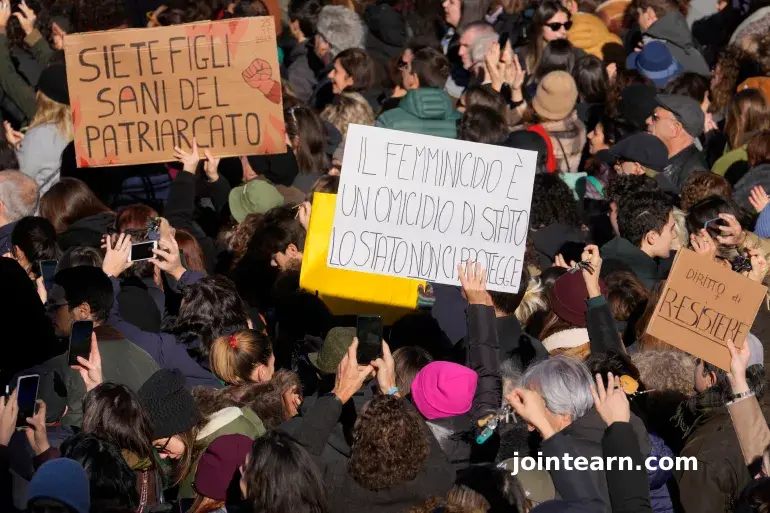
Public attention on gender-based violence intensified in Italy following the 2023 killing of 22-year-old university student Giulia Cecchettin, a case that sparked widespread protests, candlelight vigils, and national conversations about safety and justice for women. The perpetrator received a life sentence, renewing calls for systemic reform.
Rights Groups Call for Prevention, Not Just Punishment
Despite widespread political support for the new femicide law, several Italian rights organizations argue that focusing solely on criminal penalties is not enough to stop violence before it occurs.
The feminist movement Non Una di Meno (Not One Less) said that while tougher punishments send an important message, the government must also prioritize sexual and emotional education, as well as policies that promote the economic independence of women.
Italy remains one of the few EU countries without mandatory, nationwide sexual education in public schools; many programs require parental permission, limiting access for students.
Advocacy groups say comprehensive education is essential for changing cultural attitudes and addressing the root causes of gender-based violence.


Leave a Reply