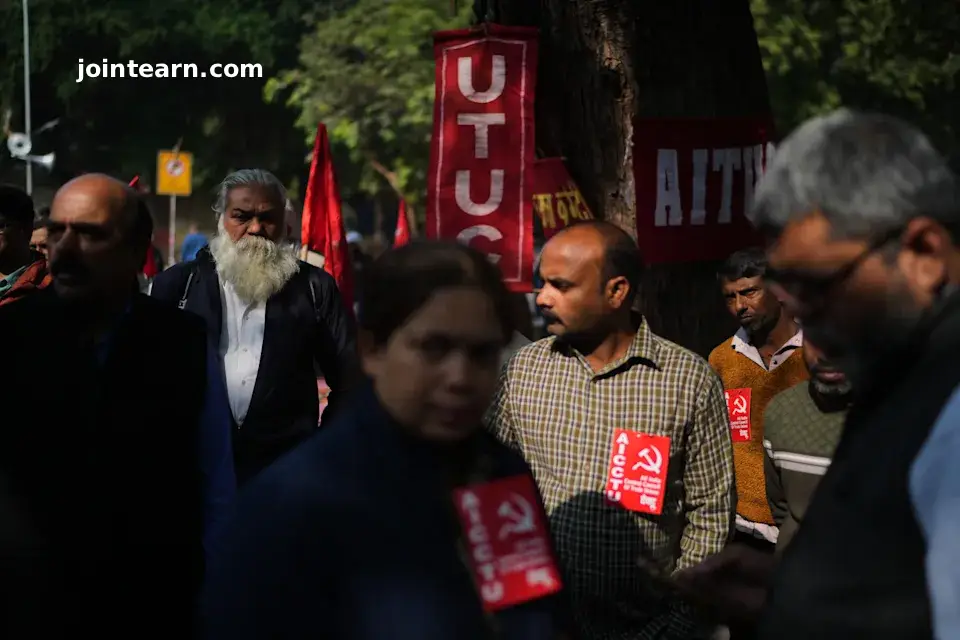
A coalition of 10 major Indian trade unions launched widespread protests across the country on Wednesday, expressing strong opposition to the government’s newly enacted labor codes. Trade union leaders described the reforms as a “deceptive fraud” against workers, sparking demonstrations in several cities, including the national capital, New Delhi.
This marks the first coordinated nationwide action since the new labor codes officially came into effect last week, highlighting escalating tensions between the unions and the government over labor rights, economic reforms, and job security.
Trade Unions Raise Alarm Over Worker Protections
Unions representing millions of workers and farmers have criticized the new framework, arguing it undermines long-standing protections. Key concerns include:
- Erosion of job security
- Weakening of collective bargaining powers
- Increased employer control over workforce policies
Tapan Sen, General Secretary of the Centre of Indian Trade Unions (CITU), said:
“Workers’ rights are being bulldozed, and the government is justifying the move with a barrage of lies that the codes will benefit laborers.”
Similarly, Amarjeet Kaur, General Secretary of the All India Trade Union Congress (AITUC), warned that the new laws could push workers “back to the colonial era,” restricting their ability to form unions or strike.
Overview of the New Labor Codes
The government consolidated 29 labor laws into four comprehensive codes, covering:
- Wages
- Industrial relations
- Social security
- Occupational safety
According to officials, these reforms aim to simplify compliance, reduce administrative fragmentation, and enhance workers’ access to social protections, including:
- Compulsory appointment letters for all employees
- Fixed salary payment timelines
- Security provisions for women working night shifts
- Social security benefits extended to gig workers and the unorganized sector
- Fixed-term employees granted parity with permanent staff, including leave, maternity benefits, and one-year service payouts
Despite these assurances, unions claim that the codes favor employers, pointing to provisions that allow easier layoffs in larger firms, expanded fixed-term employment, and stricter rules for union formation or strike action.
Government’s Perspective
The Indian government defends the new labor codes as modern and necessary reforms. Officials argue that:
- Outdated labor laws hinder investment and formal job growth
- Simplified codes will boost operational efficiency and attract domestic and foreign businesses
- Over time, these changes are expected to create secure employment opportunities and expand the formal workforce
However, the government has not issued a direct response to Wednesday’s strike, often dismissing union criticism as politically motivated.
Nationwide Impact of the Protests
Wednesday’s demonstrations drew large crowds, including elderly union members and gig workers, across multiple states. Union leaders delivered speeches, and participants raised slogans demanding the government reconsider the reforms.
Observers note that these protests reflect deep-seated concerns among India’s working population over the balance between economic liberalization and worker protections. Analysts suggest that if tensions persist, additional strikes and legal challenges could follow.
Conclusion
The rollout of India’s new labor codes has triggered unprecedented nationwide protests, highlighting friction between labor unions and the government. While the government promotes the reforms as a step toward modernization, unions argue that essential worker protections are being compromised.
The coming months will reveal whether dialogue between the government and unions can resolve the impasse, or if labor unrest will continue to escalate across the country.


Leave a Reply