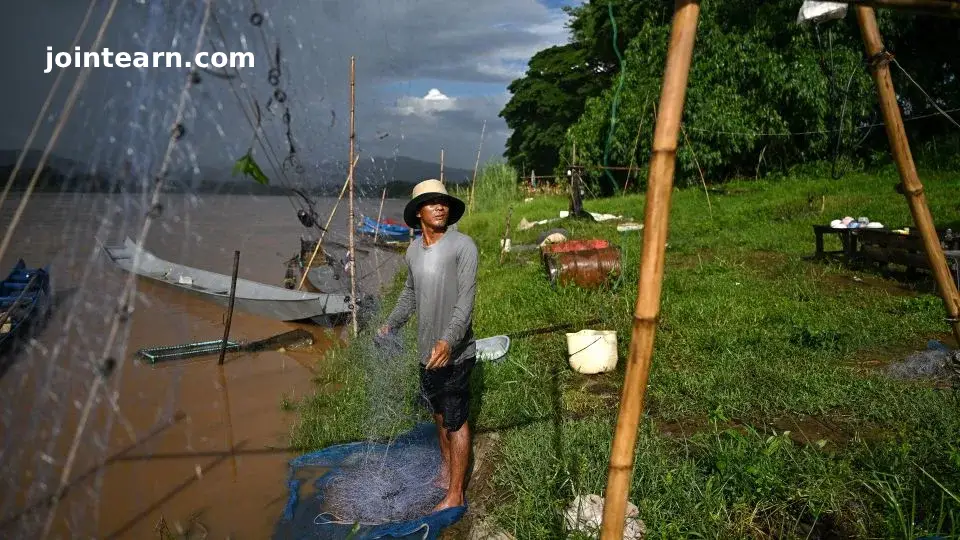
Global demand for rare earth minerals is wreaking havoc on Southeast Asia’s Mekong River, threatening the livelihoods and health of tens of millions of people who rely on the waterway. From agriculture to fisheries, the river serves as a lifeline for approximately 70 million residents across six countries, including Myanmar, Thailand, Laos, Cambodia, Vietnam, and China.
Rare earth elements, essential for everything from electric vehicle batteries to smartphones, MRI scanners, and wind turbines, are driving a mining boom that is largely unregulated and environmentally destructive, particularly in conflict-affected regions of Myanmar.
Toxic Pollution Threatens the Mekong River
According to research by the Stimson Center, over 2,400 mining sites across mainland Southeast Asia are releasing dangerous pollutants such as cyanide, mercury, arsenic, and other heavy metals into rivers, tributaries, and floodplains. The Mekong and its tributaries—including the Kok River along the Thailand-Myanmar border—have been particularly affected, raising concerns about ecosystem collapse and human exposure to deadly toxins.
- Cyanide poisoning can cause seizures, comas, and cardiac arrest.
- Mercury accumulates through the food chain, affecting plants, fish, and humans.
- Heavy metals threaten wildlife, rice production, and food security in the region.
Communities dependent on the river, including subsistence farmers and fishermen, report contaminated fish and water, making food production increasingly hazardous.
Mining Boom Amid War and Weak Regulation
Myanmar accounts for almost 80% of unregulated mining activity identified in the Stimson study. Mining has flourished in areas with lax governance, corruption, and ongoing armed conflicts. The 2021 military coup intensified mining operations, particularly in Kachin and Shan states, where ethnic armed groups control territories and oversee extraction.
These operations are profitable but dangerous, providing cash for militias and fueling conflicts, human trafficking, and labor exploitation. Mining methods such as alluvial mining, in-situ leaching, and heap leaching are heavily reliant on toxic chemicals, which often seep directly into waterways.
China’s Role in Rare Earth Mining
China controls over 90% of refined rare earth production worldwide and plays a dominant role in Myanmar and Laos mining operations. Chinese managers and technical staff often run the mines, and minerals extracted in Myanmar are exported to China for processing.
China has also maintained influence over ethnic militias and the Myanmar military junta, shaping both the economic and political dynamics of the region. Meanwhile, the United States is attempting to diversify its rare earth supply, signing memorandums with Southeast Asian nations to reduce dependence on Chinese imports.
Environmental and Humanitarian Consequences
The Mekong River, once seen as a relatively clean and sustainable ecosystem, now faces unprecedented ecological pressure. Researchers warn that continued unregulated mining could lead to:
- Collapse of local fisheries and rice production
- Long-term health risks from exposure to heavy metals
- Worsening poverty and food insecurity for millions living along the river
- Loss of biodiversity and ecosystem stability
Pai Deetes, executive director of the River and Rights Foundation, described Southeast Asia as a “sacrifice zone” for global demand, emphasizing that human rights and environmental standards are being ignored while the region feeds the world’s technological and energy supply chains.
Urgent Call for Action
Researchers and environmentalists are urging immediate testing and monitoring of rivers and floodplains to understand the full extent of contamination and implement mitigation strategies. Without intervention, the Mekong River could become a stark example of the environmental and social cost of global rare earth dependency.
Brian Eyler, director of the Stimson Center’s Southeast Asia and Energy, Water, and Sustainability programs, warned:
“The Mekong could serve as a case of how not to go about rare earth mining… hundreds of millions of people could be affected if this continues unchecked.”


Leave a Reply