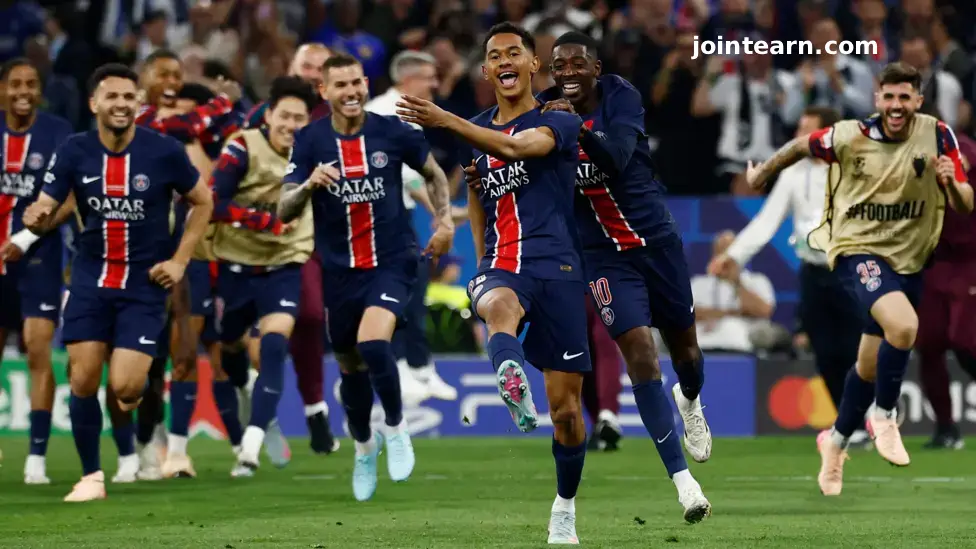
Paris Saint-Germain are undergoing one of the most meaningful identity shifts in their modern era. After more than a decade defined by superstar signings and global glamour, the reigning European champions are increasingly placing their trust in homegrown Parisian talent—and the change is already paying off both domestically and in Europe.
For years, academy players struggled to break through at PSG. Aside from rare cases like Mamadou Sakho, Presnel Kimpembe, and Adrien Rabiot, the Qatari-owned era was dominated by high-profile arrivals. Talented prospects such as Kingsley Coman and Mike Maignan departed without the chance to establish themselves in the capital.
But now, PSG have moved decisively away from that “bling-bling” approach. The arrivals of Ousmane Dembélé and Désiré Doué, combined with last season’s treble triumph, signaled a new direction. And with the squad hit by a severe early-season injury crisis—affecting stars like Dembélé, Doué, and Achraf Hakimi—that shift has accelerated even further.
At times this season, up to five academy products from the Paris region have appeared in the matchday squad, illustrating a deep cultural reset.
PSG’s New Campus: A Foundation for Sustainable Success
Much of this evolution stems from infrastructure. Two years ago, PSG left their historic Camp des Loges base to move into the groundbreaking PSG Campus, a cutting-edge 59-hectare training facility.
The new headquarters include:
- 16 professional-level pitches
- Accommodation for 140 academy players
- Education spaces and classrooms
- Integrated training for men’s, women’s, and youth teams
- Even a vegetable garden promoting sustainable living
Sporting advisor Luis Campos calls the facility the backbone of the club’s future. Speaking at an event celebrating 50 years of PSG’s academy, Campos explained:
“The idea is to have players in every age group who can climb the steps.”
He means that literally: the four-tier complex places the senior team at the top, symbolizing the pathway every academy player can aspire to.
Campos emphasized that the days of relying on the transfer market are fading:
“Going to the supermarket often doesn’t make you a better cook. What matters is going in the right direction, not stockpiling players.”
Luis Enrique’s Philosophy: Play Young Talent When They’re Ready
Luis Enrique’s arrival has been central to PSG’s youth-first approach. Campos revealed that the Spanish manager quickly established his “principles of play” with academy coaches—focused on identity, not rigid instructions.
Known for his commitment to young players, Enrique has handed opportunities to several prospects:
- Warren Zaïre-Emery
- Senny Mayulu
- Quentin Ndjantou
- Ibrahim Mbaye
- Mathis Jangeal
The shift has already produced iconic moments. In October’s surprise 2–1 win over Barcelona, 19-year-old Senny Mayulu led the line and scored against the Catalan giants.
Mayulu also grabbed PSG’s fifth goal in their Champions League final victory over Inter, cementing himself as one of the brightest young stars in Europe.
The Rise of Parisian Wonderkids
Senny Mayulu: The Multi-Position Gem
Mayulu’s versatility has made him indispensable. Though a midfielder by trade, he has featured as:
- Right-back
- Central midfielder
- Centre-forward
His adaptability has allowed him to make more than 50 senior appearances before his 20th birthday.
Academy director Yohan Cabaye praises Mayulu’s resilience:
“He struggled to complete full seasons because of injuries, but his strength of character always brought him back.”
Warren Zaïre-Emery: The Exceptional Benchmark
Zaïre-Emery, PSG’s youngest-ever player, now captains the team at just 19. Although he spent stretches of last season battling form, he has rediscovered his explosive level and returned to the France national team.
The Paris-born star credits the under-21 side for helping him reset:
“I’ve focused on myself, kept going, and worked hard.”
Cabaye acknowledges Zaïre-Emery’s uniqueness:
“We can’t use him as a benchmark. Otherwise, we’d have 20 sixteen-year-olds knocking on Luis Enrique’s door.”
Still, he remains the symbol of PSG’s homegrown resurgence.
Strengthening the Parisian Talent Pipeline
PSG’s challenge now is protecting local prospects from being poached by rivals. With 30 to 40 scouts attending some youth matches, the competition is fierce.
Cabaye says PSG have expanded their scouting presence across Greater Paris—Europe’s most prolific talent region—to secure the next generation before other clubs do.
The academy’s recent results show the system is thriving. PSG’s under-19s defended their league title and performed strongly in Europe, attracting even more attention to their emerging stars.
Challenges Behind the Scenes
Not everything has been perfect. A recent inspection by France’s labour authority highlighted administrative and workload issues within the academy. Cabaye acknowledged the findings but insisted:
“We have nothing to hide. It mainly showed we need better communication.”
He emphasized that staff wellbeing and youth development remain top priorities.
The Future: Homegrown Stars Leading the European Title Defense
As PSG prepare to face Tottenham, academy graduates are once again expected to play major roles. The win over Barcelona showed they are more than capable of handling high-pressure moments.
With the club committed to developing Parisian talent, supported by world-class facilities and a manager willing to trust youth, PSG may have finally found the sustainable model they’ve been searching for.
And as they seek to defend their European crown, it could be homegrown players—not global stars—who define PSG’s future.


Leave a Reply