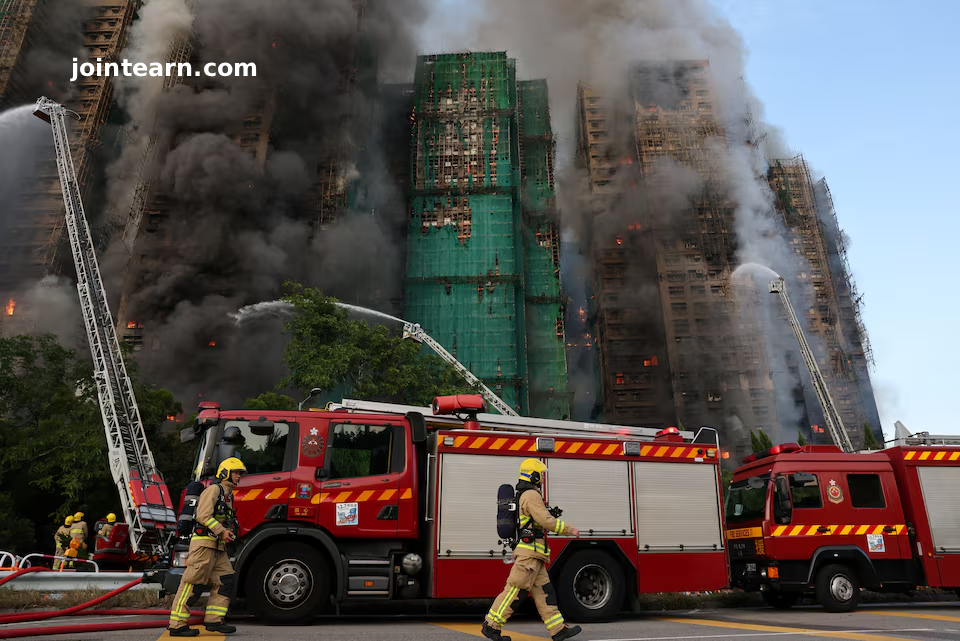
HONG KONG, November 26, 2025 – Hong Kong’s deadliest fire in three decades has drawn attention to the risks of using bamboo scaffolding and mesh for building construction, a centuries-old practice that remains widespread in the city despite modern alternatives. The blaze at the Wang Fuk Court housing estate in Tai Po resulted in at least 36 deaths, with flames spreading rapidly across bamboo lattices and green construction netting.
Traditional Use of Bamboo in Hong Kong Construction
For decades, bamboo has been the scaffolding material of choice in Hong Kong, prized for being cheap, abundant, and flexible. Bound together with nylon cords, bamboo scaffolds allow small teams of workers to climb tall facades and complete projects in weeks. This traditional craft originated in mainland China, where bamboo has been a symbol of grace and durability, historically even used in the construction of the Great Wall.
Despite its historical significance, mainland China has largely phased out bamboo scaffolding in favor of sturdier metal scaffolds and clamps. Hong Kong, however, still employs around 2,500 registered bamboo scaffolding masters, compared with three times as many metal scaffolders. Bamboo scaffolds are often combined with green construction mesh to prevent debris from harming pedestrians, as was the case in Tai Po.
Government Response and Investigations
Hong Kong leader John Lee announced that a task force has been established to investigate the cause of the fire. “The Buildings Department’s independent review unit will investigate whether the building’s exterior walls meet fire retardant standards,” Lee said. “If there is any wrongdoing, we will pursue accountability in accordance with laws and regulations.”
Authorities have also promised special checks on ongoing projects, focusing on whether scaffolding mesh materials meet fire retardant and other safety standards. In March, the government mandated that 50% of new public works contracts must use metal scaffolding, primarily for worker safety rather than fire prevention.
Despite repeated incidents, including a massive bamboo scaffolding fire at Chinachem Tower in Central in October 2025, the government has not banned bamboo scaffolds. According to the Hong Kong Labour Department, there were 22 deaths involving bamboo scaffolders between 2019 and 2024, underscoring ongoing safety concerns.
Fire Safety Concerns and Public Warnings
Experts and whistleblowers have long warned of the fire hazards associated with bamboo scaffolding. Protective nets and tarpaulins installed on scaffolds are required to have appropriate fire retardant properties under Hong Kong’s Code of Practice for Bamboo Scaffolding Safety. Jason Poon, a whistle-blower, reported multiple sites with non-fire-retardant scaffolding nets to government authorities last year, but his warnings were ignored.
This latest tragedy has renewed calls for stricter building safety regulations and increased adoption of metal scaffolding and fire-retardant materials across Hong Kong’s construction industry.
Broader Implications
The Tai Po fire demonstrates the ongoing risks of traditional scaffolding methods in modern urban environments. As Hong Kong continues to grow as a financial hub with towering skyscrapers, authorities face increasing pressure to modernize construction practices, enforce stricter safety standards, and prevent further loss of life from highly flammable bamboo scaffolds.


Leave a Reply