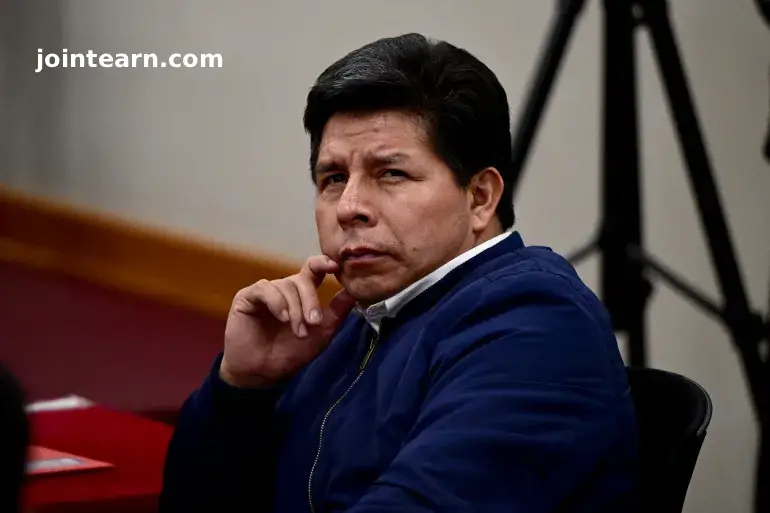
In a landmark ruling that has sent shockwaves across Peru and Latin America, former President Pedro Castillo has been sentenced to 11 years, five months, and 15 days in prison for attempting to dissolve Congress during his tumultuous presidency. The verdict, delivered on November 27, 2025, comes nearly three years after Castillo’s controversial move to disband the legislature, which he attempted on December 7, 2022, in the face of a third impeachment process.
Background: Castillo’s Failed Attempt to Dissolve Congress
Pedro Castillo, who served as President of Peru from 2021 to 2022, made headlines in December 2022 when he appeared on national television announcing a state of emergency and attempting to suspend Congress. His actions were widely described as a “self-coup”, a direct challenge to Peru’s constitutional order. The move followed two unsuccessful impeachment attempts against him.
Castillo, a former teacher and union leader from the rural north of Peru, argued that his televised announcement was simply the reading of “a document without consequence.” Nevertheless, Congress acted swiftly, voting for his removal and prompting his immediate arrest.
Charges and Trial
The Peruvian judiciary charged Castillo with rebellion and conspiracy against the state, accusing him of undermining the Constitution in an effort to consolidate power. Prosecutors highlighted the gravity of his actions, noting that Castillo could have faced up to 34 years in prison.
The trial, which spanned nine months, featured intense scrutiny both domestically and internationally. Castillo’s defense maintained that his actions were lawful and non-threatening, but the court ultimately disagreed. Castillo has been denied the option of house arrest, a decision highlighting the court’s view of the seriousness of his alleged crimes.
Castillo’s Presidency and Political Turmoil
Castillo’s presidency, lasting approximately 16 months, was marked by political instability, frequent cabinet reshuffles, and ongoing clashes with the opposition-led Congress. Known as the “president of the poor” due to his working-class roots in Puna, Castillo’s rise to power was seen as a symbol of hope for many marginalized communities in Peru.
His removal and arrest sparked protests nationwide, particularly among Indigenous communities and rural populations in southern Peru. The unrest persisted for years, with violent crackdowns under his successor, former Vice President Dina Boluarte, resulting in at least 50 fatalities. The Inter-American Commission on Human Rights (IACHR) condemned the Peruvian government’s response as involving “disproportionate, indiscriminate, and lethal use of force.”
Boluarte, Peru’s first female president, was subsequently impeached in October 2025 over rising crime concerns and alleged misconduct. She was replaced by right-wing politician Jose Jeri, who previously served as President of Congress.
Diplomatic Tensions and Legal Precedents
The trial also caused diplomatic friction, notably when the Mexican embassy granted asylum to Castillo’s former Prime Minister, Betssy Chavel. Peru responded by declaring Mexican President Claudia Sheinbaum persona non grata, highlighting the broader international implications of Castillo’s trial.
Castillo will serve his sentence at Barbadillo Prison in Lima, a facility designed to hold former heads of state who may be at risk in standard prisons. Other inmates at Barbadillo include former presidents Ollanta Humala, Alejandro Toledo, and Martin Vizcarra, who are serving sentences for corruption, bribery, and money laundering.
Implications for Peru’s Political Landscape
The sentencing of Pedro Castillo underscores the ongoing volatility in Peruvian politics. With eight presidents in the past decade, the country continues to face challenges in political stability, governance, and public trust in institutions. Castillo’s trial and conviction serve as a stark reminder of Peru’s struggle to balance democracy with accountability at the highest levels of government.
As Peru navigates this period of political turbulence, analysts predict that the repercussions of Castillo’s imprisonment will influence upcoming elections, social movements, and international relations across Latin America.


Leave a Reply