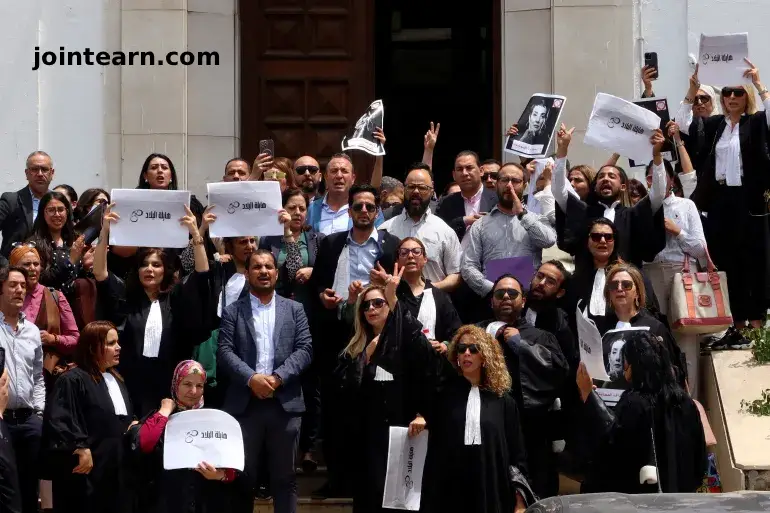
Tunisia has released Sonia Dahmani, a prominent lawyer, media commentator, and vocal critic of President Kais Saied, after spending a year and a half behind bars. Dahmani’s imprisonment drew local protests and widespread international condemnation, highlighting growing concerns over Tunisia’s crackdown on dissent.
Dahmani, widely regarded as one of Tunisia’s leading voices of opposition, was convicted for comments made during a television appearance, in which she criticized government policies toward undocumented African refugees and migrants. She questioned whether some migrants might try to “conquer” Tunisia and highlighted the frustration of Tunisian youth. A court ruled that her remarks insulted the nation and spread false information intended to harm Tunisia.
Release and Reactions
As Dahmani left prison in Manouba near Tunis, supporters, family members, and activists chanted, “The police state’s era of repression is over.” Dahmani expressed hope that her release would signal an end to the hardships faced by herself and other prisoners, saying:
“I hope this is the end of the nightmare for me and all the other prisoners.”
Her lawyer, Sami Ben Ghazi, confirmed that the justice minister issued a release order under a system allowing prisoners to apply for early release after serving half of their sentences.
The National Syndicate of Tunisian Journalists welcomed her freedom and called for the release of other detained journalists. Local and international rights groups emphasized that Dahmani’s imprisonment reflected a worsening crackdown on political dissent and freedom of expression in Tunisia.
Context: Saied’s Crackdown on Opposition
Since July 2021, President Kais Saied has concentrated power in the executive branch, suspending parliament and ruling by decree. A 2022 referendum and new constitution further entrenched Saied’s powers. During this period, many media figures, lawyers, and opposition activists have been prosecuted under a controversial “fake news” law.
Amnesty International recently warned that the crackdown on rights groups has reached critical levels, with arbitrary arrests, asset freezes, banking restrictions, and NGO suspensions affecting 14 organizations. Human Rights Watch reported that over 50 individuals, including politicians, lawyers, journalists, and activists, have faced arbitrary detention or prosecution since late 2022.
Targeting of Political Figures
Saied’s government initially focused on the Ennahdha Party, jailing its leader, former Parliament Speaker Rached Ghannouchi, in cases deemed politically motivated by his supporters. Even former allies of the president have faced imprisonment: Nadia Akacha, Saied’s former chief of staff, was sentenced in absentia to 35 years in prison in July.
International Attention
Dahmani’s release is being closely watched as a potential signal of easing political repression in Tunisia. However, many rights organizations caution that freedoms remain under threat, and Tunisia continues to face international scrutiny for its treatment of political opponents and independent media.


Leave a Reply