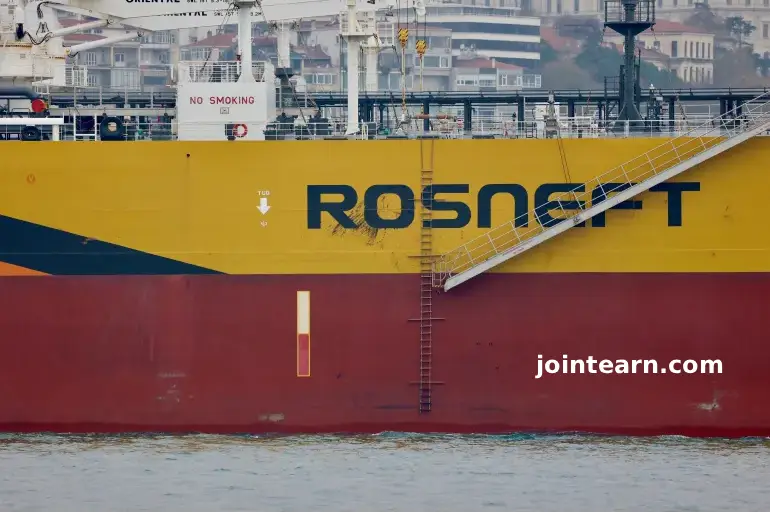
A new report from the Helsinki-based think tank Centre for Research on Energy and Clean Air (CREA) reveals that Russia’s “shadow vessels” are increasingly using false flags to bypass international sanctions imposed over the war in Ukraine.
According to the report, 113 Russian ships sailed under a false flag during the first nine months of 2025, transporting 11 million tonnes of oil valued at €4.7 billion ($5.4bn).
Shadow Fleet Growth Raises Alarms
“The number of Russian ʻshadowʼ tankers sailing under false flags is now increasing at an alarming rate,” said CREA co-author Luke Wickenden. He noted that €1.4 billion ($1.6bn) worth of Russian crude oil and oil products passed through the Danish Straits in September alone under false flags.
These vessels are primarily transporting sanctioned commodities, particularly crude oil, while flying the flags of other nations to avoid scrutiny. Under international law, ships must sail under a flag that grants them legal jurisdiction, a system exploited by countries offering open registries with lower regulatory oversight.
False Flagging Practices
CREA’s analysis found that 96 sanctioned vessels had flown a false flag at least once this year. Meanwhile, 85 vessels had changed flags at least twice within six months of being sanctioned by the EU, US Office of Foreign Assets Control (OFAC), or the UK.
Moreover, six flag registries that previously had no Russian ships registered now each have at least 10 vessels, totaling 162 shadow vessels in the fleet. The think tank noted that operators exploit regulatory loopholes and weak maritime governance in economically weaker countries to transport what it called “blood oil.”
Calls for Regulatory Reform
CREA urges the EU and UK to reform their flagging regulations to curb the growth of shadow fleets. Data for the report came from the Equasis maritime safety platform and cross-referenced with the IMO Global Integrated Shipping Information System (GSIS).
Experts warn that Russia is adopting “more evasive techniques”, including the use of so-called zombie vessels, which re-use registration numbers of retired ships. Rachel Ziemba, senior fellow at the Center for a New American Security, emphasized that while sanctions are expanding, enforcement is increasingly difficult without targeting intermediaries, buyers, or stopping ships at sea—a move that carries political and military risks.
With sanctions enforcement becoming harder, CREA and analysts warn that Russia’s shadow fleet could continue to move massive volumes of oil despite EU and US efforts, potentially undermining the impact of international measures.


Leave a Reply