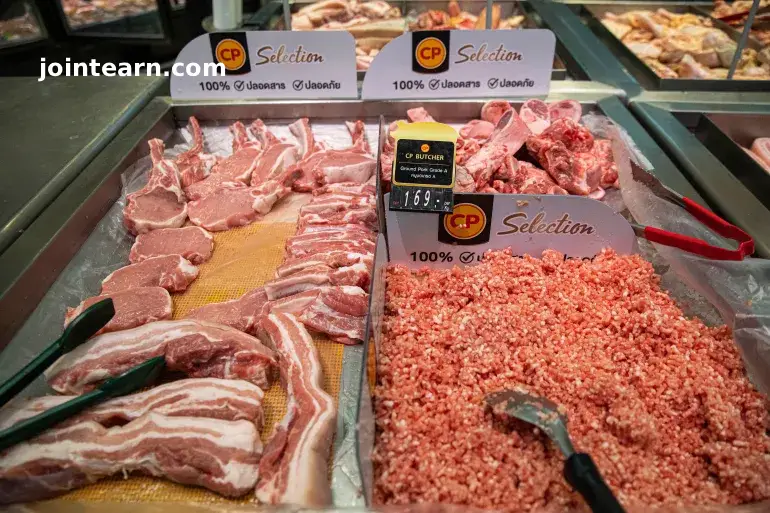
Bangkok, Thailand – Thailand’s $3 billion pork market, nearly entirely supplied by domestic pig farmers, is bracing for intense competition from the United States if Washington secures duty-free access under a preliminary trade agreement.
The trade deal, discussed between US President Donald Trump and Thailand’s caretaker Prime Minister Anutin Charnvirakul, includes a 10,000-item list of US goods seeking preferential access. These include pork, corn, soybeans, and certain fruits, aimed at reducing the US trade deficit with Thailand.
Domestic Industry Concerns
Thai farmers are concerned that cheap, subsidized US pork, often fattened with ractopamine, could undercut local producers.
“Producers will not be able to survive and will stop raising pigs,” said Worawut Siripun, deputy secretary-general of the Swine Raisers Association of Thailand, highlighting the broader impact on feed crop growers, feed suppliers, and veterinary drug sellers.
Thailand’s pork industry already faces high feed costs, partly due to government price controls on corn and soy, while US producers benefit from much lower input costs. Recent government decisions to lift corn import limits and remove tariffs appear aimed at satisfying Washington, but have heightened domestic industry fears.
Political and Economic Context
The trade discussions have been affected by a suspended ceasefire agreement with Cambodia, which Trump tied to trade negotiations. Meanwhile, Thailand’s economic growth forecast for 2026 has been revised down to 1.2 percent, signaling challenges for the broader agricultural sector.
The opposition People’s Party is urging the government to pause negotiations and consult local stakeholders, particularly farmers directly impacted by US pork and feed imports.
For mid-sized businesses, Trump’s return and trade tensions have already compressed profit margins across supply chains, from durian exports to lightbulbs and electrical components for US markets.
“The government should hold stakeholder hearings, especially for groups directly affected, such as corn farmers,” said Weerayut Karnchuchat, deputy leader of the opposition.


Leave a Reply