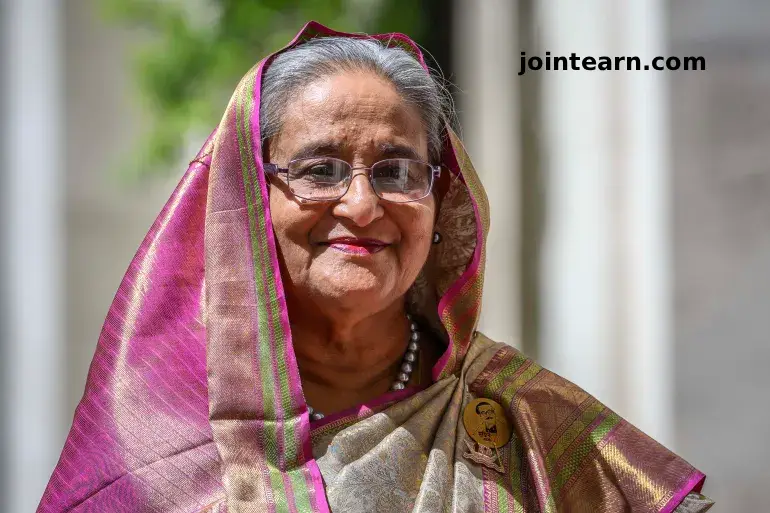
India says it is examining Bangladesh’s extradition request for former Prime Minister Sheikh Hasina, who was recently sentenced to death in absentia by a special International Crimes Tribunal (ICT) in Dhaka. Hasina, 78, fled to India following a mass uprising in Bangladesh that ousted her from power in August 2024.
India’s Official Statement
A spokesperson for India’s Ministry of External Affairs, Randhir Jaiswal, told reporters that the government is reviewing the request carefully, as part of ongoing judicial and internal legal processes.
“We remain committed to the best interest of the people of Bangladesh, including peace, democracy, inclusion and stability in that country,” Jaiswal said.
“India will continue to engage constructively in this regard with all stakeholders.”
Bangladesh first requested Hasina’s extradition last year and sent a renewed formal request following her conviction on November 17, 2025. Dhaka’s officials argue that India has an “obligatory responsibility” under a 2013 bilateral extradition treaty to hand over the former leader.
Background on Sheikh Hasina’s Conviction
Hasina was sentenced to death in absentia for crimes against humanity during her time in office. The ruling followed a brutal crackdown on a popular uprising that resulted in over 1,400 deaths, according to UN estimates. Bangladesh’s Ministry of Foreign Affairs described her remaining in India as a “grave act of unfriendly behaviour” and called it a travesty of justice to grant asylum to someone convicted of such crimes.
Political Context
Observers suggest that India is unlikely to comply with the extradition request, citing the political nature of Hasina’s prosecution.
“India understands this [Hasina’s case] to be political vindictiveness of the ruling political forces in Bangladesh,” said Sanjay Bhardwaj, professor of South Asian Studies at Jawaharlal Nehru University.
Hasina, who led Bangladesh for 15 years, fled the country during the uprising against her hardline policies. The upcoming Bangladeshi general election in February 2026 will be the first since her ouster, with her party, the Awami League, barred from participating.
Her asylum in India highlights ongoing tensions between New Delhi and Dhaka, balancing legal obligations under extradition treaties with geopolitical and humanitarian considerations.
Implications for India-Bangladesh Relations
- Bilateral diplomacy: India must navigate accusations of “unfriendly behaviour” while protecting its own legal and humanitarian standards.
- Election influence: Hasina’s absence affects Bangladesh’s political landscape and may influence the 2026 elections.
- Regional stability: The case underscores tensions in South Asia over asylum, extradition, and political accountability.
Analysts say that India’s response could set a precedent for handling high-profile political asylum cases in the region, balancing treaty obligations against perceived political persecution.


Leave a Reply