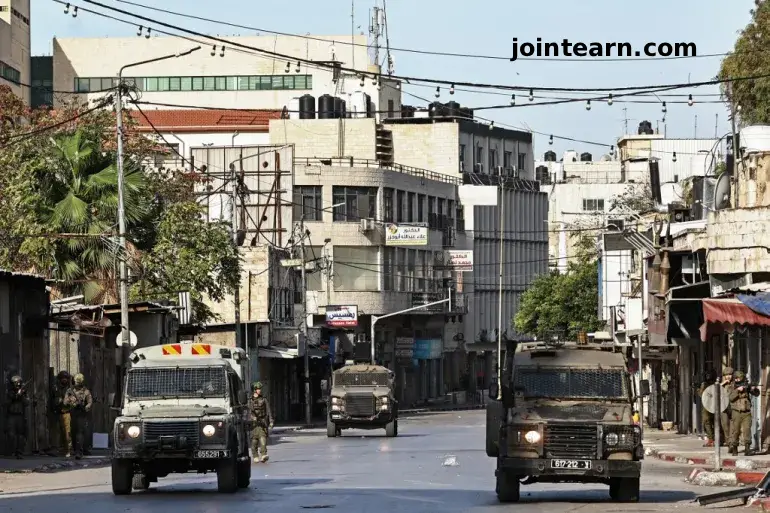
Tubas, West Bank – November 26, 2025 – Israeli forces have launched a sweeping military operation in the Tubas governorate of the occupied West Bank, sealing off key areas and displacing dozens of Palestinian families. The operation, which includes house-to-house raids and a full blockade of northern Jordan Valley towns, has raised international concerns over collective punishment and potential violations of international law.
Tubas Governor Reports Forced Displacement
Tubas Governor Ahmed Asaad stated that the military action is aimed at reshaping the geographic and political realities near the Jordan Valley, rather than addressing security concerns. Approximately 30 Palestinian families have been forcibly removed from their homes, while several buildings on high ground overlooking the governorate have been seized by Israeli forces.
“The assault is targeting Tubas for its location near the Jordan Valley, in a new effort to impose new realities,” Asaad told Al Jazeera. He added that over 50,000 Palestinians now live in areas encircled by the military, including the towns of Tubas, Tammun, Aqqaba, and nearby villages.
Blockade and Restrictions on Daily Life
The military curfew has led local authorities to suspend schools and public services while activating emergency committees. Movement of ambulances and medical personnel has been severely restricted, prompting the Palestinian authorities to contact the International Committee of the Red Cross (ICRC) to facilitate urgent medical transfers.
Residents reported that Israeli forces used bulldozers to block all approach roads to the towns and that Apache helicopters fired warning rounds over fields near Tubas before dawn, creating an atmosphere of intimidation.
Humanitarian and Legal Concerns
Humanitarian groups and rights organizations have condemned the siege, describing it as a form of collective punishment that exacerbates an already dire humanitarian situation.
The Palestine Red Crescent Society reported that at least two Palestinians were hospitalized after being beaten during raids in Tubas and Tammun. Local sources compared the scale of this operation to previous large-scale incursions across the West Bank, particularly following the Gaza conflict in 2023, which resulted in thousands of detentions, home demolitions, and widespread displacement.
Allegations of Ethnic Cleansing and Annexation
Hamas and other Palestinian resistance groups have denounced the operation as part of Israel’s ongoing efforts to ethnically cleanse the West Bank and annex Palestinian territories. Hamas described the military actions, curfews, and raids as part of a systematic policy aimed at eradicating Palestinian presence in strategic areas.
The Palestinian Mujahideen Movement echoed these concerns, accusing Israel of conducting an “open war” to annex the West Bank and forcibly remove its residents. The group criticized the United States for enabling Israel’s “systematic aggression” against Palestinian communities.
Escalating Displacement in the West Bank
This year alone, Israeli forces have conducted nearly 7,500 raids across the West Bank, according to the UN Office for the Coordination of Humanitarian Affairs (OCHA). The UN agency reported that the West Bank is facing its worst displacement crisis in decades, fueled by military operations, demolitions, and escalating settler violence.
More than 1,000 Palestinians have been killed in the West Bank over the past two years. Earlier this month, Human Rights Watch confirmed that Israel’s mass displacement of Palestinians from three refugee camps constitutes war crimes and crimes against humanity. The UN Relief and Works Agency (UNRWA) estimates that nearly 32,000 Palestinian refugees have been displaced from camps and surrounding areas.
International Response and Concerns
The siege on Tubas adds to growing international criticism of Israeli military practices in the occupied territories. Humanitarian organizations, the UN, and human rights advocates have repeatedly condemned collective punishment, forced displacement, and violations of international law, urging the international community to intervene and protect civilian populations.


Leave a Reply