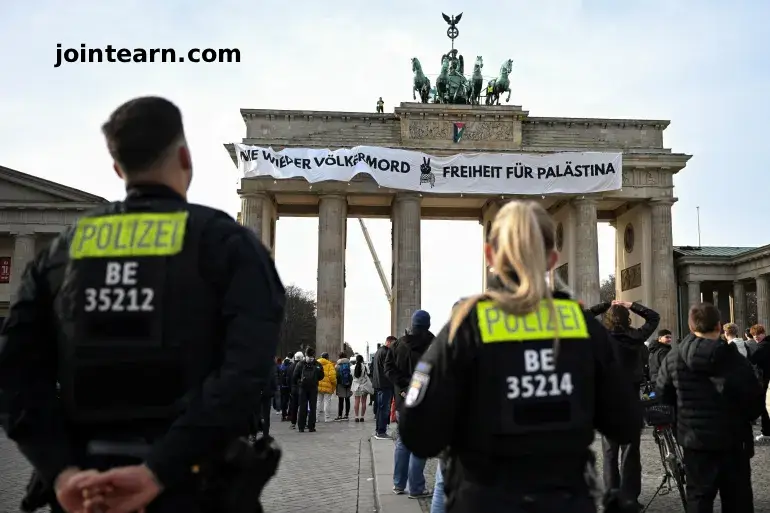
Berlin, Germany – November 26, 2025 – A Berlin court has ruled that authorities acted unlawfully when they abruptly shut down a pro-Palestine conference in April 2024, confirming concerns over freedom of assembly and expression in Germany.
The Palestine Congress, organized by solidarity activists and human rights experts, had convened to discuss Israel’s ongoing conflict in Gaza and Germany’s alleged complicity. However, within an hour of starting, German police forcibly ended the event, drawing international criticism.
Court Finds Police Actions Disproportionate
The Berlin Administrative Court concluded that the dissolution of the conference was disproportionate. Authorities had argued that the event posed a risk of criminal activity, such as incitement to hatred or the use of symbols linked to unconstitutional or terrorist organizations.
The court found no evidence that any speech crimes had occurred when police intervened, ruling that shutting down a private indoor political gathering without proof of imminent criminal activity violated fundamental rights.
“I’m not aware of any other instance where a conference was shut down without any crime having been committed,” said Michael Ploese, the lawyer representing the organizers.
The Police Crackdown
On April 12, 2024, hundreds of riot police descended on the conference venue—a hall typically used for weddings. Officers cut power to prevent speeches from being heard or broadcast via livestream.
Participants included high-profile speakers such as British-Palestinian doctor Ghassan Abu Sittah and Greek economist Yanis Varoufakis, both of whom faced entry bans to Germany. The court later ruled that Abu Sittah’s ban on political activity was unlawful.
Conference chair Wieland Hoban, of the Jewish activist collective Juedische Stimme, said:
“I saw it as a success that we had even been able to begin it at all, but I wasn’t expecting it all to end an hour later.”
Germany’s Strict Limits on Palestine Solidarity
The shutdown reflects a broader pattern in Germany, where police have repeatedly cracked down on pro-Palestine activism, often citing anti-Semitism or claims of glorifying Hamas. Thousands of protesters have been arrested in recent years, and many demonstrations have been banned outright.
Germany’s strict approach is tied to its historical responsibility for the Holocaust, with authorities often limiting criticism of Israel. Hoban emphasized that these restrictions sometimes even target Jewish activists who advocate for Palestinian rights:
“Even if you lost family in the Holocaust, you can still be lectured by some German about what you can say.”
International Reactions
Last month, a group of United Nations experts expressed alarm over what they described as a “pattern of police violence and apparent suppression of Palestine solidarity activism by Germany.” Videos of police using force against nonviolent Gaza protests have circulated widely, drawing condemnation from human rights groups.
The court ruling is seen as a landmark decision for freedom of assembly, particularly in indoor venues where political speech had previously been considered protected from state interference.
Significance for Activists and Civil Liberties
The judgment underscores the tension in Germany between protecting free speech and regulating hate speech. Legal experts argue that while Germany’s historical context is important, authorities cannot use it to suppress legitimate political debate, even on sensitive topics like Israel-Palestine.
The decision also offers a legal precedent for activists, human rights groups, and academics seeking to hold public events without fear of arbitrary police intervention.


Leave a Reply