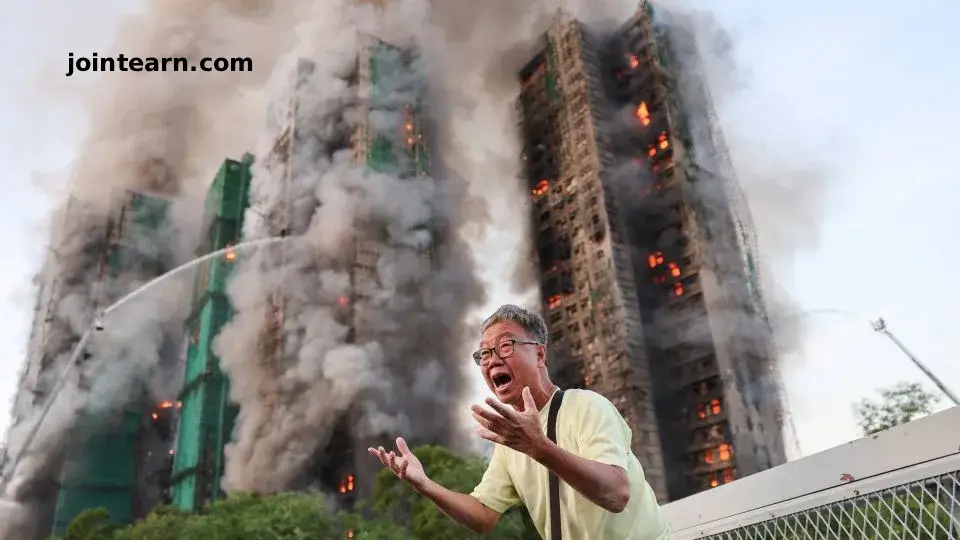
Hong Kong faced its deadliest fire in decades on November 26, 2025, as flames engulfed the Wang Fuk Court public housing complex in Tai Po. Survivors and residents are demanding answers, questioning how such a catastrophic event was allowed to happen in a city known for its stringent building safety regulations.
The Fire and Initial Evacuations
At 3:15 p.m., Wan, a resident on the eighth floor, noticed smoke for the first time, half an hour after an eyewitness reported flames spreading rapidly through one of the eight residential towers. Firefighters arrived on the scene, but the fire had already spread to multiple buildings, all undergoing renovation and wrapped in bamboo scaffolding, a traditional yet highly flammable construction material.
Wan grabbed his wallet and two dogs, fleeing down an emergency stairwell filled with the smell of gas. Within minutes, the fire was declared a Level 4 alarm, and by 6 p.m., authorities had raised it to the maximum Level 5 alarm, confirming the full scale of the disaster.
Over 4,000 residents lived in the complex, many elderly, and the fire spread with unprecedented speed, engulfing seven of the eight buildings. Community chat groups lit up as families desperately sought information about loved ones.
Human Toll and Damage
As of November 27, at least 128 people were confirmed dead, making this the deadliest fire in Hong Kong in decades. Many more residents remained unaccounted for, with the final toll expected to rise as firefighters continue searching through charred apartments. Hundreds of residents were left homeless, forced to stay in emergency shelters without clothing or personal belongings.
“There’s no home to go back to. We have nothing, not even clothes,” Wan told CNN from a sports center converted into a temporary shelter.
Safety Concerns and Early Warnings
Residents have raised concerns that the tragedy could have been prevented. Social media posts indicate complaints about the bamboo scaffolding and construction materials had been filed as early as October 2024. The Labour Department confirmed conducting 16 safety inspections between July 2024 and November 2025, issuing reminders about fire prevention measures, but the blaze exposed potential lapses.
Polystyrene boards, plastic covers, and netting that may not have met fire-retardant standards were found blocking windows, while several residents reported non-functional fire alarms during the fire. Evacuations were reportedly delayed, leaving some residents unaware of the danger until flames reached their buildings.
Investigations and Government Response
Three arrests have already been made, and both criminal and anti-corruption investigations have been launched, including a dedicated task force by Hong Kong’s Independent Commission Against Corruption (ICAC). Officials also announced inspections of all public housing estates undergoing renovations to ensure fire safety compliance.
Vulnerable Residents and Public Housing
Wang Fuk Court, part of Hong Kong’s public housing program, provides affordable housing for low-income families. Nearly 45% of the city’s population relies on some form of public housing, including many elderly residents. The majority of residents in the burned buildings were over 65, highlighting the fire’s devastating impact on Hong Kong’s aging population.
Residents who had just purchased or renovated apartments watched in horror as months of work and investment were destroyed in hours. The community’s grief has been compounded by the uncertainty surrounding missing loved ones.
Community and International Reaction
Volunteers and aid organizations quickly mobilized to provide food, water, and shelter to affected residents. The scale of the disaster has prompted calls for stricter enforcement of construction safety codes, particularly regarding scaffolding materials, fire alarms, and renovation oversight.
The tragedy has sparked widespread questions about how Hong Kong’s strong safety record failed to prevent one of the most deadly fires in the city’s history. Investigations are ongoing, and the government faces mounting pressure to implement reforms and hold responsible parties accountable.


Leave a Reply