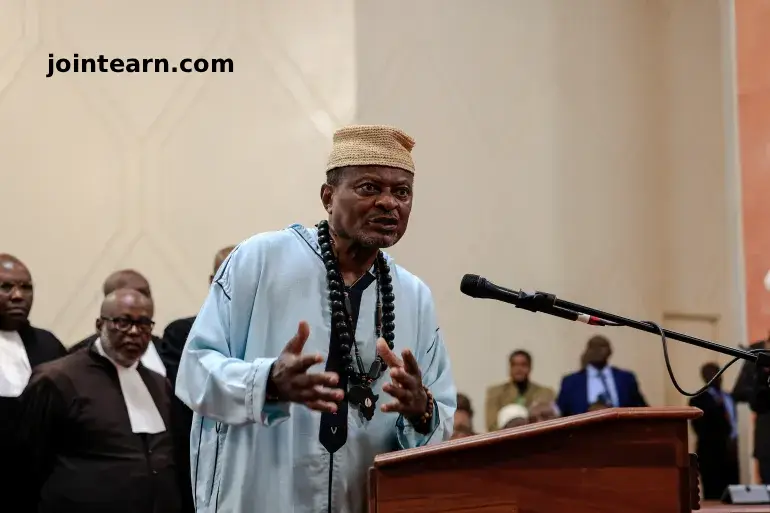
Veteran Opposition Leader Anicet Ekane Dies in Military Detention
Cameroon is facing heightened political tension following the death of veteran opposition leader Anicet Ekane, who passed away on Monday morning, December 1, 2025, while in military custody in Yaoundé, the nation’s capital. Ekane, aged 74, was the director of the African Movement for New Independence and Democracy (MANIDEM), a prominent left-wing political party in Cameroon.
According to Valentin Dongmo, vice-president of MANIDEM, Ekane had been detained by security forces 38 days earlier in Douala, shortly after supporting opposition presidential candidate Issa Tchiroma Bakary against long-standing President Paul Biya.
Arrest and Allegations of Political Repression
Ekane’s detention followed Cameroon’s October 2025 presidential election, which saw 92-year-old Paul Biya secure another term, extending his rule to over four decades. Authorities charged Ekane with insurrection and rebellion, accusations widely criticized as politically motivated by his party and international observers.
His eldest son, Muna Ekane, told the press that his father’s health deteriorated sharply in the days leading to his death, citing severe respiratory distress. Despite repeated appeals for medical intervention, the family claims no adequate treatment was provided, raising serious concerns over medical neglect in military detention.
Outrage and International Reactions
Ekane’s death has ignited widespread outrage across Cameroon and beyond, intensifying the country’s post-election crisis. MANIDEM described the death as “murder”, and the European Union delegation expressed “deep sadness,” reiterating calls for the release of all those arbitrarily detained since the elections.
The Cameroonian government stated that Ekane received treatment from military doctors alongside his personal physicians and confirmed an official investigation has been launched. Communication Minister Rene Emmanuel Sadi expressed regret over the loss, while President Biya ordered a probe into the circumstances surrounding Ekane’s death.
A Lifetime of Political Activism
Anicet Ekane dedicated nearly five decades to political activism, emerging as a pivotal figure in Cameroon’s early 1990s push for multiparty democracy. He was widely regarded as a political heir to Cameroon’s nationalist heroes and witnessed the execution of independence fighter Ernest Ouandie, shaping his lifelong commitment to social justice and political reform.
Ekane’s career symbolized the struggle of Cameroon’s opposition movement, particularly during periods of authoritarian rule, and his death highlights the ongoing human rights concerns in the country.
Post-Election Unrest and Continuing Controversy
The backdrop of Ekane’s death is Cameroon’s volatile post-election environment, with widespread allegations of voter fraud and violent crackdowns. While the government reports 16 deaths related to post-election protests, opposition groups and human rights organizations estimate the toll exceeds 55 fatalities.
Issa Tchiroma Bakary, the candidate supported by Ekane, fled to The Gambia for safety, emphasizing the growing political instability and the risks faced by opposition figures.
Legacy of Anicet Ekane
Ekane’s death underscores the challenges faced by opposition leaders in Cameroon, highlighting systemic political repression, human rights abuses, and lack of medical care for detainees. His dedication to democracy, social justice, and political reform continues to inspire activists and opposition movements across Cameroon and the broader African political landscape.


Leave a Reply