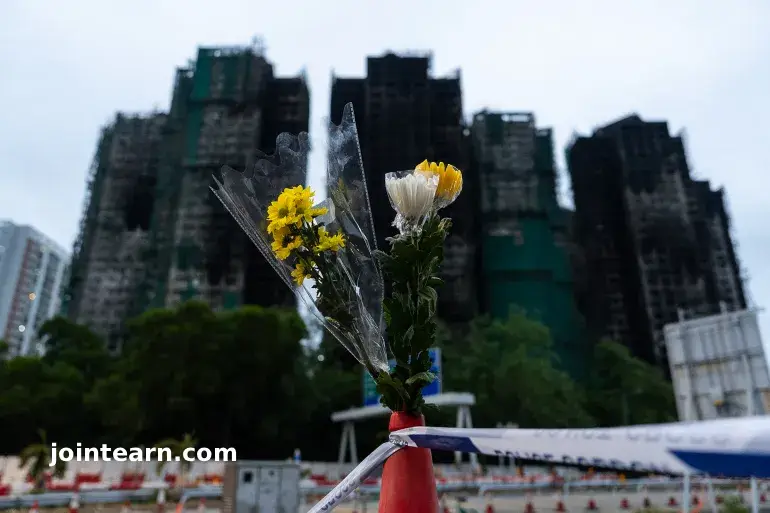
Chinese authorities have arrested activists and issued stern warnings against “anti-China and pro-chaos elements” following Hong Kong’s deadliest fire in decades, highlighting the tightening control Beijing exercises over the semi-autonomous territory. The crackdown has drawn criticism from activists, rights groups, and international observers who warn of shrinking freedoms in Hong Kong.
The fire, which broke out on November 27, 2025, at a high-rise residential complex in Tai Po district, claimed at least 151 lives, marking the city’s worst fire since 1948. As survivors and residents called for transparency and accountability, authorities responded with arrests and warnings against public dissent.
Arrests Amid Calls for Accountability
Over the weekend, Hong Kong’s national security police arrested three individuals connected to advocacy for greater government accountability. Among them was ex-district councillor Kenneth Cheung Kam-hung, arrested on suspicion of “attempting to incite discord.” A volunteer managing supplies for fire survivors was also detained.
Separately, Miles Kwan, a 24-year-old university student, was arrested after creating an online petition demanding government transparency regarding the fire. The petition, which gained over 10,000 supporters before removal, requested:
- Establishment of an independent commission of inquiry.
- Transparency in government safety protocols.
- Investigation of potential conflicts of interest in construction and renovation projects.
- Public accountability measures to prevent future tragedies.
Authorities quickly condemned the petition, accusing activists of using it “to incite confrontation and tear society apart.” Beijing’s Office for Safeguarding National Security in Hong Kong warned that some groups were attempting to revive the “black-clad violence” seen during the 2019 antigovernment protests.
Public and Activist Response
The arrests sparked outrage among pro-democracy activists and critics of Beijing’s influence over Hong Kong. Nathan Law, former legislator and prominent activist, described the actions as “outrageous” and indicative of a “highly authoritarian trend.” Law highlighted that any civil action without government approval is now considered illegal, creating a chilling effect on activism.
Observers note that the space for dissent in Hong Kong has dramatically narrowed since Beijing implemented sweeping national security laws following the 2019 demonstrations. The laws have effectively eliminated opposition parties, forced closures of independent media outlets, and restricted public protests.
Safety Concerns and Investigations
The Tai Po fire has intensified scrutiny of Hong Kong’s construction and renovation standards. Authorities are investigating whether substandard materials used during renovation contributed to the fire’s rapid spread.
In addition to activist arrests, Hong Kong police have detained 13 individuals, including directors of an engineering consultancy involved in renovations, as part of their criminal investigation.
While the Independent Commission Against Corruption (ICAC) and local police have launched separate probes, there is currently no indication that the government will establish an independent commission of inquiry, a mechanism historically used in Hong Kong for major disasters. Past inquiries investigated tragedies such as the 2012 ferry accident and a 1996 residential fire.
Beijing’s Perspective
Chinese authorities have defended the crackdown, arguing that criticism and protests could escalate into wider unrest. Officials stress that national security laws safeguard the city’s autonomy and stability, ensuring that Hong Kong operates within the “One Country, Two Systems” framework.
Beijing-backed media, including Wen Wei Po, called for vigilance against “anti-government elements” and framed activist petitions as attempts to incite public unrest. Commentaries described such actions as “utterly devoid of conscience and humanity,” portraying the government’s response as necessary for maintaining order.
Global Context and Human Rights Concerns
The crackdown follows broader trends of restrictions on civil liberties in Hong Kong. Human rights organizations and foreign governments have repeatedly criticized Beijing’s approach, citing the suppression of political opposition, media closures, and arrests of peaceful activists. Critics argue that silencing dissent allows the government to control the narrative of disasters and political events, creating an official record that minimizes public scrutiny.
Kevin Yam, a former Hong Kong lawyer, explained: “Once dissent is silenced and favorable stories flood the public space, that becomes the official version of history. Beijing sees even the smallest spark of dissent as potentially destabilizing.”
Conclusion
The Tai Po fire has exposed gaps in Hong Kong’s safety standards and sparked urgent calls for accountability. However, the response from Beijing and local authorities demonstrates the limits of public criticism in the city today. As Hong Kong mourns its dead, debates over freedom, transparency, and government control are intensifying, highlighting the challenges faced by residents seeking justice in a highly regulated environment.


Leave a Reply