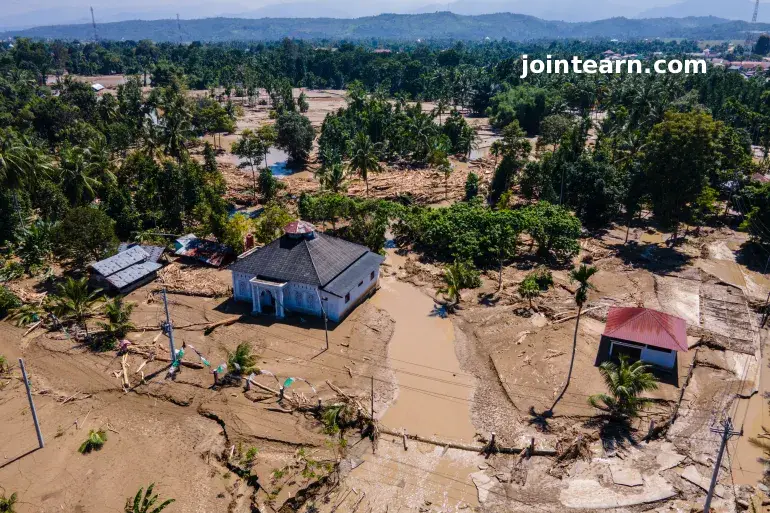
Sumatra, Indonesia – November 30, 2025: The death toll from catastrophic floods and landslides in Indonesia has climbed to 442, as desperate survivors search for basic necessities like food and clean water. The National Disaster Management Agency (BNPB) reported that 402 people remain missing across the hardest-hit provinces of North Sumatra, West Sumatra, and Aceh.
Authorities are struggling to reach isolated areas of Sumatra island, where thousands remain stranded without critical supplies. The floods, driven by unusually heavy monsoon rains and exacerbated by a tropical storm, have also triggered landslides, damaged roads, and cut off communications in several regions.
Severe Impact Across Sumatra
The floods have left entire communities submerged under water and mud, with aerial images showing mosques, homes, and streets engulfed in debris. Social media videos captured people navigating waist-deep waters and crumbling infrastructure to reach convenience stores and local aid centers.
BNPB head Suharyanto highlighted two particularly isolated areas, Central Tapanuli and Sibolga, as requiring urgent attention. The government has deployed two warships from Jakarta to deliver emergency aid to these cities, with supplies expected to arrive in Sibolga on Monday.
Humanitarian Crisis
Thousands of residents have been displaced, seeking refuge in temporary shelters. The challenging weather, combined with the lack of heavy rescue equipment, has slowed relief operations, leaving many communities without sufficient food, medicine, or clean water.
“The situation is desperate. People are struggling to survive and need urgent assistance,” said a local aid worker.
The floods have also affected other parts of Southeast Asia, including Thailand and Malaysia, where heavy rains caused similar destruction. Across the region, at least 600 people have died as monsoon storms overwhelmed infrastructure and forced mass evacuations.
Role of Climate Change
Experts warn that climate change has intensified the annual monsoon season, which typically lasts from June to September. Increased rainfall, stronger wind gusts, and prolonged storm duration have worsened flash floods and landslides in Indonesia. Scientists say such extreme weather patterns are likely to become more frequent, increasing the risk of future natural disasters.
Ongoing Relief Efforts
The Indonesian government continues to coordinate emergency response efforts, focusing on rescuing stranded populations and distributing vital supplies. Warships, helicopters, and local volunteers are being deployed to the most affected regions.
Despite these efforts, aid remains limited in remote districts, and authorities urge communities to remain cautious and adhere to evacuation orders wherever possible.
“We are doing everything we can to reach isolated areas, but conditions are challenging. The priority is to save lives,” said Suharyanto.
International Attention
The Indonesia floods have drawn international attention, with humanitarian agencies calling for immediate assistance to prevent further loss of life. Relief operations are ongoing, with a focus on food, water, shelter, and medical aid for survivors.
The disaster highlights the vulnerability of densely populated regions in Southeast Asia to climate-related emergencies and underscores the need for improved disaster management and early warning systems.


Leave a Reply