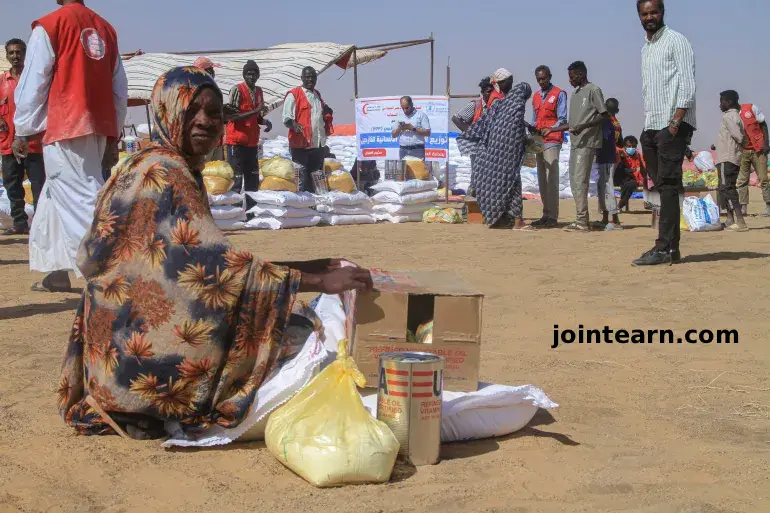
Sudan – November 30, 2025: The humanitarian crisis in Sudan continues to escalate as fighting between the Sudanese Armed Forces (SAF) and the paramilitary Rapid Support Forces (RSF) rages across the country. Despite international pressure for a ceasefire, both sides show little willingness to yield, leaving civilians trapped in one of the world’s most severe and underreported crises.
According to reports from aid agencies and local witnesses, mass atrocities have been committed, especially in West Darfur, as the RSF consolidates control over previously contested areas.
Military Fighting and Territorial Control
In West Darfur, the RSF has solidified its hold on el-Fasher, the last SAF stronghold in the region, following a violent takeover in late October. Civilians in the area have suffered killings, kidnappings, and widespread destruction.
Meanwhile, the SAF maintains control of much of eastern and central Sudan, including the capital Khartoum and parts of Kordofan. RSF forces and allied militias are mobilizing to capture strategic cities such as Babnusa and el-Obeid, which are vital for both military advantage and economic resources, including agriculture, livestock, and petroleum.
In mid-November, SAF troops celebrated territorial gains in Kazqil and Um Dam Haj Ahmed in North Kordofan. International stakeholders continue to push for a ceasefire to freeze the battle lines, though fighting persists.
Humanitarian Crisis and Famine Risk
The RSF takeover of el-Fasher triggered widespread atrocities, including mass killings, sexual violence, hostage-taking, and the systematic burning and burial of bodies. Thousands of civilians fled to surrounding areas like Tawila, while others crossed the border into Chad, where resources are also strained.
The Integrated Food Security Phase Classification (IPC) reported famine conditions not only in el-Fasher but also in Kadugli, South Kordofan. At least 20 additional areas in Darfur and Kordofan face high risk of famine as aid remains blocked.
Amy Pope, Director General of the International Organization for Migration, emphasized the scale of the crisis:
“Sudan has the world’s largest displacement crisis, mostly affecting children and women, yet it receives insufficient international attention.”
Nearly 14 million people are either internally displaced or have fled to neighboring countries. Images from refugee camps in eastern Chad show children, like seven-year-old Mabroka Adam from el-Fasher, living in precarious conditions while dreaming of education and food far from the conflict.
Diplomatic Efforts and Political Stalemate
International mediators, known as the Quad (United States, Saudi Arabia, Egypt, UAE), proposed a truce aiming for a future transition to civilian rule. On November 6, the RSF claimed to accept the proposal, and RSF commander Mohamed Hamdan Dagalo (Hemedti) announced a three-month “humanitarian truce” on November 26.
However, SAF commander Abdel Fattah al-Burhan rejected the proposal, arguing it undermines the army and security agencies while maintaining RSF positions. Al-Burhan singled out the UAE, claiming the Quad lacks credibility due to alleged support for rebel forces, which Abu Dhabi denies.
US President Donald Trump pledged cooperation to support the truce after an appeal by Saudi Crown Prince Mohammed bin Salman. Senior US and UAE diplomatic advisers, Massad Boulos and Anwar Gargash, held a press conference in Abu Dhabi to promote the ceasefire initiative.
Outlook
As fighting continues across Sudan, the humanitarian situation is worsening daily. Civilians face famine, displacement, and violence, while international efforts to broker a ceasefire remain stalled. The conflict’s combination of military offensives, paramilitary control, and political deadlock threatens to deepen Sudan’s humanitarian disaster in the months ahead.


Leave a Reply