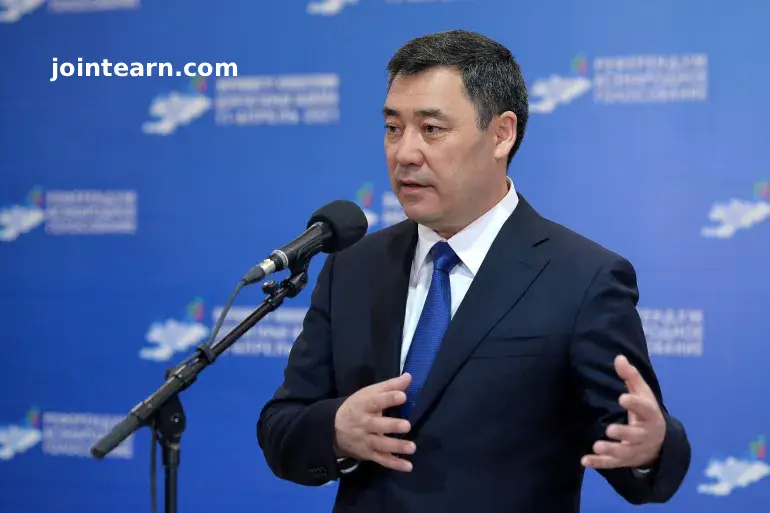
Bishkek, Kyrgyzstan – November 30, 2025: Kyrgyzstan has begun voting in a snap parliamentary election that is expected to deliver a decisive victory to President Sadyr Japarov’s allies, amid a political landscape where formal opposition parties are largely absent. The vote marks another step in consolidating Japarov’s authority, with implications for the upcoming presidential election in 2027.
Japarov’s Firm Grip on Power
Since assuming office in 2020 following mass protests, the populist and nationalist leader Sadyr Japarov has established tight control over Kyrgyzstan, historically considered Central Asia’s most democratic state. Victory for his allies in parliament will further strengthen his position ahead of the next presidential election, effectively setting the stage for another term.
Kyrgyzstan, a mountainous country with a population of approximately 7 million, has a history of political upheaval. After gaining independence from the Soviet Union in 1991, the nation experienced three major uprisings in 2005, 2010, and 2020, each driven by public outcry over allegedly rigged elections. For decades, Kyrgyz media was regarded as the freest in the region, fostering lively political discourse.
Since coming to power, Japarov has clamped down on independent media and opposition groups, and several journalists have been designated “extremists” under the government’s restrictive measures.
Snap Election and Parliamentary Dynamics
The snap election was called after parliament voted in September to dissolve itself, advancing the originally scheduled vote set for November 2026. Analysts note that this move is largely designed to cement the dominance of Japarov’s allies in the legislature, with opposition participation virtually nonexistent.
Bolot Ibragimov, an opposition candidate in Bishkek, estimated that roughly 80 percent of parliament will consist of pro-Japarov lawmakers. The election occurs against a backdrop of media suppression, social media restrictions, and limited public debate, further diminishing democratic competition.
Political and Economic Context
Deputy Prime Minister Edil Baisalov, a close ally of Japarov, argued that the president’s popularity stems from a rejection of decades of political instability that failed to improve living standards or provide national stability. Baisalov stated:
“We thought that adopting a Westminster-style parliamentary system would bring prosperity like Western countries. But it did not work, and it will not work.”
President Japarov has promoted socially conservative policies, including proposals to ban online pornography and reinstate the death penalty. At the same time, Kyrgyzstan has recorded the fastest economic growth in Central Asia, partly fueled by its role as a transit hub for imports to Russia amid Western sanctions related to the war in Ukraine.
However, high inflation and electricity shortages continue to affect everyday life. Western nations have targeted several Kyrgyz banks and cryptocurrency firms for allegedly facilitating sanctions evasion on behalf of Russia.
Strengthening Ties with Russia
Japarov’s government has further solidified its alignment with Russia, which maintains military bases in Kyrgyzstan and hosts many Kyrgyz migrant workers. In the lead-up to the election, Russian President Vladimir Putin visited Bishkek, and his image appeared prominently on city billboards, signaling strong bilateral support.
Outlook for Kyrgyzstan
The snap parliamentary election is widely seen as a consolidation of Japarov’s political dominance, raising concerns over the erosion of democratic norms in Kyrgyzstan. With little opposition representation and ongoing media suppression, the vote is likely to reinforce authoritarian control, shaping the political trajectory of the country through at least 2027.


Leave a Reply