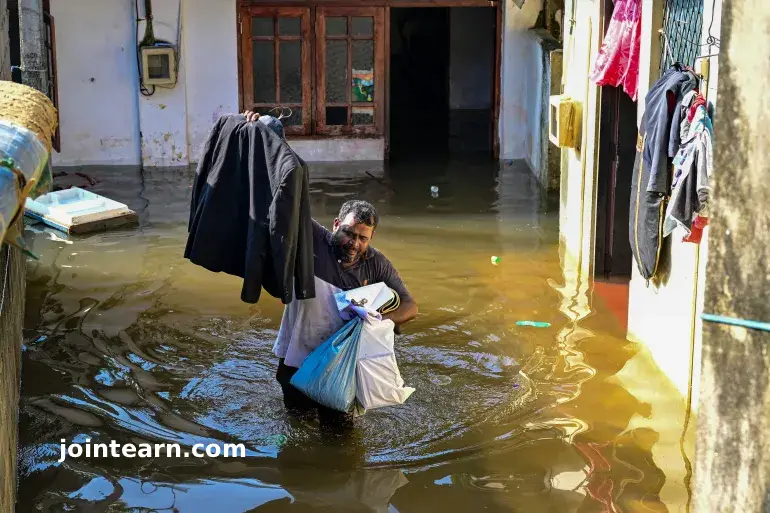
Colombo, Sri Lanka – November 30, 2025: The death toll from devastating floods caused by Cyclone Ditwah in Sri Lanka has risen to 334, as authorities continue rescue operations and struggle to reach areas still submerged under water and mud. The Disaster Management Centre (DMC) reported that nearly 400 people remain missing, and further heavy rainfall is expected to worsen conditions across the island.
Widespread Destruction Across Sri Lanka
Cyclone Ditwah has caused Sri Lanka’s deadliest flooding since 2017, affecting Colombo and numerous other regions. The extreme weather system has destroyed over 25,000 homes, displaced more than 147,000 people, and left countless families stranded without access to basic necessities.
In the northeast, five Navy personnel are among those missing after attempting to stem overflowing water at a Naval sub-station in Chalai Lagoon. Floodwaters have submerged newly planted rice fields, threatening the country’s agricultural output and food security.
Al Jazeera’s Minelle Fernandez, reporting from Sammanthurai in east-central Sri Lanka, described the devastation:
“Some neighbourhoods are completely buried under mud, and each one brings more despair. Communication has also broken down, and there are areas yet to send updates.”
The Kelani River in northern Colombo has reached dangerous levels, inundating low-lying areas despite the cyclone moving past.
State of Emergency and International Aid
President Anura Kumara Dissanayake declared a state of emergency on November 29 to coordinate the national response and called for international assistance. India promptly dispatched relief supplies and helicopters to aid in rescue missions, while Japan pledged a team to assess immediate needs and provide further support.
Sri Lankan authorities report that more than 20,000 homes have been destroyed, with 122,000 people sheltered in state-run temporary facilities. An estimated 833,000 people require assistance due to displacement and damaged infrastructure.
Troops from the army, navy, and air force, along with civilian volunteers, are working to deliver aid and evacuate stranded residents. However, heavy rainfall, damaged roads, and collapsed power lines continue to hinder relief efforts. Approximately one-third of the country remains without electricity or running water, and internet access is disrupted in many areas.
Humanitarian Impact
The floods have left thousands of Sri Lankans without food, clean water, and safe shelter. Relief agencies are racing against time to prevent further casualties and alleviate suffering. The DMC has warned that more heavy rains in the coming days could worsen flooding and hamper ongoing rescue operations.
This disaster marks the worst flooding in Sri Lanka since 2017, when over 200 people lost their lives, and is the deadliest since the June 2003 floods that killed 254 people.
Looking Ahead
Authorities continue to monitor rainfall patterns and river levels, prioritizing relief delivery to isolated and severely affected areas. International support and local coordination remain critical as Sri Lanka navigates one of its most severe natural disasters in recent years.


Leave a Reply