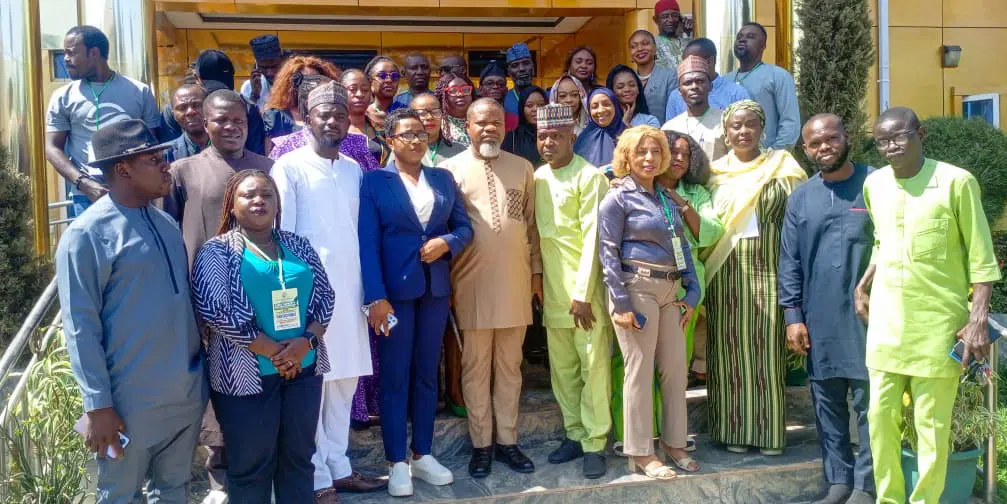
Media professionals have raised concerns over increasing threats to journalism in Nigeria, cautioning that unchecked misinformation, unregulated online content, and the lack of legal protection for journalists endanger the nation’s democracy.
Speaking at the 2025 Capacity Building Programme for Information Officers in Keffi, former President of the Nigeria Union of Journalists (NUJ), Chris Isiguzo, highlighted the rapid expansion of digital tools and social media, which has allowed non-professionals to dominate the information space with potentially misleading or harmful content.
“We must confront this challenge head-on, otherwise we are going to be in trouble,” Isiguzo said. “Professionals must reclaim the space—social media or otherwise—to ensure accurate and ethical reporting. Citizen journalists and influencers are producing content without editorial checks, and we must set the standard.”
He warned that the proliferation of unchecked information—what he called the “fifth law of misinformation”—is creating confusion and chaos. Isiguzo emphasized that all published content must adhere to professional standards, allowing readers to distinguish the work of trained journalists.
Isiguzo lamented the absence of legal protection for journalists in Nigeria, contrasting the situation with countries like Ghana, Malawi, and the United States, where media freedoms are safeguarded by law. “Journalists operate under fear—fear of harassment, arrest, intimidation, or detention. Only a clear legal framework can protect them,” he said.
NUJ FCT Chair Highlights Professional Development
In her keynote address, Comrade Grace Ike, Chairman of the NUJ FCT Council, said the programme underscores the Union’s commitment to strengthening professionalism in Nigeria’s communication ecosystem.
“This training is critical in an era where information travels faster than policy, and a single headline, tweet, or video can reshape an institution’s reputation,” Ike said. She emphasized that information officers today are expected to handle strategy, crisis communication, digital engagement, content creation, and reputation management.
“Training is no longer optional—it is foundational. Investing in knowledge elevates the credibility of our institutions,” she added, urging participants from ministries, media organisations, and regulatory bodies to engage actively and take practical insights back to their workplaces.
The programme forms part of NUJ’s broader initiative to enhance ethical standards, strengthen government communication, and equip journalists and information officers to combat misinformation, safeguarding Nigeria’s democratic space.


Leave a Reply