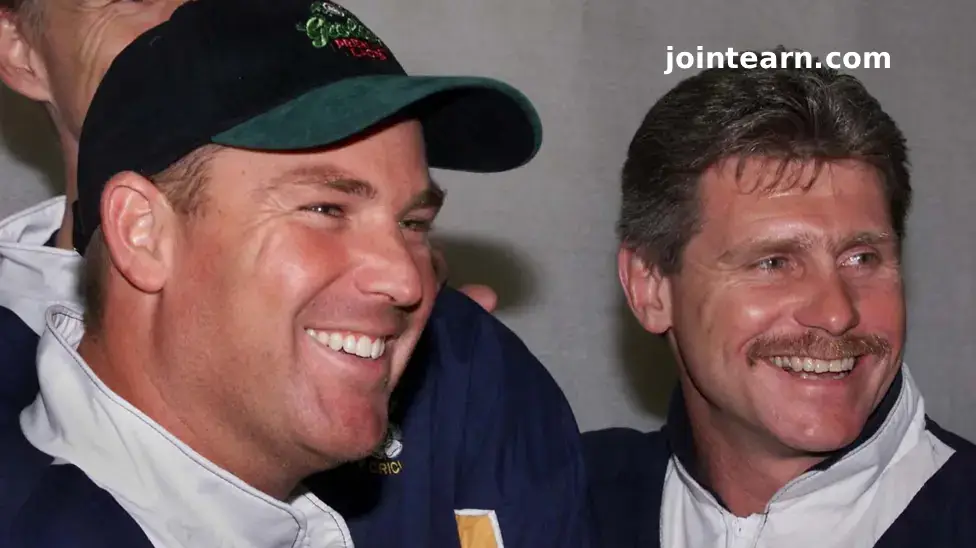
Robin Arnold Smith, who has died aged 62, was one of England cricket’s finest batsmen, renowned for his fearless approach against fast bowling during a period when the national team was often ridiculed on the world stage. From his bristling moustache to his powerful square cut, Smith’s courage and skill made him a beacon of hope for fans and a nightmare for bowlers.
Early Life and Rise from South Africa to England
Born in Durban, South Africa, in 1963 to British parents, Robin Smith showed prodigious talent in both cricket and rugby during his school years. His early promise led to him being featured in a coaching book by South African Test opener Barry Richards, who would become a lifelong mentor and friend.
Smith’s parents were committed to nurturing his talent, even building a backyard cricket pitch with a bowling machine for him and his older brother, Chris. Robin’s cricket journey began in Natal, where he joined the squad at 17 and supported legends like Richards and Mike Procter.
The Smith brothers later moved to England thanks to their parentage, joining Hampshire County Cricket Club—Robin officially qualifying for England in 1985 after serving a mandatory four-year residency period.
England Debut and Test Career
Nicknamed “The Judge” for his long, wavy hair resembling a judge’s wig, Robin Smith made his Hampshire debut in 1982 and quickly became known for his aggressive batting against bowlers of all styles. He earned his England call-up in 1988, shortly after a destructive innings in the Benson & Hedges Cup final at Lord’s.
Making his Test debut at Headingley under captain Chris Cowdrey, Smith showed no fear against the formidable West Indies pace attack. He scored 38 runs on debut and shared a century partnership with fellow South African-born batsman Allan Lamb, demonstrating the trademark bravery that would define his career.
Smith’s maiden Test century, 143 against Australia in Manchester, cemented his reputation. He often wore a blue England helmet without a grille, relishing hooks, pulls, and cuts against the fastest bowlers of the era, including West Indies great Malcolm Marshall and Australian legend Merv Hughes.
ODI Success and Records
While his One-Day International (ODI) record did not mirror his Test achievements, Smith’s unbeaten 167 against Australia at Edgbaston in 1993 remained an England record until 2016. Known for his single-minded focus, Smith remained loyal to England and Hampshire despite opportunities abroad, including a trial with baseball’s New York Mets.
His ICC retrospective ranking placed him as the world’s second-best batter in 1991, behind captain Graham Gooch, in what Smith described as his “perfect summer.”
Challenges Against Spin and Injury Setbacks
Having grown up on hard, bouncy South African pitches, Smith initially struggled on subcontinental wickets. In 1993, poor performances against spinners in India and the Ashes dented his confidence. Shoulder surgery and management changes at England further complicated his career, and he was controversially omitted for series against South Africa and the 1994-95 Ashes.
Although recalled in 1995 and touring South Africa, Smith’s England career ended at age 32, after the 1996 World Cup. His Test average of 43.67 remains impressive, comparing favorably with contemporaries such as Graham Gooch, Michael Atherton, and Allan Lamb.
Later Career, Hampshire Captaincy, and Life After Cricket
Smith continued to play for Hampshire, captaining the side between 1998 and 2002. After being denied another contract in 2003, he faced personal challenges, including mental health struggles, the breakdown of his marriage, and battles with alcoholism.
In his 2019 memoir, Smith reflected:
“The Judge was a fearless warrior; Robin Arnold Smith was a frantic worrier… I wasn’t one of the all-time greats, but if people remember me as a good player of raw pace bowling then I’m chuffed with that because it’s something I worked so hard on.”
Relocating to Perth, Australia, to be closer to family, Smith remained a respected figure in cricket, admired not only for his performances on the field but also for his honesty and courage in addressing off-field struggles.
Legacy
Robin Smith will be remembered as a fearless hero for hapless England, a player who challenged the fastest bowlers in the world with unmatched courage and elegance. His contribution to Hampshire and England cricket, his record-breaking innings, and his personal battles later in life paint a picture of a talented, human, and enduring cricketing figure.


Leave a Reply