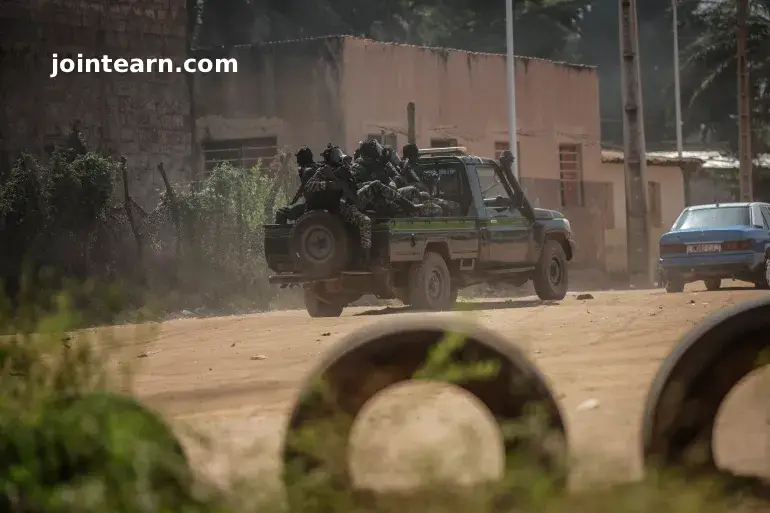
Guinea-Bissau Military Seizes Power, Election Results Destroyed
The Guinea-Bissau Electoral Commission announced it can no longer complete the November 23 presidential election after armed men attacked its offices, seizing ballots, tally sheets, and computers, and destroying the servers storing vote results.
The takeover occurred on November 26, a day before provisional results were scheduled to be announced from the tightly contested vote. Several government and electoral buildings were targeted during the military seizure.
“We do not have the material and logistic conditions to follow through with the electoral process,” said Idrissa Djalo, senior electoral commission official, in a statement.
Djalo added that the military confiscated computers belonging to all 45 staff members present and seized tally sheets from every region, making it impossible to complete the vote count.
Major-General Horta Inta-A Sworn In as Transitional President
Following the coup, Major-General Horta Inta-A was sworn in as the new transitional president on November 27, immediately halting the election. The military has since banned protests and strikes as part of tightened security measures.
Inta-A has pledged a one-year transitional period and appointed a 28-member cabinet dominated by figures aligned with the previously deposed administration.
Disputed Election and Political Fallout
The coup came three days after the presidential vote, with both leading candidates – incumbent President Umaro Sissoco Embalo and opposition candidate Fernando Dias da Costa – claiming victory before any results were officially released.
During the takeover:
- Embalo reported being deposed and briefly arrested, later fleeing to Brazzaville, Republic of Congo.
- Nigeria, under President Bola Tinubu, authorized protection for Dias da Costa, citing an imminent threat to his life.
Civil rights groups have condemned the exclusion of PAIGC, a dominant political party, from presenting a candidate, describing it as part of a broader crackdown on opposition forces.
Regional Response and International Pressure
The Economic Community of West African States (ECOWAS) is pressing Guinea-Bissau’s military to restore constitutional order and allow the electoral process to resume.
- A delegation led by Sierra Leone’s President Julius Maada Bio, ECOWAS chairman, met with military and electoral officials in Bissau on Monday.
- ECOWAS has warned of potential sanctions against those undermining democracy in the country.
- Leaders are scheduled to meet on December 14 to review the crisis and determine next steps.
Implications for Guinea-Bissau
The coup has plunged Guinea-Bissau into political uncertainty, with the presidential election effectively nullified and the future of the country’s democracy in jeopardy. Analysts warn that the crisis could destabilize the region, particularly if military rule continues beyond the promised one-year transitional period.


Leave a Reply