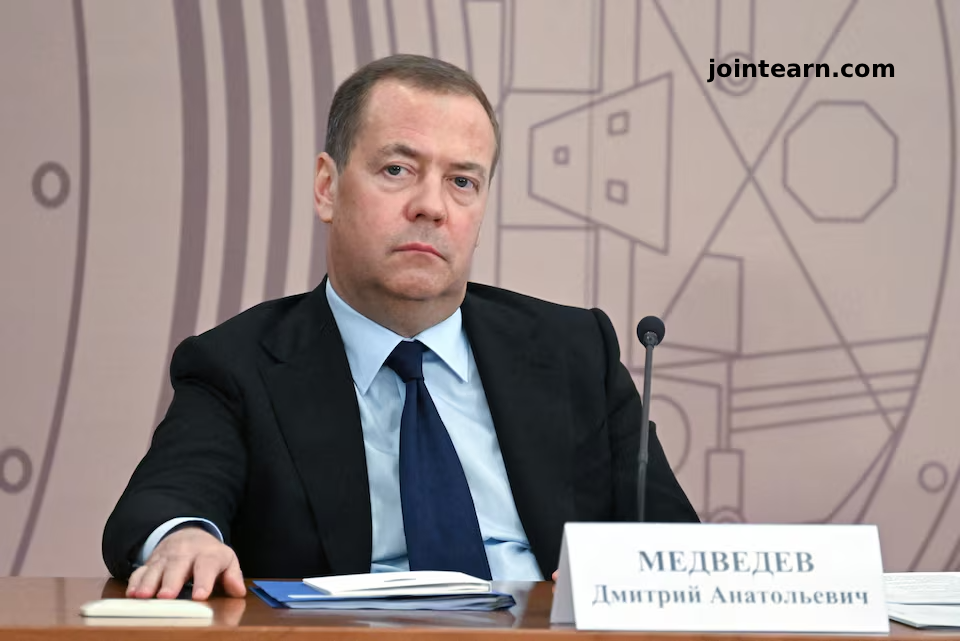
Moscow, Russia – Dmitry Medvedev, deputy chairman of Russia’s Security Council, issued a stark warning to the European Union (EU) on Thursday, suggesting that any attempt to seize Russian assets frozen in Europe could be viewed by Moscow as an act justifying war.
“If the crazy European Union does, after all, try to steal Russian assets frozen in Belgium under the guise of a so-called ‘reparations loan,’ Russia may well view this move as tantamount to a casus belli with all the relevant implications for Brussels and individual EU countries,” Medvedev stated.
The warning comes in response to a proposal by the European Commission to repurpose frozen Russian assets or leverage international borrowing to generate up to €90 billion ($105 billion) in funds for Ukraine. The plan is intended to support Ukraine’s military operations and cover essential services amid ongoing conflict with Russia.
Background: EU Proposal to Use Frozen Russian Assets
The European Commission’s unprecedented move would target assets frozen in EU countries, including Belgium, as part of a broader effort to assist Ukraine during its ongoing war with Russia. While the proposal is framed as a “reparations loan,” Moscow has interpreted it as an aggressive act against Russian sovereignty and financial holdings abroad.
Analysts say that Medvedev’s statement reflects escalating tensions between Russia and the EU, highlighting the potential for diplomatic and geopolitical repercussions. The term “casus belli,” meaning an act that justifies war, underscores the severity of Russia’s response to perceived economic aggression.
Potential Implications for EU-Russia Relations
Medvedev’s warning signals a hardening of Russia’s stance toward Europe. Experts suggest that unilateral moves to repurpose frozen Russian assets could complicate international relations, increase political friction, and risk retaliatory measures from Moscow. The dispute over frozen assets adds to an already tense geopolitical landscape shaped by sanctions, military conflict in Ukraine, and economic measures imposed by Western nations.
Despite Medvedev’s comments, European leaders have emphasized the humanitarian and strategic need to support Ukraine, framing the proposal as a necessary step to ensure ongoing military aid and critical services. Negotiations and discussions at EU forums are expected to continue amid concerns over Russian reactions.


Leave a Reply