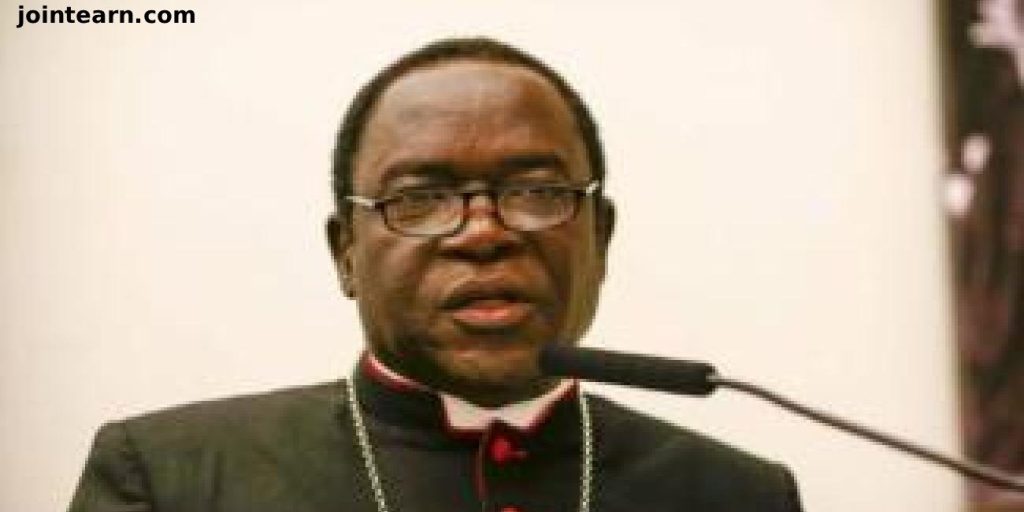
The Bishop of Sokoto Catholic Diocese, Most Rev. Matthew Hassan Kukah, has cautioned that Nigeria’s worsening security challenges cannot be solved by arming communities or encouraging self-defence.
Speaking Thursday in Abuja at a national dialogue themed “A Whole-of-Society Approach to Prevention of Violence and Conflict in Northern Nigeria”, organised by the National Peace Committee, The Kukah Centre, and the Office of the National Security Adviser (ONSA), the cleric warned that distributing weapons to civilians only creates an illusion of safety.
Deeper Causes of Insecurity
Kukah highlighted that Nigeria’s security problems go far beyond armed violence, pointing to unstable homes, fragmented communities, and weakened moral foundations as key vulnerabilities that provide fertile ground for bandits and criminals.
He questioned the long-term consequences of arming civilians:
“When peace returns, where will those weapons go? Arms will not solve our problems. They offer a false sense of security.”
He added that resorting to arms contradicts moral and religious principles:
“As a Christian, it is not accidental that Jesus asked Peter to put back his sword. God’s teachings do not change; circumstances may change, but the truth does not.”
Call for Unity and Moral Leadership
Bishop Kukah argued that Nigeria has hit rock bottom in terms of insecurity and that progress is only possible if Nigerians unite across religious, ethnic, and cultural divides.
“The nation can only overcome its security challenges when every citizen comes together to fight the common enemy,” he said.
Describing the dialogue as part of a long journey, he stressed that it was a moral call to action, not a talk shop:
“We meet because we believe Nigeria is worth fighting for — not with weapons, but with truth, courage, justice, and compassion. Our gathering is meant to respond to the cries in our land, not to look for scapegoats or excuses.”
Peace Through Collective Responsibility
Kukah urged Nigerians to embrace diversity as a strength, noting the example of the United States as a nation strengthened by heterogeneity.
“Peace cannot be outsourced. Peace is the collective work of all of us,” he said, calling on government leaders to act with humility, transparency, and justice and for religious and traditional leaders to confront extremism within their communities.
He further emphasized the importance of giving voice to women, who often remain excluded from decision-making, as an essential part of rebuilding trust and restoring security.
“Peace begins with individuals, families, communities, and societies. If each of us seeks peace where we are, the nation will benefit. We must build trust. We must speak for the voiceless.”
Bishop Kukah concluded that achieving security in Nigeria requires a whole-of-society approach, where every citizen actively participates in rebuilding confidence and healing divisions.


Leave a Reply