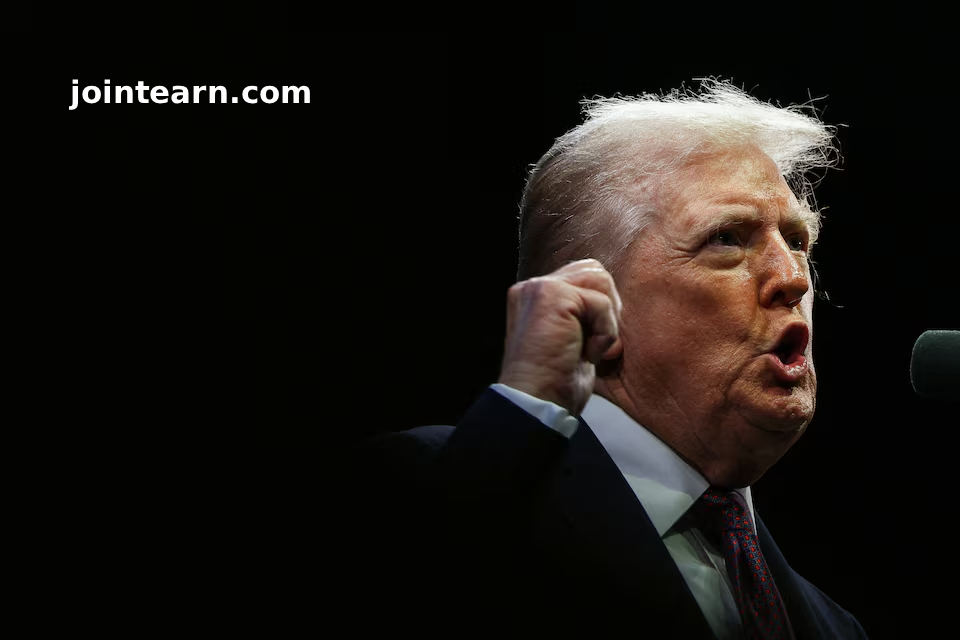
The U.S. Supreme Court is set to hear arguments next week in a high-stakes case examining former President Donald Trump’s firing of a Federal Trade Commission (FTC) member, a move that could reshape the balance of power between the presidency and independent federal agencies. The case, which challenges a 90-year-old legal precedent, has far-reaching implications for the independence of regulatory bodies across the United States.
Background: Trump’s FTC Firings
In March, Trump moved to dismiss Democratic FTC commissioner Rebecca Slaughter before her term expired in 2029. The firings drew criticism from Democratic senators, consumer advocacy groups, and antitrust experts who argued that the move aimed to remove opposition to pro-corporate policies within the agency.
Lower courts initially blocked the firing. U.S. District Judge Loren AliKhan ruled in July that Slaughter’s statutory tenure protections complied with the Constitution, citing the 1935 Supreme Court precedent Humphrey’s Executor v. United States, which shields heads of independent agencies from removal without cause. The D.C. Circuit Court upheld this ruling in September.
However, the Supreme Court allowed Slaughter’s removal to take effect while agreeing to hear the case, signaling the potential for a landmark decision on the limits of presidential authority.
The Legal Stakes: Humphrey’s Executor and the Unitary Executive
The case centers on whether the president can fire heads of independent agencies at will, overriding the for-cause protections that Congress established to ensure regulatory stability. The 1935 Humphrey’s Executor decision held that the FTC’s functions—spanning consumer protection, antitrust, and other quasi-legislative or judicial roles—justified restricting presidential removal powers.
Proponents of the unitary executive theory, which argues that the president should have full control over the executive branch, support overturning or narrowing Humphrey’s Executor. Legal scholars like John Yoo call the case “one of the most important questions over the last century on the workings of the federal government,” emphasizing that removal power is essential for presidents to ensure subordinates follow directives.
Critics argue that stripping tenure protections undermines the independence of the administrative state, allowing political interference in agencies regulating finance, labor, and consumer protection. Erwin Chemerinsky, dean of UC Berkeley Law School, warns that such a change could destabilize regulatory agencies, making them “part of carrying out a president’s agenda” rather than acting as neutral regulators.
Congressional Role and Checks on Presidential Power
Congress grants independent agencies authority, funding, and structural independence, including for-cause removal protections. A 1914 law permits the president to remove FTC commissioners only for inefficiency, neglect of duty, or malfeasance—not for policy disagreements. Similar protections exist for over two dozen other independent agencies, including the National Labor Relations Board (NLRB) and the Merit Systems Protection Board (MSPB).
Legal scholars note that broadening presidential removal authority could encroach on Congress’s constitutional role in shaping independent agencies, upsetting the balance of power envisioned in the U.S. Constitution.
Broader Implications for Presidential Authority
The Supreme Court’s conservative majority has previously narrowed Humphrey’s Executor but stopped short of overturning it. Major decisions in recent years, including rulings on abortion rights, race-conscious admissions, and agency deference, indicate a willingness to revisit longstanding precedents.
If the court rules in Trump’s favor, the decision could:
- Allow presidents to fire all commissioners of independent agencies at will.
- Reduce regulatory stability for businesses and consumers.
- Strengthen the unitary executive theory, giving presidents more control over executive-branch functions.
The case follows other high-profile Trump-era actions challenging agency independence, including attempted removals of National Labor Relations Board members, Merit Systems Protection Board officials, and Federal Reserve Governor Lisa Cook.
Expert Opinions
- Steve Schwinn, law professor at the University of Illinois Chicago, emphasizes that ignoring Congress’s role in structuring agencies undermines the Constitution’s separation of powers.
- Proponents of the unitary executive argue that presidential control ensures accountability and policy consistency.
- Critics warn that removing tenure protections could make agencies politicized and unpredictable, affecting law enforcement, consumer protection, and financial regulation.
Conclusion
The Supreme Court’s ruling on Trump’s FTC firing will not only decide the fate of Rebecca Slaughter but could reshape the independence of federal agencies for decades. With a 6-3 conservative majority, the court has an opportunity to redefine the limits of presidential power over regulatory bodies designed to operate independently from the White House.


Leave a Reply