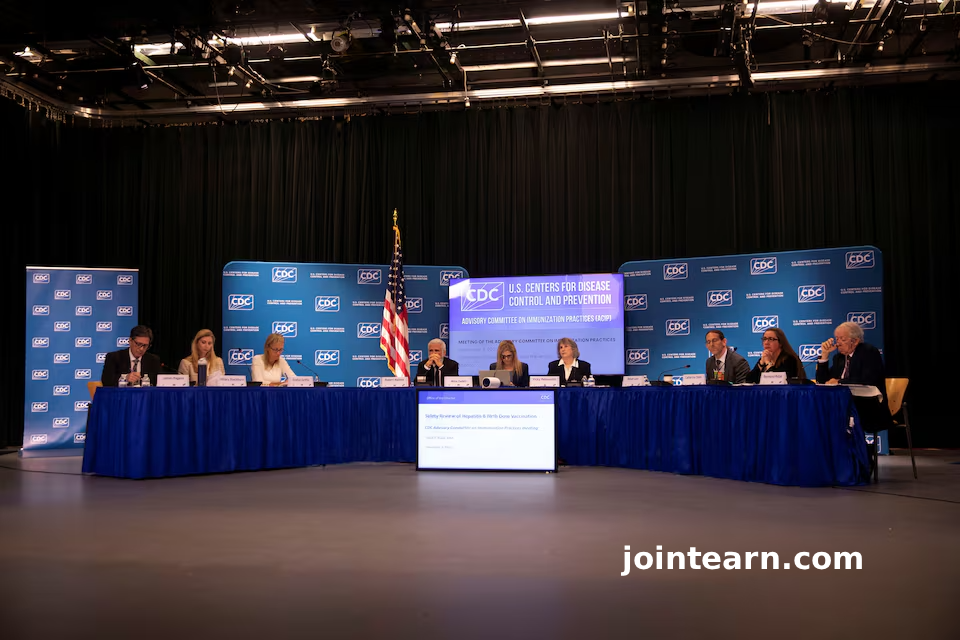
The Advisory Committee on Immunization Practices (ACIP) will vote this Friday on whether to remove the longstanding recommendation for the hepatitis B vaccine for most U.S. children, a decision that could have far-reaching public health implications. The vote comes under the leadership of Robert F. Kennedy Jr., the nation’s top health official, and represents a major shift in U.S. childhood vaccination policy.
Background: Hepatitis B Vaccine in the U.S.
Since 1991, the United States has maintained a universal hepatitis B vaccination policy, including a dose administered shortly after birth, followed by two additional doses at 1–2 months and 6–18 months. Studies show that the birth dose alone reduces hepatitis B infection rates by 95%, helping prevent chronic liver disease, liver cancer, and premature death.
Public health experts warn that removing the universal birth-dose recommendation could result in increased childhood infections with lifelong health consequences.
Proposed Changes and Controversy
The ACIP is expected to vote on three key proposals:
- Limiting the vaccine to infants born to mothers who test positive for hepatitis B.
- Allowing parents, in consultation with healthcare providers, to decide if and when to begin the vaccination series for other children. The proposal advises the first dose be administered no sooner than two months of age if vaccination is delayed.
- Voting on whether to test children for hepatitis B antibodies before administering subsequent doses.
The panel will also consider whether to continue recommending vaccination for infants whose mothers’ hepatitis B status is unknown.
Dr. Yvonne Maldonado, a global health expert at Stanford University, cautioned that implementing a “shared clinical decision-making” approach could be cumbersome and may lead to missed vaccination opportunities.
Political and Public Health Implications
Kennedy, founder of the anti-vaccine group Children’s Health Defense, previously dismissed 17 independent vaccine experts on the CDC advisory committee, replacing them largely with advisers supportive of his views. This shift has intensified scrutiny and concern from public health officials and legislators.
Lawyer and anti-vaccine activist Aaron Siri is scheduled to present at the meeting, advocating changes to the childhood immunization schedule, despite not being a medical or scientific expert. Senator Bill Cassidy, a physician and Republican from Louisiana, criticized the committee, saying it is “totally discredited” and failing to protect children.
The meeting will also compare the U.S. immunization schedule with schedules in other countries, such as Denmark, and review vaccine safety, including the use of aluminum adjuvants, which have been safely used in vaccines for over 70 years.
Vaccine Industry Response
Pharmaceutical companies including Sanofi, Merck, and GSK defended the safety and effectiveness of their hepatitis B vaccines amid the ongoing debate. Stock prices of these companies showed minor declines during the advisory committee meeting.
Public Health Concerns
Removing the universal birth-dose recommendation for hepatitis B could have serious consequences:
- Increased rates of chronic hepatitis B infection among children.
- Higher lifetime risk of liver cancer and liver-related illnesses.
- Reduced herd immunity and greater public health costs.
Experts emphasize that the current vaccination schedule has successfully prevented thousands of infections and remains a critical part of U.S. public health strategy.


Leave a Reply