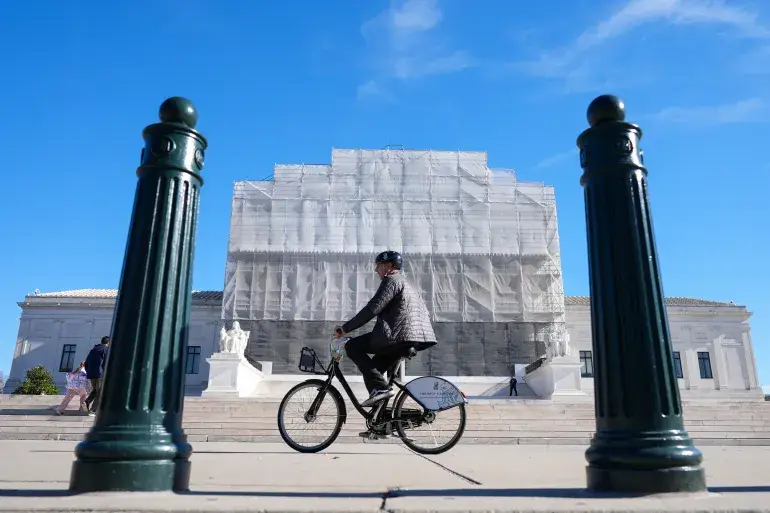
Supreme Court to Hear Trump’s Birthright Citizenship Case
The United States Supreme Court has agreed to decide the legality of President Donald Trump’s bid to end birthright citizenship, a core provision under the 14th Amendment that grants automatic US citizenship to anyone born on American soil.
While the Court, which has a 6-3 conservative majority, has not set a date for oral arguments, legal analysts expect hearings to take place early next year, with a potential ruling in June 2026.
Background: Trump’s Executive Order
On January 20, 2025, Trump signed an executive order declaring that children born to parents in the US illegally or on temporary visas would not automatically receive citizenship. The administration argued that such individuals were not fully “subject to the jurisdiction” of the United States, a claim that has been blocked by multiple lower courts as unconstitutional.
Lower courts cited the 14th Amendment, which states:
“All persons born or naturalized in the United States, and subject to the jurisdiction thereof, are citizens of the United States and of the State wherein they reside.”
Judges emphasized that the Constitution has historically applied this right to all born in the US, regardless of the parents’ immigration status, a principle upheld in a landmark Supreme Court decision in 1898.
Legal Arguments
Trump’s solicitor general, John Sauer, argued in a brief to the Supreme Court that extending birthright citizenship to children of undocumented migrants has “caused substantial harm”, including incentivizing illegal immigration and threatening the United States’ territorial integrity.
The administration also claims that the 14th Amendment, drafted after the Civil War, was primarily intended to secure rights for former slaves and does not extend to children of undocumented migrants or temporary visitors.
Previous Court Rulings
Federal judges across the country blocked the executive order before it could take effect on February 19, 2025.
- District Judge John Coughenour in Washington state called the order “blatantly unconstitutional”.
- Similar rulings in other states reinforced that the policy violated a core constitutional right.
Political and Legal Implications
Conservatives, who hold a 6-3 majority on the Supreme Court with three Trump-appointed justices, may provide a favorable environment for the administration. However, legal experts caution that overturning over 150 years of constitutional precedent would be unprecedented and could face intense public and political backlash.
Cecillia Wang, national legal director of the American Civil Liberties Union (ACLU), emphasized:
“Federal courts around the country have consistently rejected President Trump’s attempts to strip away this core constitutional protection. The president’s action goes against a core American right that has been part of our Constitution for over 150 years.”
The Supreme Court has sided with Trump in recent decisions, including policies on:
- Revoking temporary legal protections for migrants.
- Deporting migrants to countries other than their own.
- Domestic immigration enforcement raids.
The upcoming ruling will have significant implications for US immigration law, potentially redefining the application of the 14th Amendment for generations.


Leave a Reply