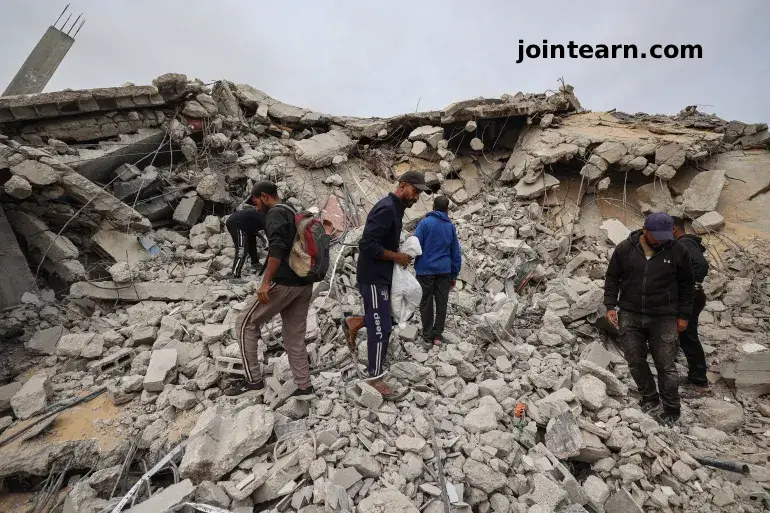
At least seven Palestinians have been killed in recent Israeli attacks in Gaza, including a 70-year-old woman and her son, as the conflict intensifies despite an ongoing ceasefire. The latest military operations mark a dangerous escalation beyond the so-called “yellow line” demarcation established under the October 10 truce.
Tragic Losses in Gaza: Civilians Targeted
Health officials confirmed that the elderly woman and her son were among seven Palestinians killed in Beit Lahiya, Jabalia, and Zeitoun. Witnesses reported that the mother and son were pursued by a drone near Gaza City, nearly one kilometer beyond the ceasefire line, and left fatally wounded as the drone hovered above, preventing rescue efforts.
Al Jazeera correspondent Hani Mahmoud described the attack as “just one of many violations throughout the day and throughout the past 50 days” since the truce began. He emphasized that the lack of visible markings along the yellow line makes it easy for civilians to unknowingly cross into dangerous zones.
Israeli Military Operations Extend Beyond Ceasefire Line
The Israeli military confirmed killing three individuals in separate incidents, citing their crossing of the yellow line. Meanwhile, Israeli forces have intensified assaults in Gaza, demolishing residential buildings and public infrastructure in the Shujayea district.
Correspondents report that tanks, attack drones, and ground troops forced many residents to flee, while sand barriers were erected to isolate parts of eastern Gaza. Armored vehicles have advanced 300–500 meters beyond the ceasefire line near Salah al-Din Street in western Gaza City.
Humanitarian Crisis Worsens
The ongoing violence has deepened Gaza’s humanitarian crisis, especially as winter approaches. According to Israeli human rights group B’Tselem, children remain in summer clothing and barefoot after storms destroyed 13,000 tents.
The UN Office for the Coordination of Humanitarian Affairs (OCHA) reports that one in four households now survives on a single meal per day, and 10 percent experienced a full day without food in the last month. Humanitarian aid operations remain critically underfunded, with only 40 percent of the $4 billion appeal for Gaza and the occupied West Bank met.
International Reactions and Regional Tensions
The situation has drawn concern from regional leaders. Qatar’s Prime Minister Sheikh Mohammed bin Abdulrahman Al Thani described the Gaza ceasefire as being at a “critical moment” during the Doha Forum, warning that it could collapse without renewed efforts toward a permanent resolution.
Similarly, Saudi official Manal Radwan stated, “We don’t see that we have a partner for peace. Not even a partner for a sustainable ceasefire.”
Eight Muslim-majority nations, including Egypt and Qatar, also rejected Israel’s plan to make Gaza’s Rafah crossing one-way, warning it could violate the US-brokered peace deal and risk forced displacement.
Rising Casualties Since Ceasefire
Since the October ceasefire, at least 367 Palestinians have been killed, 953 wounded, and 624 bodies recovered from rubble, according to Gaza’s Health Ministry. UNICEF confirmed that 70 children were among the dead, highlighting the grave toll on civilians.
The UN reports that approximately 1.9 million people—about 90 percent of Gaza’s population—have been displaced during the conflict.


Leave a Reply