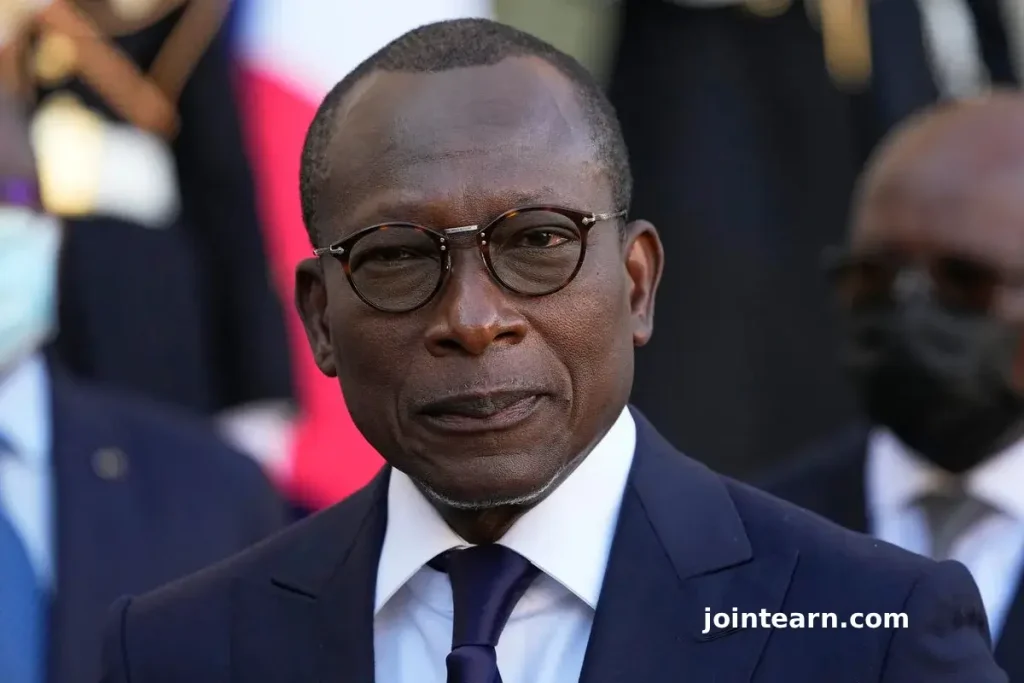
Cotonou, Benin — December 7, 2025: Benin’s government has successfully thwarted an attempted military coup, according to officials, after a small group of soldiers briefly seized control of state television and announced the removal of President Patrice Talon.
The foiled coup adds to a growing pattern of political instability across West Africa, where disputed elections, constitutional crises, and security challenges have fueled military interventions in recent years.
Benin Coup Attempt: What Happened
Early Sunday morning, a group of soldiers calling themselves the Military Committee for Refoundation (CMR) appeared on state TV in Cotonou, announcing that President Talon had been removed and all state institutions dissolved. They appointed Lt. Col. Pascal Tigri as head of their military committee.
Soldiers cited a number of grievances, including the “continuous deterioration of the security situation in northern Benin,” neglect of fallen soldiers and their families, and “unjust promotions at the expense of the most deserving.”
AFP correspondents and eyewitnesses reported hearing gunfire near the presidential palace and state television building, though most of the city went about normal business. Access to certain areas, including the Sofitel hotel and districts housing international institutions, was temporarily restricted. No military presence was reported at the airport.
Government Response
Benin’s Interior Minister Alassane Seidou described the soldiers’ actions as a “mutiny aimed at destabilizing the country and its institutions.” The government confirmed that around a dozen soldiers involved in the coup were arrested.
Foreign Minister Olushegun Adjadi Bakari emphasized that the situation was under control, noting that the coup plotters had only taken state television and that the loyalist army had regained authority. A source close to President Talon confirmed that the president, a 67-year-old former businessman dubbed the “cotton king of Cotonou,” was safe.
Security forces quickly restored normalcy, and Benin’s streets, aside from a few restricted areas, remained calm.
International Reactions
- United States: The US Embassy in Cotonou advised citizens to avoid the presidential compound and maintain a low profile.
- France: Recommended that its nationals remain indoors.
- Spain and Italy: Urged their citizens to avoid non-essential travel and shared emergency contacts.
- Regional Organizations: The Economic Community of West African States (ECOWAS) condemned the coup as “unconstitutional” and a subversion of the will of the Beninese people. The African Union urged the military to return to barracks.
Historical Context: Coups in Benin
Since gaining independence from France in 1960, Benin has experienced multiple coups and attempted coups, particularly in the decades following independence. Political stability largely returned after 1991 following the two-decade rule of Marxist-Leninist leader Mathieu Kérékou.
President Talon, in power since 2016, has overseen notable economic growth and reforms. However, critics have accused him of authoritarianism. Talon is scheduled to step down after completing his second term in April 2026. The ruling coalition has nominated Finance Minister Romuald Wadagni to succeed him, while the main opposition party has been excluded from the race.
Military Coups in West Africa: A Growing Trend
Benin’s attempted coup is part of a broader wave of military interventions in West Africa since 2020, often following disputed elections or crises of governance:
- Mali (2020 & 2021): Soldiers overthrew Presidents Ibrahim Keïta and Bah Ndaw; Col. Assimi Goita consolidated power.
- Burkina Faso (2022): Lt. Col. Paul-Henri Damiba ousted President Roch Kaboré in January; Capt. Ibrahim Traoré replaced him in September.
- Niger (2023): Gen. Abdourahamane Tchiani removed President Mohamed Bazoum, forming the Alliance of Sahel States with Mali and Burkina Faso.
- Gabon (2023): Soldiers removed President Ali Bongo after contested elections; Brice Oligui Nguema assumed power.
- Madagascar (2025): Military intervention followed public protests over water shortages and power outages.
- Guinea-Bissau (2025): Soldiers staged a takeover following a disputed election, allowing President Umaro Sissoco Embaló to flee to Senegal.
- Chad, Guinea, Sudan: All have experienced recent military interventions, further destabilizing regional security.
The rise in coups has alarmed analysts and foreign investors, highlighting threats to democracy, regional stability, and economic growth in West Africa.
What Comes Next for Benin
With the coup foiled, Benin’s government is focused on restoring public confidence and maintaining security ahead of the April 2026 presidential election. Loyalist forces continue to monitor the situation, and authorities are working to ensure that state institutions operate normally.


Leave a Reply