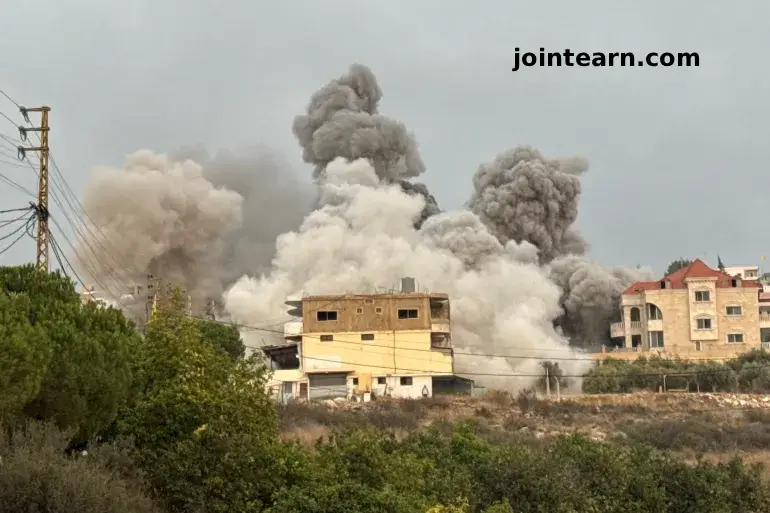
Israel has launched a new series of air attacks on southern Lebanon, prompting renewed fears of a widening conflict and putting unprecedented strain on the fragile US-brokered truce in place since 2024. Lebanese state media reported significant damage to residential areas as calls grow louder for accountability over repeated Israeli violations of the ceasefire with Hezbollah.
Israeli Jets Hit Multiple Locations Across Southern Lebanon
According to Lebanon’s National News Agency (NNA), Israeli warplanes struck several locations late Monday in multiple waves. Targets included:
- Mount Safi
- Jbaa
- Zefta Valley
- Areas between Azza and Rumin Arki
While no casualties were immediately reported, NNA confirmed structural damage to homes and civilian properties, heightening public anger across the region.
Israel’s military said on X that the strikes targeted Hezbollah-linked sites, including a special operations facility reportedly used by the group’s elite Radwan Force. The statement also mentioned attacks on rocket-launching infrastructure and several buildings allegedly used for military purposes.
Ceasefire Under Pressure as Diplomatic Efforts Falter
The escalation comes just days after Israel and Lebanon sent civilian representatives to a joint military committee tasked with supervising the 2024 ceasefire. This move followed persistent encouragement from the United States, which has urged both sides to deepen negotiations.
Lebanese President Joseph Aoun reiterated on Friday that Lebanon remains committed to diplomatic engagement aimed at halting Israeli violations.
The ceasefire, established after more than a year of border clashes, has been repeatedly tested by near-daily Israeli attacks on Lebanese territory.
A United Nations report released in November highlighted the devastating toll of these strikes, stating that at least 127 Lebanese civilians, including children, have been killed since the ceasefire was agreed. UN officials have warned that the ongoing attacks may constitute war crimes.
Tensions Surge After Assassination of Hezbollah Commander
Regional tensions surged further last week after Israel bombed Beirut’s southern suburbs, killing Haytham Ali Tabtabai, a senior Hezbollah military commander. The group, still weakened from last year’s conflict, has not yet mounted a major response, though analysts warn retaliation remains likely.
Israel continues to claim that Lebanon is failing to prevent Hezbollah from maintaining or rebuilding its arsenal—a charge Lebanon strongly denies.
Lebanese Leadership Calls for Stronger Monitoring Mechanism
Prime Minister Nawaf Salam said Lebanon supports strengthening the ceasefire monitoring framework, particularly in verifying Israel’s allegations about Hezbollah’s activities and in documenting the efforts of the Lebanese army.
When asked whether this would include allowing US and French troops on Lebanese soil as part of a verification mission, Salam replied, “Of course,” signaling a notable shift in Lebanon’s stance on international involvement.
Fears of a Wider Conflict as Airstrikes Intensify
Growing anxiety is spreading throughout Lebanon as repeated Israeli strikes raise concerns that the conflict may expand into a broader military campaign. Hezbollah has insisted it will not disarm while Israel continues its air assaults and maintains occupation of five disputed points in southern Lebanon.
With diplomatic channels struggling to contain escalating hostilities, the region stands on edge—waiting to see whether this fragile ceasefire can survive yet another round of violence.


Leave a Reply