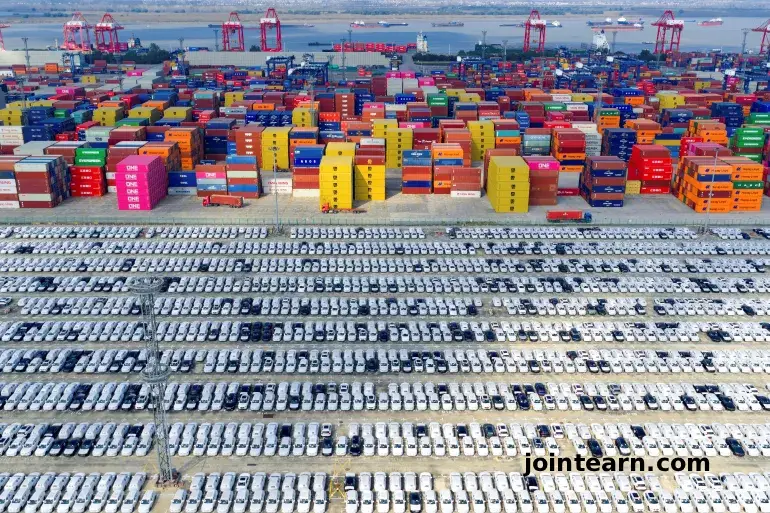
China has reached a historic milestone, with its annual trade surplus in goods surpassing $1 trillion for the first time. This comes as exports to the United States slump, prompting Chinese exporters to redirect shipments to alternative markets and sustain growth.
China’s Record-Breaking Trade Surplus
Data released by China’s General Administration of Customs shows that the trade surplus for the first eleven months of 2025 reached $1.08 trillion. Chinese exports climbed 5.9% year-on-year in November, rebounding from a 1.1% decline in October, demonstrating resilience in global trade despite ongoing challenges.
The increase was driven by diversified trade routes as exports to the US fell 28.6%, totaling $33.8 billion in November. This sharp decline reflects the ongoing impact of the US-China trade war, which imposed significant tariffs and trade barriers during the second administration of US President Donald Trump.
Pivot to Other Global Markets
Chinese exporters have successfully redirected goods to other regions, mitigating the decline in US-bound shipments. Analysts, including Zichun Huang from Capital Economics, noted that the weakness in US exports was “more than offset by shipments to other markets.”
Exports to the European Union rose 14.8%, while shipments to Australia surged 35.8%. Fast-growing Southeast Asian economies imported 8.2% more goods, highlighting China’s strategic pivot to emerging markets and diversified trading partners.
Huang added that exports are likely to remain resilient due to trade rerouting and increased price competitiveness of Chinese goods, supported by deflation lowering the real effective exchange rate.
Economic Context and Domestic Challenges
Exports have become a critical pillar of China’s economy amid sluggish domestic demand and a property sector debt crisis. Weak consumer spending has limited the growth potential from domestic markets, making international trade essential for sustaining overall economic momentum.
Despite robust export figures, imports rose only 1.9% year-on-year in November, indicating continued weak domestic consumption. Analysts highlight that the export surge helped mitigate the impact of slowing internal demand, providing a lifeline to China’s economic growth in 2025.
International Reactions and Trade Tensions
China’s record trade surplus has drawn criticism from Western partners. French President Emmanuel Macron, following a state visit to China, warned in an interview with Les Echos that Europe may consider tariffs on Beijing if trade imbalances are not addressed in the coming months.
Meanwhile, the US-China trade relationship remains delicate. The two largest economies agreed to pause tariff hostilities during a meeting in South Korea in October, yet US exports from China continue to struggle under the residual effects of tariffs and trade barriers.
Monthly Trade Highlights
- November trade surplus: $111.68 billion, highest since June 2025.
- Previous month surplus: $90.07 billion.
- Forecasted surplus: $100.2 billion.
Zhiwei Zhang, chief economist at Pinpoint Asset Management, emphasized that the rebound in export growth in November has helped offset weakness in domestic demand, particularly in the property sector.
Outlook for China’s Trade and Economy
Analysts predict that China’s trade surplus will continue to expand in 2026, driven by strong global demand, strategic export diversification, and competitive pricing. However, ongoing trade tensions with the US and potential European tariff measures remain key risks to sustained growth.
China’s ability to navigate shifting global trade dynamics will be crucial in maintaining economic stability and reinforcing its position as a leading player in international commerce.


Leave a Reply