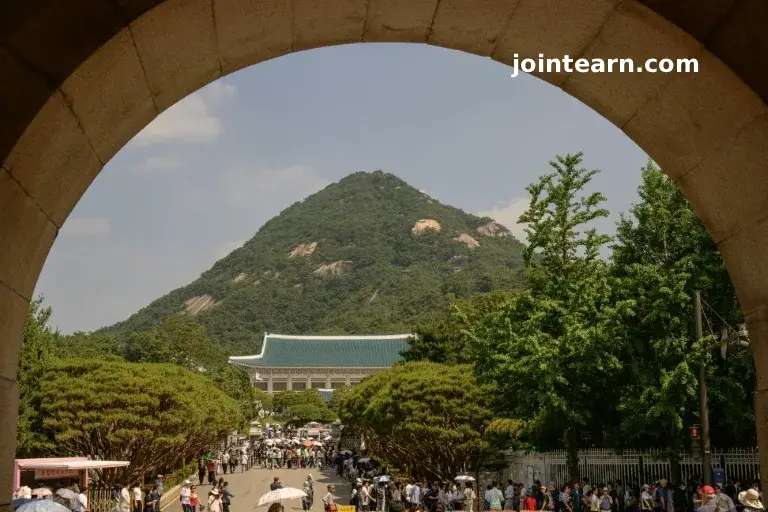
SEOUL, South Korea — President Lee Jae Myung and his administration have begun the process of moving back into Seoul’s historic Blue House, officially known as Cheong Wa Dae, a government official confirmed on Tuesday. The move reverses a decision by Lee’s predecessor, who had abandoned the site, calling it too “imperial,” and opens a new chapter in South Korea’s presidential history.
The Blue House, famous for its approximately 150,000 hand-painted blue tiles, has long symbolized the South Korean presidency. Situated on the slopes of Bugaksan Mountain, it has served as the official residence and office of South Korea’s leaders for more than seven decades, including during the Japanese colonial period.
Background: Why the Blue House Was Abandoned
Former president Yoon Suk Yeol chose not to reside at the Blue House, citing its historical “imperial” design as a reason. Instead, Yoon opened the complex to the public and relocated his office and residence to a separate facility. However, his tenure was cut short following the controversial and brief imposition of martial law in April, leading to his ouster and the subsequent election of Lee Jae Myung in a snap vote.
President Lee had campaigned on a promise to restore the presidential office and residence to the Blue House, emphasizing both tradition and national symbolism. The relocation process began on Monday and is expected to be completed by Christmas 2025, according to the presidential office.
Security and Logistics of the Move
While the administrative offices are scheduled to resume operations at the Blue House soon, the president’s full move into the residence will take longer due to heightened security protocols. Local media reported that additional security measures are being put in place to protect the site and the president’s family.
Cultural and Historical Significance
The Blue House has always fascinated the South Korean public, partly because of the dramatic fates of its previous occupants, including assassinations, impeachments, and imprisonments. Some observers speculate that Yoon’s relocation was partly an attempt to avoid the perceived “bad luck” associated with the historic site—an effort that ultimately did not prevent his downfall, as he now faces criminal trial on insurrection charges.
Restoring the presidency to the Blue House reflects President Lee’s commitment to tradition while reinforcing the symbolic authority of the South Korean executive office. For many citizens, the move signals a return to familiar national imagery and governance practices that resonate with the country’s historical identity.


Leave a Reply