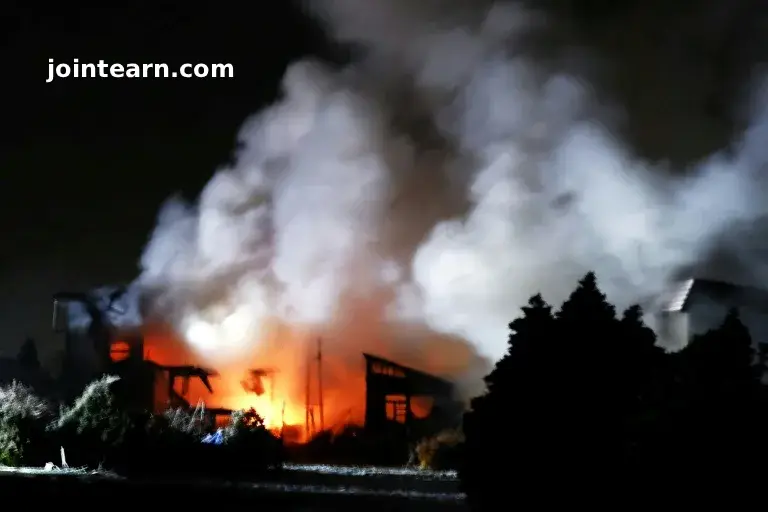
AOMORI, Japan — A magnitude 7.5 earthquake struck off the coast of northern Japan late Monday night, injuring at least 30 people and causing significant damage to roads and infrastructure, authorities reported Tuesday. The quake also triggered tsunami waves up to 70 centimetres (28 inches) and temporarily left thousands without power amid freezing temperatures.
Details of the Earthquake
The Japan Meteorological Agency (JMA) recorded the earthquake at 11:15 pm local time (1415 GMT). The initial magnitude of 7.6 was later revised to 7.5. The agency warned that aftershocks or even stronger tremors could occur over the coming week, urging residents to remain vigilant.
Prime Minister Sanae Takaichi confirmed the number of injuries, while the Fire and Disaster Management Agency reported one serious injury on the main northern island of Hokkaido.
Daiki Shimohata, 33, a civil servant from Hashikami, Honshu, described the terrifying experience:
“The tremor was something we’ve never experienced. It lasted maybe 20 seconds. We were holding our children — a two-year-old girl and a one-year-old boy — in our arms. The shaking reminded me of the 2011 disaster.”
Damage and Disruption
The quake caused crevasses in roads, fallen debris, and at least one car trapped in a hole. Broken glass was scattered across streets, and one confirmed fire occurred at a residential property. Initial reports of multiple fires were later ruled out.
Shinkansen bullet-train services were temporarily suspended while tracks were inspected. Fortunately, no abnormalities were reported at the Higashidori or Onagawa nuclear power plants, according to operator Tohoku Electric Power.
Approximately 2,700 homes lost electricity, though power was largely restored by Tuesday morning. Around 28,000 residents were initially advised to evacuate, with some makeshift shelters reaching full capacity.
In Hachinohe, on Hokkaido island, the quake registered an upper six on Japan’s seven-level Shindo scale, making it difficult for residents to move without crawling.
Tsunami Warnings
The JMA initially warned of tsunamis up to three metres (10 feet), which could have caused significant coastal damage. After several hours, the warnings were downgraded as the largest waves measured just 70 centimetres.
Historical Context
Japan lies at the junction of four major tectonic plates along the Pacific “Ring of Fire,” making it one of the world’s most earthquake-prone countries. The nation experiences roughly 1,500 earthquakes annually, most of which are minor.
The 2011 magnitude-9.0 earthquake and subsequent tsunami killed approximately 18,500 people, destroyed thousands of homes, and caused a meltdown at the Fukushima nuclear plant.
Geologists emphasize that predicting earthquakes is extremely difficult, though historical data suggests that very few large earthquakes are followed by even stronger events, according to experts Kyle Bradley and Judith A. Hubbard.
Ongoing Precautions
The JMA urged residents to remain alert for potential aftershocks and further seismic activity over the next week. Authorities continue to monitor infrastructure and coordinate emergency response efforts across the affected northern regions.


Leave a Reply