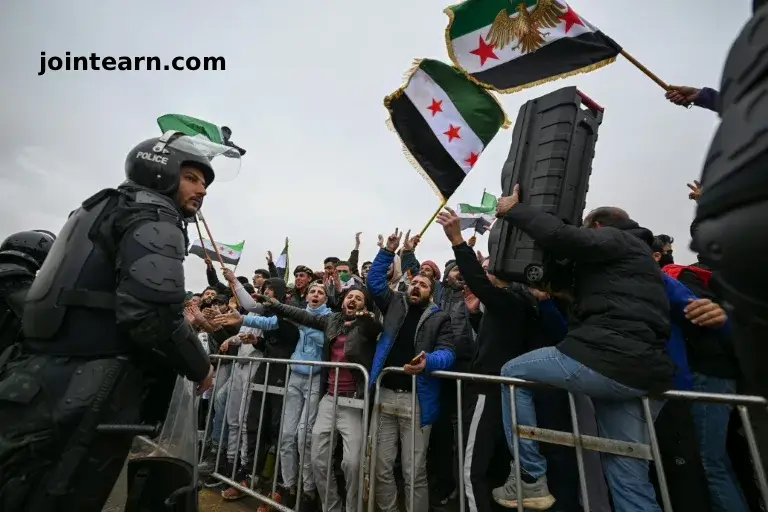
Syrian President Ahmed al-Sharaa marked the first anniversary of Bashar al-Assad’s overthrow by pledging to promote justice, unity, and peaceful coexistence across the war-torn country. Tens of thousands of Syrians took to the streets to celebrate, waving flags and attending prayers broadcast from Damascus’s historic mosques.
Anniversary of Assad’s Ouster
Sharaa’s Islamist-led alliance launched a rapid offensive in late November last year, capturing Damascus on December 8 and ending more than five decades of Assad family rule. The takeover also brought a close to over a decade of civil war that devastated Syria, leaving hundreds of thousands dead and millions displaced.
During his speech, Sharaa called the day a historic break from tyranny, emphasizing a commitment to justice, benevolence, and peaceful coexistence. He also reaffirmed the government’s dedication to transitional justice, pledging accountability for those who committed crimes under the former regime.
Public Celebrations and Challenges
AFP correspondents reported jubilant crowds in Damascus and other major cities, with fireworks and revolutionary songs marking the anniversary. Yet, the country remains fragile. Recent sectarian violence in the Alawite coastal region and deadly clashes in Druze-majority Sweida have tested the new government’s ability to maintain order and protect minorities.
Authorities have launched investigations into incidents involving former government forces and allied militias implicated in the violence, highlighting ongoing security and reconciliation challenges.
Humanitarian and Economic Recovery
Years of war and economic collapse have left basic infrastructure in ruins. Civilians like doctor Iyad Burghol emphasized the urgent need for civil peace, electricity, and basic services. Meanwhile, Sharaa’s government has made strides internationally, securing sanctions relief and restoring Syria’s diplomatic standing, but domestic trust and institution-building remain critical hurdles.
Humanitarian worker Ghaith Tarbin expressed hope that the government would prioritize civil stability and reconstruction efforts, emphasizing the importance of addressing deep social and economic scars.
Governance and Minority Rights
Sharaa’s administration faces scrutiny over minority rights and centralization of power. While critics advocate for decentralization or self-determination, Sharaa maintains a unitary state model, insisting on a centralized governance structure to unify the nation.
International organizations are monitoring the situation closely. Amnesty International described the government’s response to ongoing violations as a litmus test for justice and accountability, while Human Rights Watch noted positive steps but highlighted continued violence and rights abuses.
International Perspective
UN Secretary-General António Guterres called the post-Assad transition an opportunity to rebuild communities, heal divisions, and establish a Syria where citizens can live securely, equally, and with dignity.
Regional and Security Concerns
Challenges persist in Kurdish-held northeast Syria, where integration with the central government under a March agreement has stalled. Authorities there have imposed bans on public gatherings due to security concerns. Meanwhile, ongoing Israeli demands for a demilitarized zone in southern Syria add complexity to national security negotiations.
In the Alawite-majority coastal city of Jableh, local religious leaders urged residents to boycott celebrations, reflecting lingering divisions among Syria’s diverse communities.
Looking Ahead
One year after Assad’s ouster, Sharaa faces a monumental task: uniting a fractured nation, rebuilding war-torn infrastructure, ensuring justice for victims of past atrocities, and balancing complex regional security dynamics. While international recognition and domestic optimism provide a foundation, stability, coexistence, and inclusive governance remain the ultimate tests for Syria’s future.


Leave a Reply