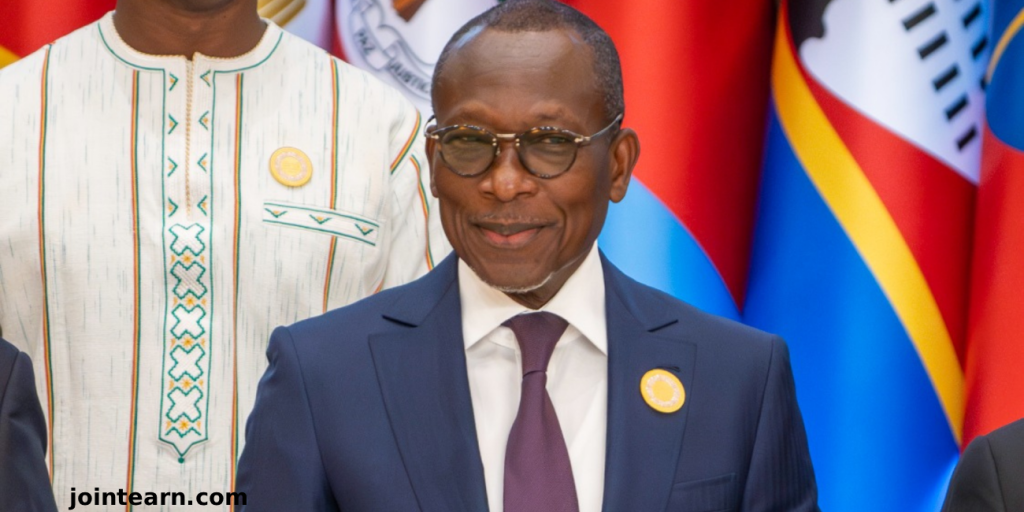
The Socialist Movement of Ghana (SMG) has warned that the Economic Community of West African States (ECOWAS) risks bolstering President Patrice Talon’s authority amid growing political tensions in Benin, cautioning against any action that might reinforce anti-democratic practices.
In a statement on Tuesday, SMG expressed concern over what it described as “rapid democratic backsliding” under Talon. The group cited the forced exile or imprisonment of opposition figures like Sébastien Ajavon and Reckya Madougou as examples of judicial repression and shrinking civic space.
“These are not isolated incidents; they form a clear pattern. Under Patrice Talon, Benin has experienced some of the most rapid democratic erosion in West Africa,” the statement read.
SMG criticized ECOWAS for inconsistencies in its responses to democratic violations, arguing that the regional body often remains silent when leaders manipulate constitutions or suppress dissent, while intervening in ways that tend to protect sitting governments rather than uphold citizens’ rights.
The group urged ECOWAS to prioritize democratic reforms over elite interests, warning that endorsing Talon could undermine the bloc’s legitimacy. SMG highlighted core demands from Beninese citizens, including:
- Reopening political space and ending opposition exclusion
- Release of political prisoners
- Truly competitive elections
- Restoration of independent institutions
- Justice for victims of state violence
“This is not radical. These are basic requirements for any society that calls itself democratic,” SMG said, adding that ECOWAS must support citizen-led reforms rather than shield authoritarian leaders.
Framing the situation in a broader African context, the movement argued that Talon embodies an elite-driven vision of governance that centralizes power, privatizes state resources, and suppresses opposition, in contrast to a people-centered vision that values participation, justice, and dignity.
SMG concluded by calling on ECOWAS to listen to civil society, journalists, student movements, and local communities in Benin, insisting that stability must be rooted in democratic reforms, not authoritarian consolidation.


Leave a Reply