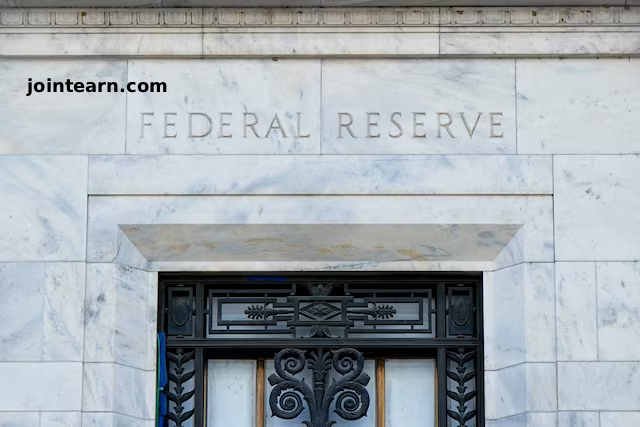
The U.S. Federal Reserve is widely expected to announce a quarter-point interest rate cut on Wednesday, as policymakers weigh the impacts of recent economic disruptions, including the 43-day government shutdown, and debate the risks facing the economy heading into 2026.
The anticipated 25 basis point reduction could come alongside a cautious, or even hawkish, signal regarding future rate moves, reflecting a division among Federal Open Market Committee (FOMC) members. Some officials remain skeptical about further cuts given persistently elevated inflation, while others argue that slowing economic growth and a weakening labor market may require additional reductions in borrowing costs.
Upcoming Policy Statement and Economic Projections
Alongside the rate decision, the Fed will release updated quarterly economic projections at 2 p.m. EST (1900 GMT), outlining the central bank’s expectations for economic growth, inflation, and the appropriate path of interest rates for the year ahead. However, these forecasts often have a short shelf life, particularly now, with the U.S. statistical agencies poised to release delayed jobs and inflation data for November, which could significantly influence policymakers’ future decisions.
Analysts at TD Securities expect the FOMC to announce the 25-basis-point cut but provide “decidedly more hawkish guidance” for subsequent meetings. The December decision is anticipated to be contentious, similar to October’s rate move, which produced dissenting votes in favor of both tighter and looser policy, reflecting ongoing disagreements about inflation risks and labor market stability.
Recent Economic Context
The latest Fed data on unemployment and inflation predate the government shutdown. In September, the unemployment rate rose slightly to 4.4%, while the Fed’s preferred measure of inflation stood at 2.8%, above the central bank’s 2% target. These figures illustrate the challenge policymakers face in balancing economic growth and price stability.
Diverging Views Among Fed Officials
Fed Governor Stephen Miran, currently on leave from his role as a White House economic adviser, has consistently advocated for larger half-percentage-point cuts at each meeting he has attended. Meanwhile, several regional Fed presidents have publicly opposed further reductions, with dissent expected from one or more members at Wednesday’s session.
Market expectations currently anticipate two additional quarter-point reductions by the end of 2026, potentially lowering the benchmark policy rate to 3.00%-3.25%. However, some Fed officials have signaled a higher threshold for further cuts, leaving uncertainty about the pace of future rate adjustments.
Implications for Investors and Markets
Analysts suggest that the Fed’s post-meeting policy statement and Chair Jerome Powell’s press conference may emphasize caution, signaling that further rate cuts will only follow a material deterioration in the labor market. The central bank’s internal divisions, combined with the pending release of delayed economic data, mean that markets may be skeptical of any forward guidance in December.
Economists at Standard Chartered, including Steve Englander and John Davies, note that factors such as Powell’s upcoming term end in May, potential turnover among FOMC members, and uncertainty over his successor’s approach to rate cuts make the Fed’s communication increasingly complicated.
The Rate-Cutting Debate
Supporters of lowering rates argue that easing borrowing costs is necessary to prevent a sharp downturn in the U.S. job market, particularly amid slowing growth. Opponents counter that inflation risks remain elevated, and recent tax cuts under President Donald Trump may further boost spending, potentially undermining the Fed’s inflation targets.
With these competing priorities, the Fed’s December decision will not only impact short-term interest rates but also shape market expectations for monetary policy throughout 2026.


Leave a Reply